
With the first half of the semester over with, looking at your mid-term grades can really put your priorities in check. It’s time to really hunker down and study your butt off in order to keep that grade point average on point. With more exams, quizzes, essays, projects and a myriad of other things on your plate, studying may be the last thing on your mind. However, it really should be your first. Here are some top studying tips you should start practicing.
1. Make and Use Flashcards
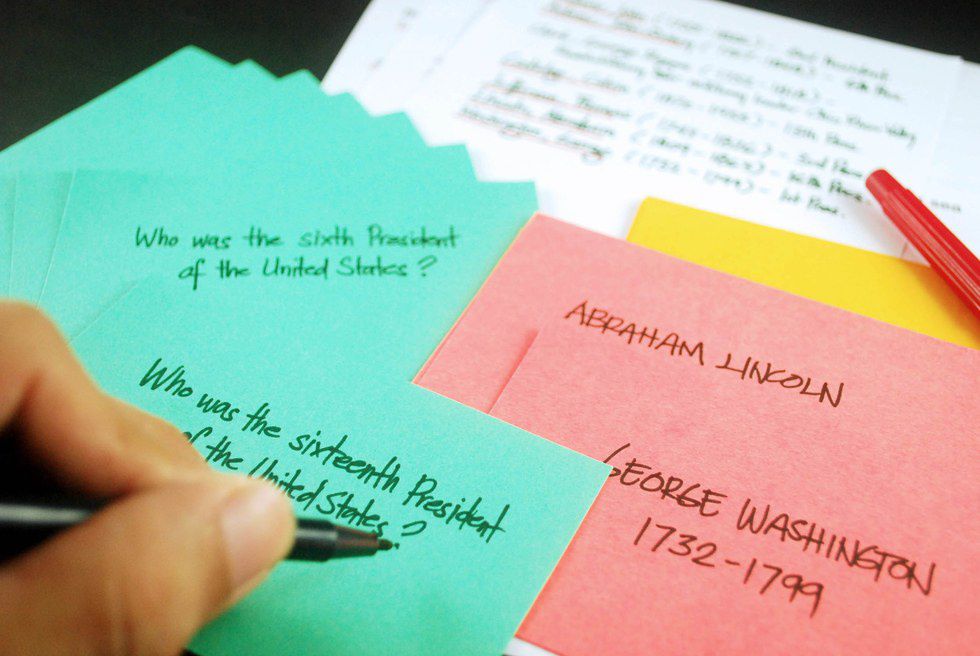
Flashcards can be incredibly useful for studying the endless lists of vocab words in each of your classes. I know what I have found helpful when studying is making flashcards for vocabulary and essay based questions. By using flashcards with a question or term on one side and the answer or definition on the other, you will force your brain to recall the necessary information and it is effective because the flashcards utilize repetition learning techniques.
2. Organization

I know organization can seem a bit dim as a study technique but if done properly it can be quite effective. Organizing your notes into specific sections can help you relate back to the material. The term divide and conquer will be heavily emphasized through this technique. Dividing the material into smaller sections and breaking it all down will help you remember the concept much more than trying to store it all at once.
3. Highlight and Annotate

Highlighting major key features in the material will help you narrow down the main idea of the material. Also annotating in the margins or in your notebook as you read, will help you understand the material in your own words instead of remembering it word for word. Trust me, college professors love to throw quick essay questions or asking for a more detailed answer, annotating helps you organize your thoughts.
4. Come up with fun and alternative ways to learn material

Finding an educational games, apps, videos or relatable activities while studying will help make studying fun and interactive. Sitting at your desk or in the library for hours on end will have you hating school in a matter of days. Finding alternative material that relates to the topic can help you relax and unwind.
5. Create your own practice exams and study material

Breaking down the material to the things you know and the things you don’t can not only save you time but can put into perspective how much you really need to study. Going over past homework assignments, pop quizzes, class activities and tests will help you narrow down what your professor may ask and how they will structure the exam.
6. Study in little increments and at night

It is scientifically proven that studying every night for at least an hour will help you retain the material better than studying for the exam the day of. It is said that when you study at night, and go to sleep your brain is constantly going over anything you just wrote, read or even listened to. Don’t do a cram session at night because by doing that your brain will be on overload. Break up the study lessons for the week and see how well you do.
7. Don’t forget to reward yourself

I tend to agree that positive reinforcement is well positive. While studying set an alarm for every 25 minutes and when the alarm goes off eat something you love, whether it be cookies, hard candies, toffee, or even a candy bar. And if that doesn’t excite you, get up and get your favorite drink or text a friend-do something that you enjoy. It’ll help emphasize that you are doing a good job.
I hope these study tips help, go ahead and try them out and when you succeed comment down below letting me know what method you chose to do and your experience! Make sure to share this with fellow classmates and friends!