
There's magic in great stories that you can't find anywhere else. Literature has the power to transport us to places we've never been, teach us lessons about life, and inspire us to create something better for ourselves with the lives we've been given. A great story takes aspects of everyday life and makes them anything but average.
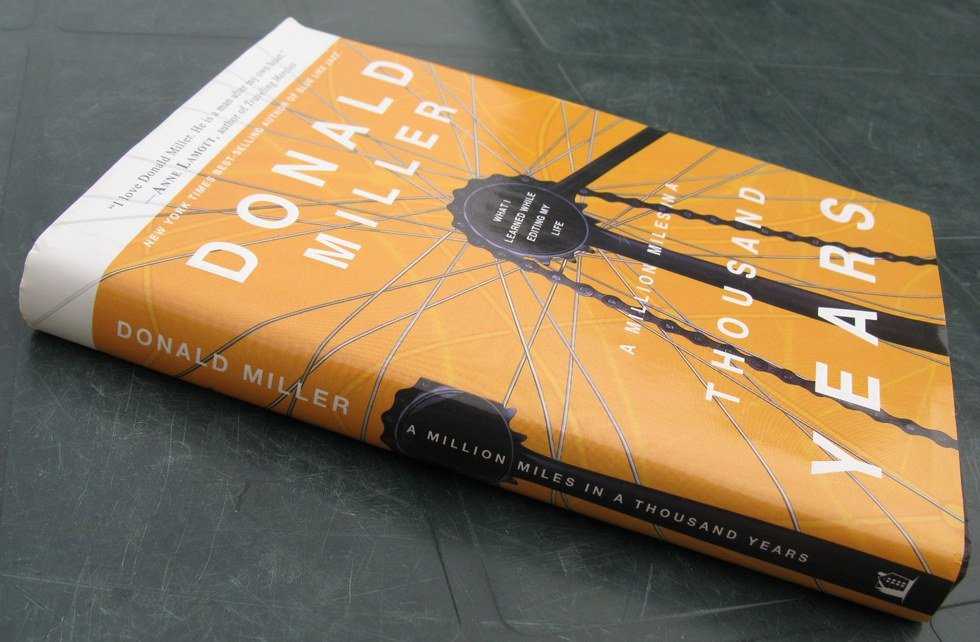
Every now and then I find those rare stories that completely change the way I look at my own. Harry Potter, Little Women, To Kill a Mockingbird, and a few others have affected me and different areas of my life, but A Million Miles In a Thousand Years: How I Learned to Live a Better Story is in a category all its own.
I first encountered this book a couple of years before I started college, and the story follows author Donald Miller's journey as he is presented with the chance of a lifetime: to edit his own life into a great story and reinvent himself along the way, taking days spent on the couch and replacing them with adventure and meaning.
The book starts off with a thought-provoking quote in the Author's Note:
"If you watched a movie about a guy who wanted a Volvo and worked for years to get it, you wouldn't cry at the end when he drove off the lot, testing the windshield wipers. You wouldn't tell your friends you saw a beautiful movie or go home and put a record on and think about the story you'd seen. The truth is, you wouldn't remember that movie a week later, except you'd feel robbed and want your money back. Nobody cries at the end of a movie about a guy who wants a Volvo. But we spend years actually living those stories, and expect our lives to be meaningful. The truth is, if what we choose to do with our lives won't make a story meaningful, it won't make a life meaningful either."
Never before had I thought about the stories I'd been choosing for my life and whether or not they really mattered in the long run, and this quote has followed me around ever since.
Over the course of the book, Miller discovers the fundamental elements crucial to every great story:
1. The main character has to want something.
2. That character must encounter and engage in conflict.
3. Every story has a supporting cast that influences the main character.
4. Stories must resolve.
While these may seem simple, every story ever told is made up of these elements. I realized how monumental this book was as I watched Miller apply these to his own life, creating a narrative that left his previous life in the pages of history.
He stopped watching TV and signed up for a biking trip that stretched from Santa Monica, California to the shores of the Delaware, riding over 3,000 miles with a group of strangers that turned into friends. He hiked the Andes into the city of Machu Picchu. He started a mentoring program for kids growing up without fathers. He fell in love and fell out of it, and invested in deep and meaningful relationships.
I thought about my own life and the lives of others around me, curious as to when we stopped choosing stories for ourselves that mattered.
If we chose to think of our lives as living and breathing stories, I think we would live a lot differently. We'd be more intentional about setting goals and look at conflict as a part of the story rather than a hindrance, and we'd choose supporting characters that helped us succeed along the way.
Miller mentions towards the end of the book that the best storytellers speak something into nothing. They don't sit around waiting on great stories to happen to them and complain about boredom; instead, they choose to walk in and change their own reality, inviting others into something that matters.
After finishing "A Million Miles In a Thousand Years," I thought that I had to start making all of these crazy plans to live a meaningful life. However, college-age students are bound to expectations (you know, grades and responsibility and things like that) and we can't all run off to the Andes and hike Machu Picchu.
Despite the limitations, we can still choose to make conscious decisions to live a with purpose. I chose to be intentional about the story I'm telling by choosing a university in an unfamiliar city, and next semester I'll travel to a foreign country to study abroad for the semester. While I might not have as many opportunities to do exciting things as a professional author might, I can take advantage of the opportunities I am presented with.
The next time you set a goal similar to earning money for a Volvo, think about the story you want to tell with your life. If you can buy a new car, fantastic (you have more money than I do), but be careful about making not-so-exciting goals the focus of your life. Create the person you want to be, and tell whatever story you want.