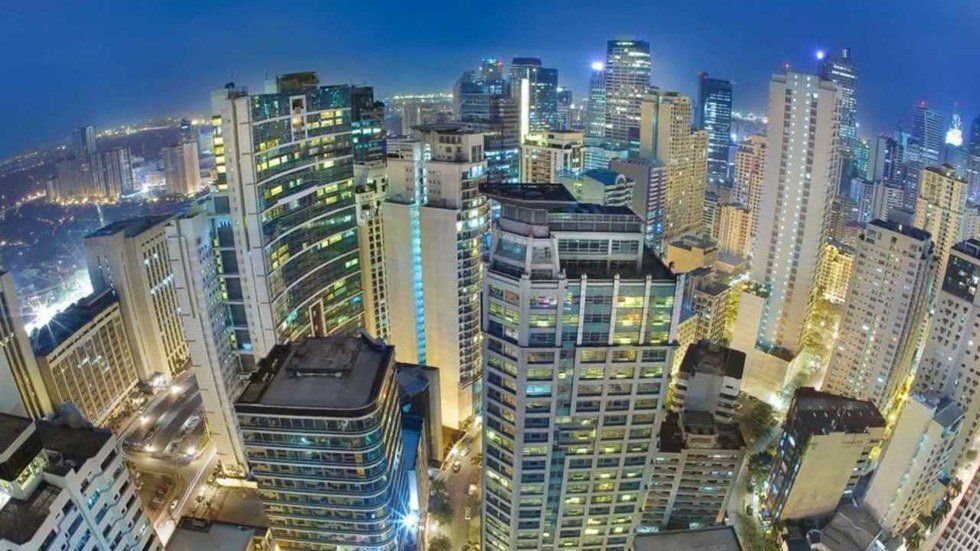
I have spent the past month in the Philippines, a nation which some call a "third world country." From experience, I guarantee you that there will be some people that think I lived in a rundown house with no running water. The classification "third world country" has such a negative connotation for many "first world" citizens that it taints their understanding of other cultures. The fact that I live in a modern apartment in the middle of a bustling city is unbelievable to some people. Even though the "three world model" has been formally replaced, there are still many who use it dangerously. Although unintentional, the mere utterance of "third world country" naturally and forcibly sets a country below others. I believe that individuals should be more conscious and use other more appropriate terms.
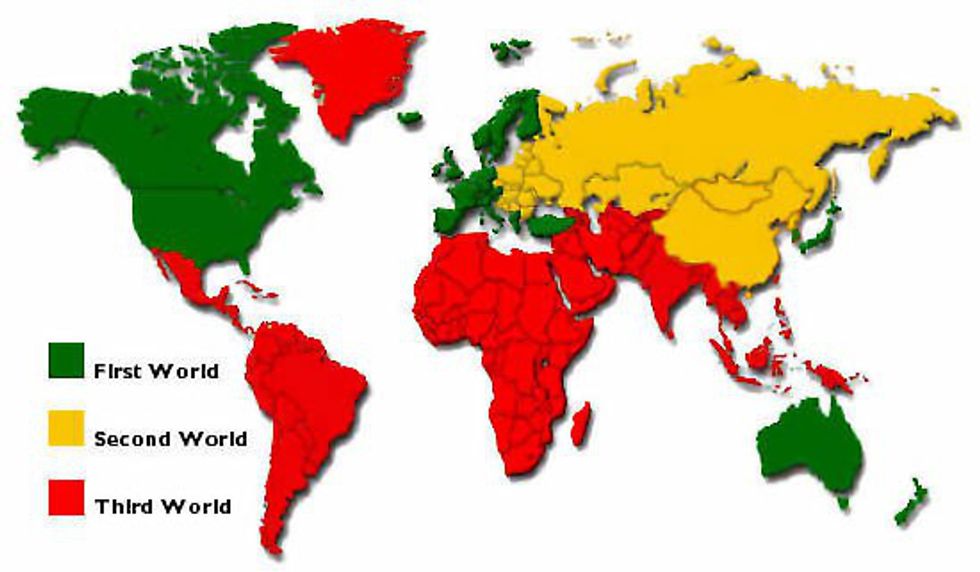
I previously mentioned the "three world model," but what is it? At a time, it was a way to geopolitical categorize nations of the world during the cold war. First world countries referred to industrial countries centered on capitalism while second world referred to communist and socialist industrial countries. Lastly, (you guessed it) third world pertained to every other country. By "every other country," I mean those that didn't specifically align with the two big powers, the capitalist-centered United States and communist Russia. During this time, the "three world model" worked but it is now the 21st century.
Today the term "third world country" is said to be used to describe a developing country that has economic and political problems. However, from what I've observed, it is used as more of a ranking. Even if we don't mean to do so, "first," "second," and "third" naturally set what it's describing into a position relative to others.
Now let me ask you:
What makes Brazil, the eighth largest economy, a "third place" country?
What makes Mexico, which has the fourth largest hydro-electric plant, a benchwarmer on the team of nations?
What sets Nigeria, the birthplace of the Afrobeat hip-hop movement, behind first and second-place countries that have artists like Nicki Minaj singing about their sexual escapades?
Don't get me wrong. These countries are considered to be developing on the basis of low income per capita, small gross domestic product, shortened life expectancy, and other economic and political metrics. However, what the "third world" description misses to include is the richness in culture that many first world countries have loss maybe because of their push for economic wealth and political stability.
Living in the Philippines has opened my eyes to what matters most in life. It's not about the money, the job, the prestige, or anything else that has become ambitions of other young people such as me. It's about... family, personal growth, and finding joy in the little things.
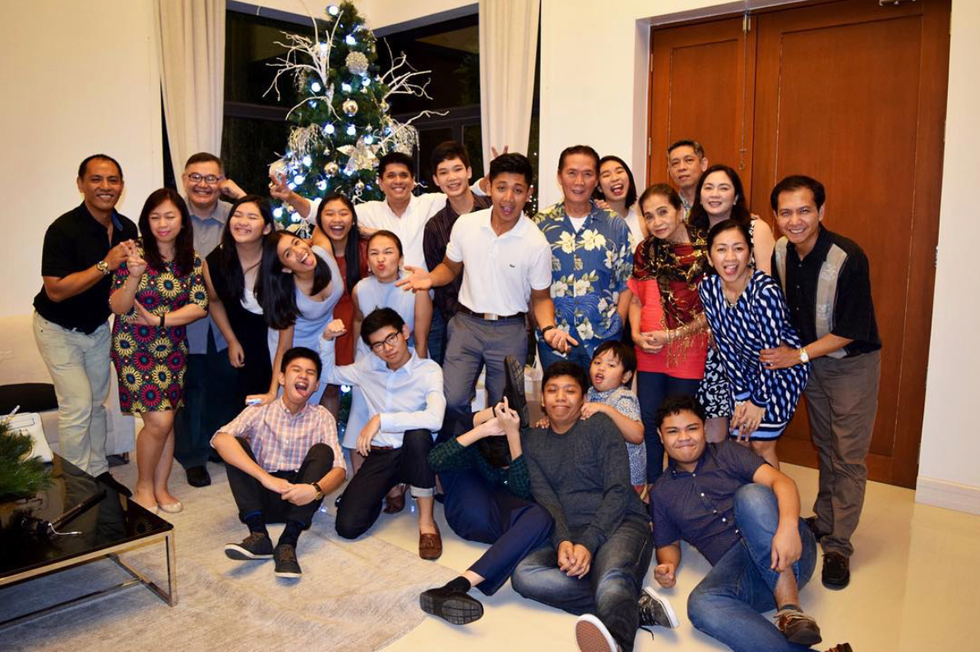
I have met so many people here that represent a loving culture that I think at times surpasses that of the United States, a "first world country." If we were to categorize based on cultural richness and hospitality, where do you think some current "first world countries" would stand?
At the end of all this, what is the correct term to describe these types of countries? I've hinted at it throughout this article. For me, "developing country" is a more appropriate and dignifying word. "Developing country" implies that there are problems but they can be and will be overcome. "Developing country" describes potential instead of limitations. After all, these countries are just in their early stages and no one can expect a toddler to solve a calculus problem. I'm even sure Bryce Johnson didn't start out playing basketball as a 6'9" power forward.
Finally, I'm glad to have spent my time here in the Philippines and in 10 years I look forward to seeing it rise above all expectations and reach its full, "developed" potential.