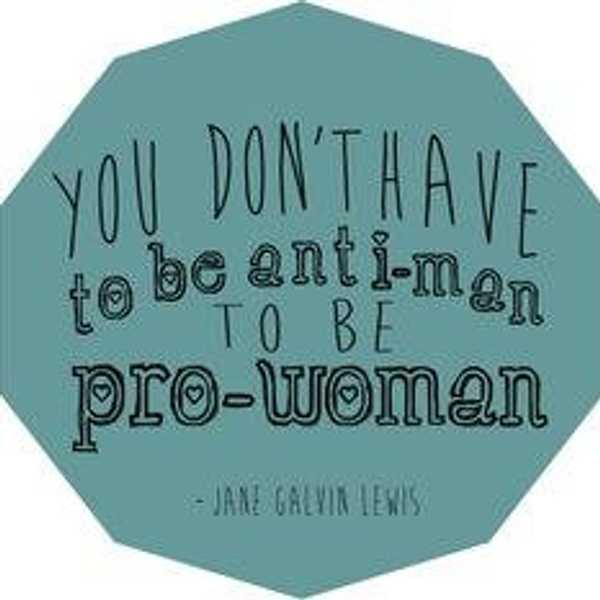
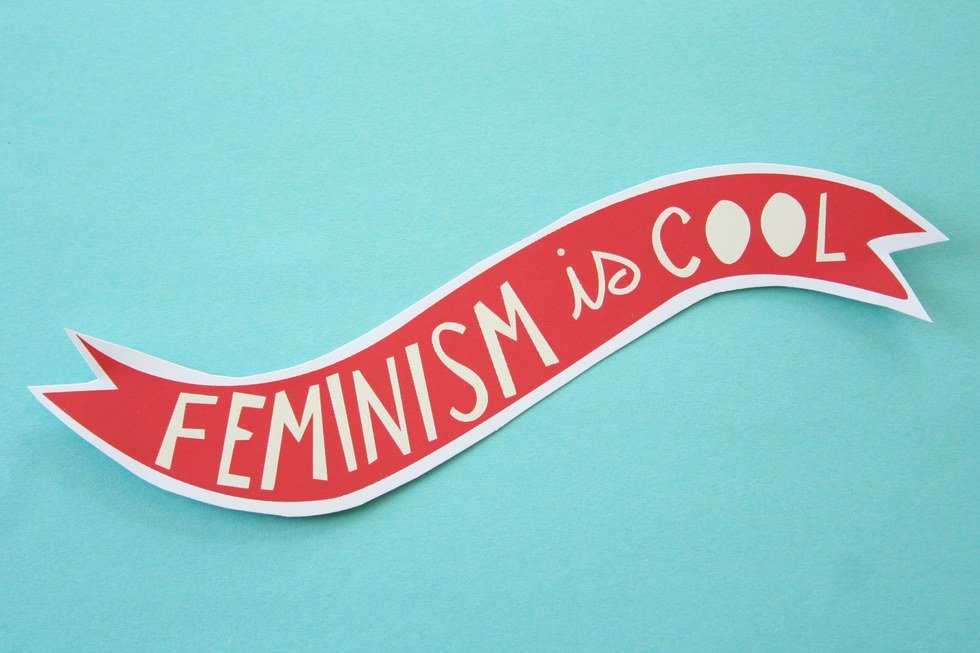
So, I’m a feminist. A scary, evil feminist who advocates for equality of gender and its intersections. Whoa! Were you expecting me to say I hate men? Or did you smell a pile of bras burning on my front lawn? Don’t worry, none of that is true.
I definitely won’t be providing any new ideas here, but I feel this is something important to discuss. Gather ‘round, kids, because it’s time we really dig into the nitty-gritty of what feminism truly is in the 21st century. There are a billion and one articles resting in every corner of the Internet about “Why I’m a feminist!” or “Feminism is a joke! LOL I’m an egalitarian!” But even though we’re riding the wake of a new age of this centuries-old term, others don’t seem to understand.
Many people in my life have tried to discredit my feminist title because of their fear of feminism’s connotation. “Feminist? Don’t you mean egalitarian? Or humanist?” No, I mean feminist. “OK, but like, feminism excludes men! It says it in the title!” That doesn’t mean I’m contradicting myself.
The only appropriate way to understand feminism is to understand its history. “Feminism” is derived from the French word “feminisme” which is “femme,” meaning “woman,” and “-isme,” which relates to political advocacy. Even many of our early feminists rejected the term because they felt it didn’t appropriately cover all of the issues social class and middle-class women wished to tackle. From the 1880s, and even into today, the term is heavily associated with radicalism. The women’s suffrage movement labeled feminism in the early 20th century as a one-time political movement, despite being heavily rooted in politics supported by women. Throughout the Second Wave in the 1960s to the 1980s, the word “humanist” was suggested. Feminism’s history has proven that the movement has never been popular, but the ideologies always have.
Estelle Freedman, author of "No Turning Back: The History of Feminism and the Future of Women," defines feminism as “a belief that women and men are inherently of equal worth. Because most societies privilege men as a group, social movements are necessary to achieve equality between women and men, with the understanding that gender always intersects with other social hierarchies.” Too many people reject this idea, especially women, because patriarchy has psychologically forced women to assimilate into accepting that they will never be as valued as men.
That’s even present in my own feminist revolution; prior to my self-identification, I would always place more value in men without realizing it, simply because that’s how I thought I was supposed to think. Holding the door open for boys led my friends to speculate if it was romantically-inclined rather than out of my own generosity. Or, even simply offering my help to move desks in high school but being rejected and told, “No, I’d rather have a boy.”
In "No Turning Back," Freedman cites a survey in 2000 where 85 percent of those polled agreed women should have equal rights. However, that number is contrasted by the 29 percent identifying as a feminist. Why are we so afraid of that term? As stated previously, most of the movement, although inherently feminist, disassociated itself with its own identity.
In the 21st century, feminism has redefined itself while still holding onto its roots. Although still mocked through social media parody accounts and regurgitated out of the mouths of men whose minds are still stuck in 1950, feminism shapes much of how we think today. Feminists in this era have adopted intersectionality, a phrase coined by feminist writer Kimberle Crenshaw in the 1990s. Much of what we perceive as mainstream feminism is not everything feminism encompasses. It’s not a “one-size-fits-all” movement, despite our societal push to lump all women into one subcategory of human. I even still have privilege in my own movement as a white woman. Feminism matters because it allows everyone access to the same opportunities without taking away preexisting privileges.
None of these ideas are new, but I often have to reiterate why I’ve adopted this view, as I feel it's necessary that everyone understands why feminism exists. I may associate with numerous other feminists, but I also equally associate with doubters, misogynists, and self-proclaimed “egalitarians” who refuse to admit they’re actually feminists. We're in support of women’s rights but refuse to acknowledge the movement that got us to that point. I credit this movement and community of people (yes, people. Not just cishet white women) for helping me not only accept my own privilege, but also speak out against all oppressed groups’ disenfranchisement. So stop silencing me, or holistically labeling feminists as angry. I am proud to be a feminist.