As an college student, one of the first questions I'm asked when I meet someone new is "what's your major?" which is a pretty normal thing to wonder.
However, the reactions I get to my response are far from normal. It's not typically polite to tell someone they're "screwed", ask them if they have a backup plan, or raise your eyebrows and gasp, but I've witnessed all of these, and more. I'm constantly questioned if that's really the profession I want to try and make money in and if I'm even going to be able to support myself after college.
All this because my answer to this simple question is that I'm an art major. More specifically an art therapy major.
Countless individuals believe that entering into the art field professionally can't possibly result in success. They think that art is a frivolous idea to pursue and is an easy way out for students who don't want to "try" in college. Society pushes the belief that the only majors that will result in positive results following graduation are ones associated with science, math or money. Careers in the medical, engineering and business fields are held in high regard, and students with these majors are met with endless support from outside sources.
What happened to the idea that students can pursue what they're interested in through their college education?
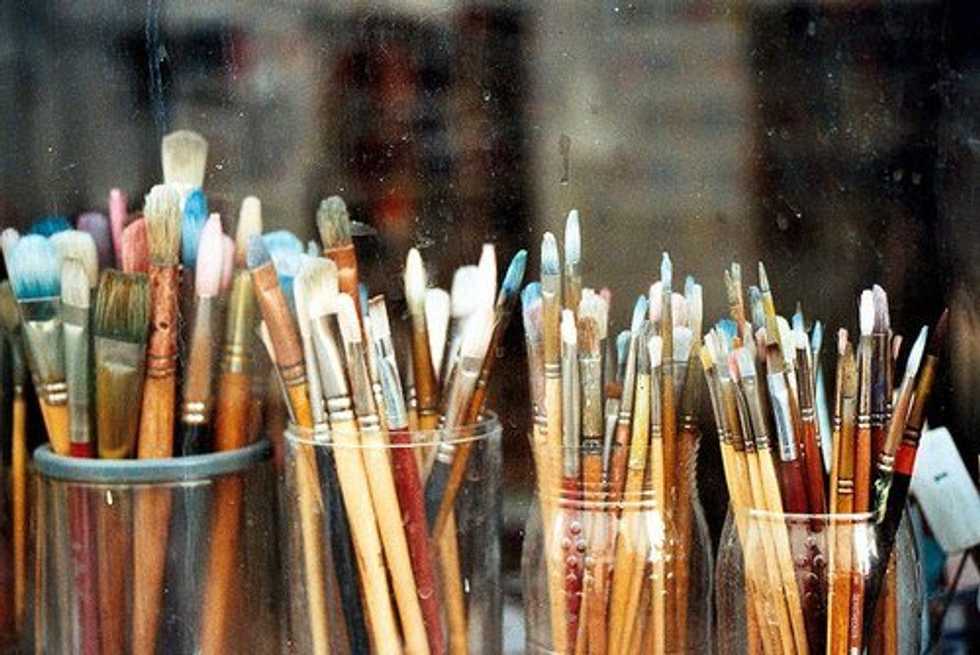
I chose to undertake art therapy as a career for this very reason. It combined both of the items that I'm most passionate about; working to help others and the ability to work with art materials in my profession. The classes that further my knowledge in my major aren't easy or "blow off" classes, although yes, some of them are art classes. Instead, they cut three hour chunks from my day, twice a week, so that adequate time can be spent in the studio. In addition, most of them require 10 plus hours of work outside of class, per week, to complete projects, practice techniques, and work with difficult or new types of art making. These classes aren't built into our schedule for fun; they're giving us a hands on and in-depth way to learn more about each of the materials and processes we can use with clients once we enter the field. Other required classes include numerous psychology and specific art therapy courses that provide us with the material we need to assist and benefit the individuals we will work with.
My major also doesn't restrict where, how, or who I can work with. As an art therapist, I can practice with a variety of populations, or focus on a specific group. I also have the opportunity to travel to numerous locations, such as hospitals, schools, or even homes, to work with people. Finally, I have the ability to work with a variety of art materials, all of which evoke responses from clients and provide beneficial and positive results. These three things not only gives me experiences with different environments, people, and materials, but ensure that my career will always be in demand wherever I go.
Additionally, I can still have a career as an artist through my major. My classes provide me not only with knowledge concerning work with different art materials and styles, but also on how to enter a professional setting. I'm required to make a portfolio, enter my pieces in gallery shows, learn how to hang and properly display artwork, and how to get my name out in the art world. My passion for art isn't hindered by becoming an art therapist; in contrast it is encouraged and desired.
Lastly, and in my opinion, most importantly, I love what I do. When my work load is difficult or I'm stressed out, that's exactly what drives me to continue to push through and strive for excellence. Despite their time commitment, I look forwards to my art, art therapy, and psychology classes every day because I'm interested in the learning opportunities they offer me. I can't wait to see where I end up in the future, and I'm excited for all the possibilities I have in front of me.
So the next time you give question someone's future success when they say they're an art major, take a moment to think about what goes on behind the scenes. You never know how much work they're putting in, the skills they're learning, or the numerous opportunities they have in front of them. Personally, I'd rather face adversity for pursuing a career that I love but is deemed "doomed" than settle for one just because it's socially accepted and promoted.