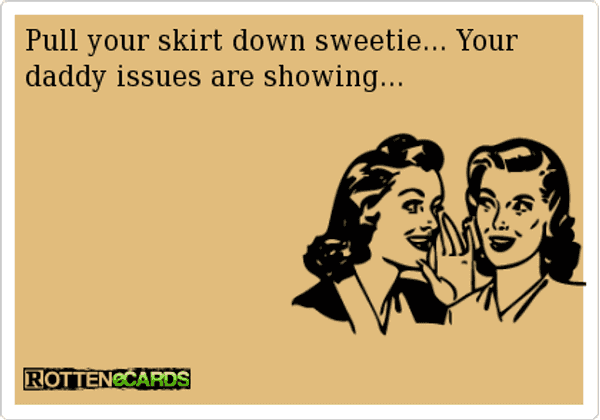


When a girl craves male attention, acts out in a relationship, or appears to be overly emotional in any way, the first explanation people often give for her behavior is, “Oh, she has daddy issues.”
But let’s take a minute and think about what this is really saying. Urban Dictionary’s top definition states:
“Whenever a female has a f*cked up relationship with her father, or absence of a father figure during her childhood, it tends to spill into any adult relationship they embark on, usually to the chagrin of any poor male in their life.”
The next one?
“When a female has a… father that walked out on her, causing her to… (be a slut).”
A few definitions down from that?
“People who have deadbeat or emotionally absent fathers so they turn to sexual affection. They are more often girls and they most likely have a rape fantasy.”
WHOA.
To start, not every female who acts in “socially unacceptable” ways around the opposite sex has a poor relationship with her father. In fact, I have known just as many girls who have good relationships with their dads who act in these ways as girls who have little to no relationship with theirs. By saying that the girls without paternal problems have “Daddy Issues,” it tells the girls who do face these problems that this is how society views them: they’re messed up, they’re sluts, they’re damaged. The assumption that a “rape fantasy” is a side effect of these issues is extremely disturbing. This MUST beg the question: who is this stigma helping? Not the girls who are acting out seemingly without reason, and CERTAINLY not those who actually struggle in their relationship with their fathers.
And anyway, how is it fair to give the name of these girls’ pain to the person who has already taken so much away from them? The girls who have been abandoned, neglected, abused, or put down by the first man who was supposed to love them unconditionally. Their perception of their self-worth has probably been diminished. Their confidence has been lowered. And you want to label them, mark them in a category that bears the title of the one person they DON’T want to think about?
Instead —
What if we, as a society, took it upon ourselves to teach these young women that the hurt they have felt is actually their strength. They are actually better off than their peers who haven’t had similarly difficult life experiences. They, like most young adults, probably aren’t entirely sure what they want in a life partner, want for their family. However, what they do know for sure is they DON’T want what they have already experienced. This wisdom is invaluable to an emerging adult.
Let’s let those who overtly explore sexuality, make potentially questionable relationship decisions, and display more emotions than society is comfortable with reside in their own category. Let’s leave familial relationships out of it, and instead, promote the image that young women growing up without a father have strength and courage, not problems and the stigma of wrongdoing and promiscuity.