
Vietnamese food has become more popular in American culture lately. Even my college dining hall takes a crack at "Banh Mi" and "Thit bo Nuong" (not quite authentic, but I appreciate the effort). However, the most notorious Vietnamese dish is Phở. And in case you were always confused on how to pronounce it, it's like saying "fuh" with a question mark at the end. Hey, those accents are tricky but will distinguish the amateur from the expert Vietnamese food enthusiast.
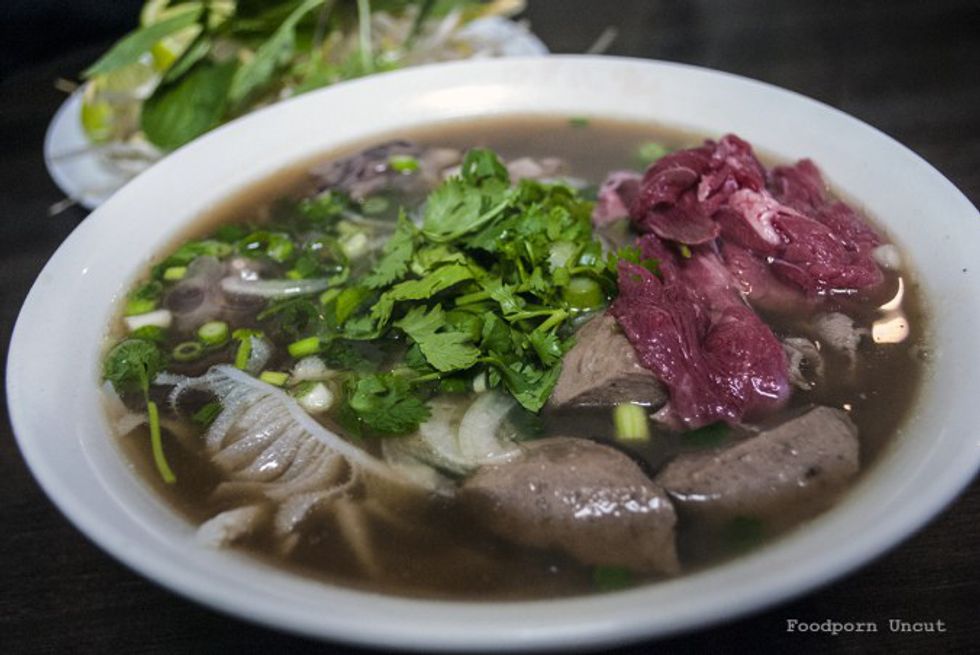
So above you see that famous bowl of pho. Underneath the heaping pile of various cuts of beef, meatball and tripe, is white rice noodle. The broth is translucent and hearty. It's a notorious cure for hangovers, or I guess any sort of cold for that matter. My local Pho restaurant uses thinly sliced eye of round, brisket, and rough flank for the beef. The raw beef you see in the picture is actually cooked by the hot broth, but remains perfectly tender since it is not overcooked. Phở is beautiful. Phở is glorious. And I'm here to tell you....
Stop ordering the Phở.
And no, it's not because I have any sort of vendetta against it. I love Phở. But I love all Vietnamese food, and I feel that it is my duty to tell you to broaden your horizons and try some other dishes now and then. So, my friend, here are six other Vietnamese food options for you. These are just dishes that I've had this past week. There are countless of others. But I must warn you, I will not sugar coat any of the ingredients. It may seem odd at first, but I promise if you decide to get a little adventurous and try it, you will not regret it.
1. Hủ Tiếu (Nam Vang)
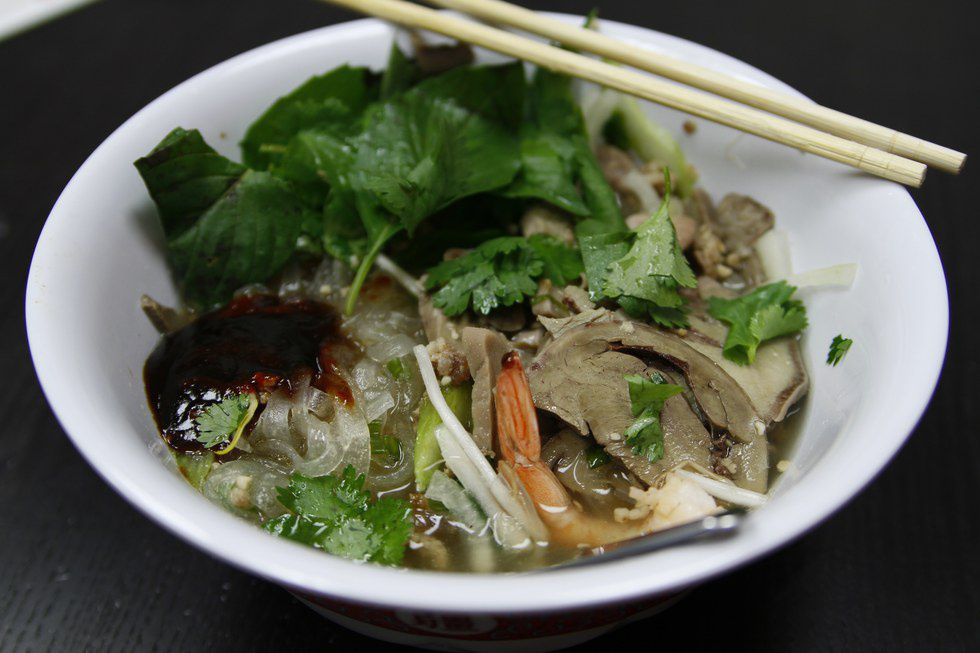
Hủ Tiếu is a clear noodle soup with a lighter pork broth as opposed to your typical beef broth in Phở. The noodle is chewier, and sometimes this dish also comes with egg noodles. This variation of Hủ Tiếu is "Nam Vang" which refers to the southern part of Vietnam with strong Khmer roots. I'll be honest, this particular version of Hủ Tiếu is probably a more adventurous route than I recommend for people who are just starting to step out of their comfort zone. It includes shrimp, ground pork, and pork internals. Too out there for you? Opt for the "Tom Ga" version which is shrimp and chicken.
Oh, I almost forgot about the language lesson. Hủ Tiếu is pronounced [hoo tew (like pew)]
2. Bún bò Huế
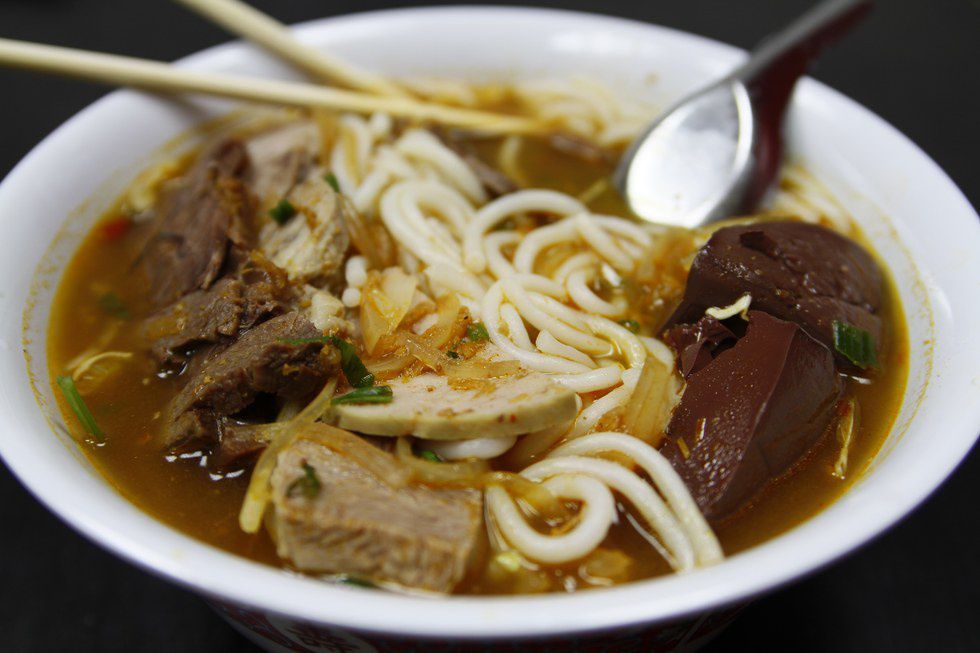
I'm drooling while writing this article. Bún bò Huế [Boon-bah-way] is a classic hearty and slightly spicy beef broth with vermicelli noodles. It's topped with beef shank, chopped pork, thin slices of pork roll, and.. *ahem*... boiled pork blood. That's that dark gelatin looking thing on the right side of the bowl. Now before you get all upset, remember that different cultures are accustomed to eating different things. You can always request that they exclude certain ingredients from you bowl. But honestly, it's my favorite part. Oh, and for the more experienced ethnic eaters, don't forget the shrimp paste. I don't even recommend it for beginners; it's stinky.
3. Bún riêu
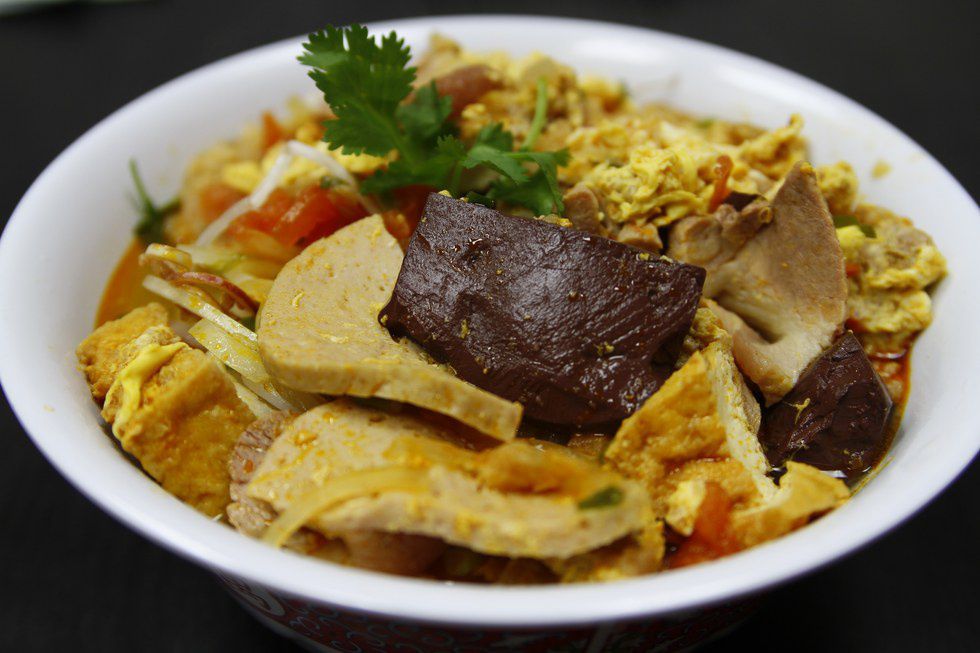
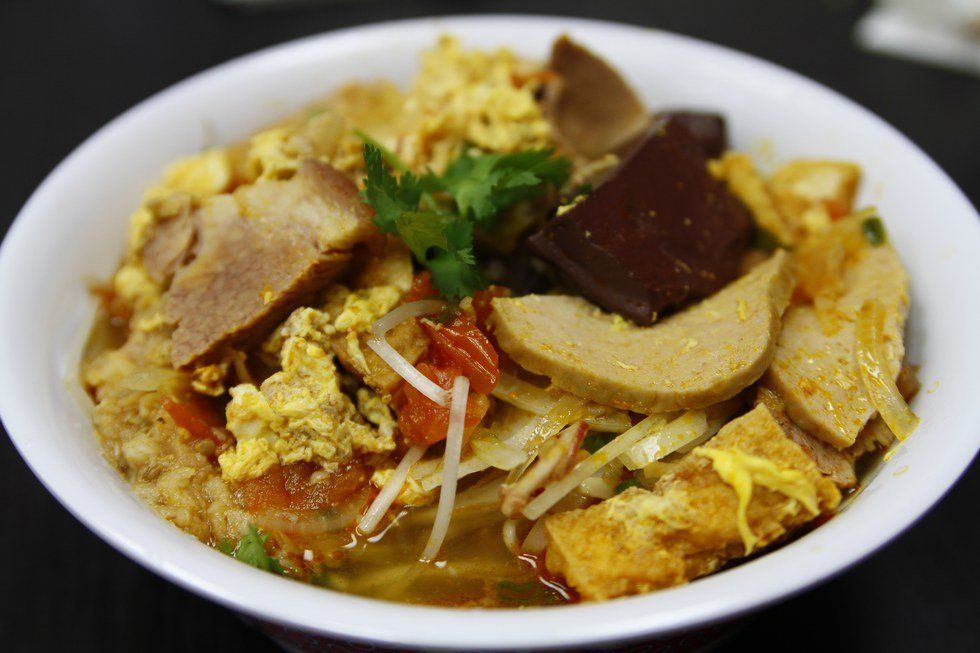
So those who like Bún bò Huế also tend to like Bún Riêu [boon-reo]. The broth has a tomato base, but it still fairly clear and similar to the other broths. It's usually topped with tomatoes, minced crab, ground pork, fried tofu, and you guess it, boiled pork blood. This dish has a very seafood/crab taste to it. It also is typically has eggs mixed in with the minced crab.
4. Duck Noodle Soup
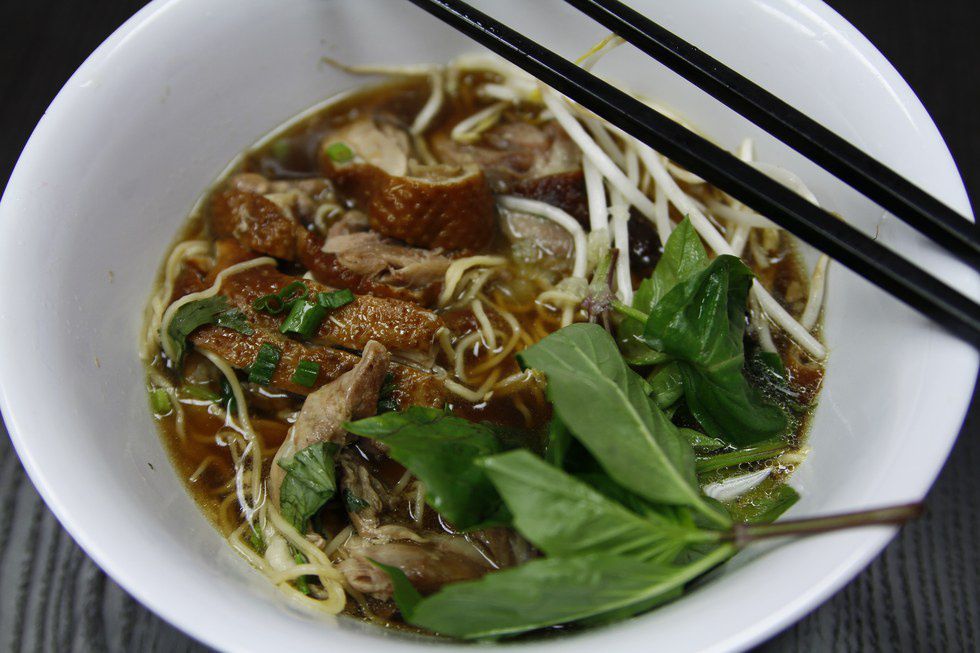
Okay, I'll be honest. This is Thai, not Vietnamese. But I've been to several Vietnamese restaurants that offer a duck noodle soup, and I recommend that you order if you get the chance. Duck has such a decadent and roasted flavor. I could sip on this broth every day if I had the chance. As you can see, this particular soup came with egg noodles, which are my favorite. Here's a quick Vietnamese lesson; Duck is Vịt. I suppose proper pronunciation is just as it's read, (VIT). However, my family speaks with a southern dialect so I prefer to pronounce it (YIT).
5. Bánh Bèo
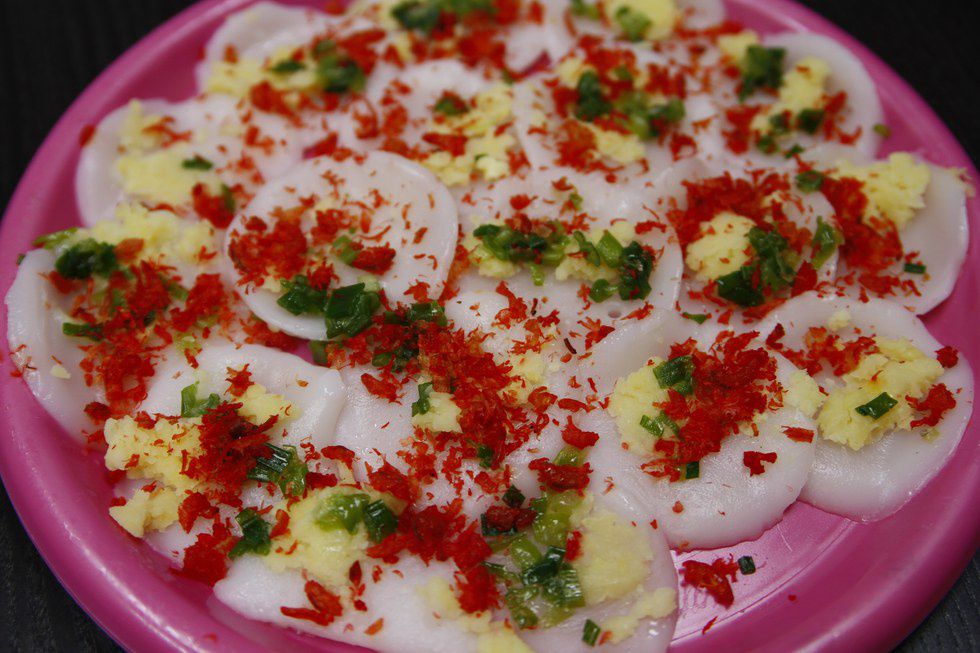
Pronounced [bun-bayoh], these steamed rice cakes are not actually typically offered in Vietnamese restaurants. However, you can almost always find them already made and packaged, ready to eat at Vietnamese grocery markets. Each round disk is approximately the size of the circle you'd make when doing the "ok" sign with your thumb and pointer finger. It's topped with shrimp, mung bean paste, shallots, and eaten with sweetened fish sauce (If you're not familiar, fish sauce is a Vietnamese cuisine staple and some incorporated in half the dishes). Bánh bèo are so addicting, and fun to eat due to the bite-sized portions.
6. Bánh mì Thịt Nướng & Bánh mì Thịt Nguội
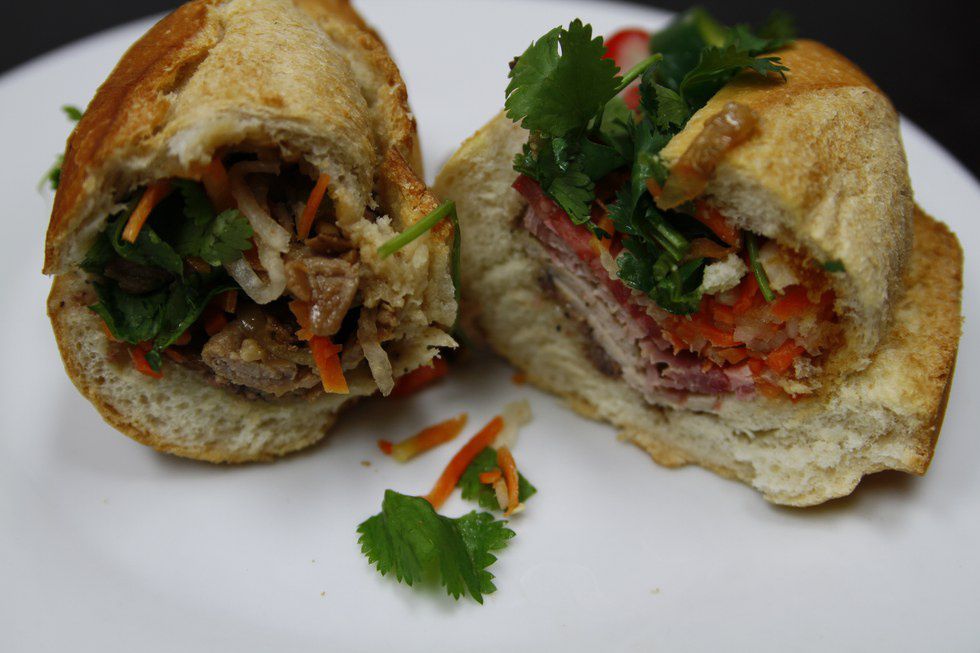
OK, so my last Vietnamese dish is actually probably just as, if not more popular than Pho. It's been adapted to so many different variations. Two of my favorite restaurants actually have a Bánh mì sandwich, and a banh mi pizza. You must ask, if it's so popular, why even add it to this article?
Because, my friends, I'd like to set it straight what a Banh Mi sandwich is. Plenty of my closest friends have heard my constant complaints about how any carb topped with pork and pickled veggie is considered a Banh Mi nowadays. No. So here is what a true Banh Mi looks like.
French baguette must be used. Rather than the skinny baguette, this baguette is thicker and more football shaped. Honestly, the type of bread is the least of my concern. It's what's inside that counts.
There are two variations that I know of, one is a marinated grilled steak (I guess I'd compare it to a teriyaki taste) called Thịt Nướng. This is on the left, and pronounce [tit newung] The Banh Mi Thịt Nguội is on the right, and translates to cold meats. This one is filled with cured pork, pork fat, pork roll, and my favorite, liver paste. The pronunciation you ask? Sorry, that one is too complicated to even attempt.
Now each should be abundantly filled with cilantro and pickled carrots and daikon. I can never bring myself to trust a restaurant that refers to it as "kim chi", which is typically understood to be a Korean side dish of fermented cabbage and other vegetables. Kim chi does not belong on a Banh Mi, but often times the pickled carrots and daikon are just called that. So here's another rant, stop calling any pickled vegetable Kim Chi.
Rant aside, the good news is that Banh Mi is a very filling sandwich, and probably the cheapest option on this list. You can usually find it for around $4-$5, a bit more if you live in a larger city.
Well, I hope this article served some purpose! If you have any questions regarding Vietnamese Dining, or restaurant suggestions, I'd be happy to help. P.S. Instead of pronouncing it [Bahn] do yourself a favor and pronounce it [Bun]. You sound dramatically less like a struggling American when you make that change.
Now if you'll excuse me, I'm going to grab something to eat.