April 20th, or better known as 420, is a day of special significance for those that enjoy marijuana in any form. This 420, in what seems like an ill-conceived attempt to honor the Bob Marley, the social media app snap chat created a filter that allowed their users to morph their faces into that of reggae icon. Many were understandably offended over what appeared to be a form of digital blackface, but this also begs the question as to how Bob Marley became the face of cannabis culture.
It is not uncommon to walk into a college dorm adorned with posters of Bob Marley smoking marijuana. Instead of Bob Marley, the revolutionary; We see Bob Marley as the mascot for America's love of marijuana. Of course, it's understandable to associate Bob Marley with marijuana, after all, his music frequently references it. However, many do not understand that smoking marijuana was a sacrament of Bob Marley's religion of Rastafari. Ever since Bob Marley gained popularity in North America and Europe during the early 70s, he attracted a mostly middle-class, college-aged, white following. My theory as to why this happens is due to the sound of reggae itself, the soothing style of reggae fits into the comfortable lifestyle of the white middle-class.
The privilege of the first world allows reggae to be listened to at a superficial value. The listener can cherry-pick the messages of peace, love, and smoking marijuana but ignore the messages of black liberation, Rastafari, and anti-colonialism. These three key elements in Bob Marley's music is expressed in some of his most popular songs such as "Buffalo Soldier," "Redemption Song," and "Zimbabwe."
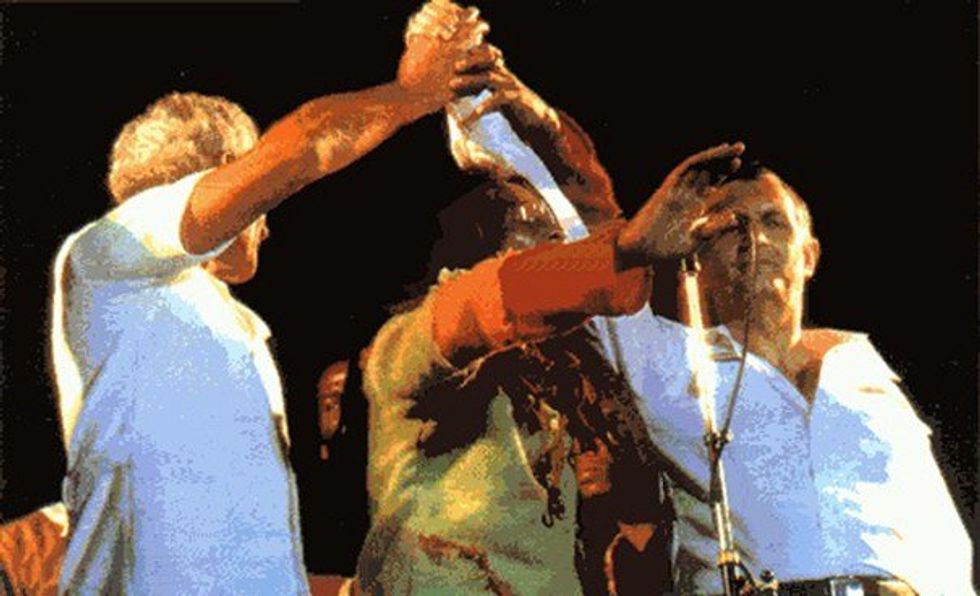
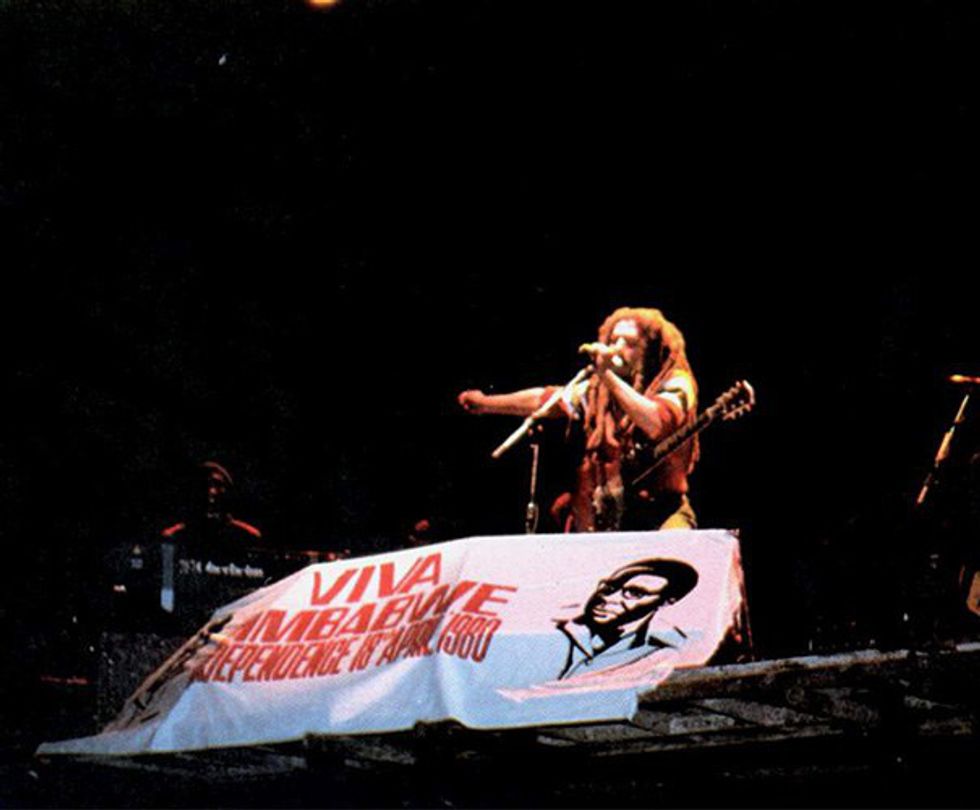
Marley did a lot to bring peace to Jamaica during it's worst period of political violence. In an effort to calm the warring parties, Marley performed at the One Love Peace Concert, which was attended by President Michael Manley (leader of then-ruling People's National Party) and his political rival Edward Seaga (leader of the opposing Jamaica Labour Party). While performing his song Jammin, Marley called Manly and Seaga onto the stage and joined their hands in a moment of solidarity between the two political rivals. Bob Marley also voiced his support for black liberation by performing a concert in the apartheid state of Rhodesia. The concert was to be a celebration of the fall of white-minority government and creation of new state of Zimbabwe. Bob Marley was so committed to black liberation that when police began to fire tear gas into the crowd and his band fled backstage, Bob continued to perform. When his band members returned, Bob commented: "Now I know who the true revolutionary is".
This isn't a condemnation of Bob Marley fans, this is a call to stop appropriating his image and reducing it to a mere fixture of some college student's wall. If Bob Marley's legacy is to be respected, he should be remembered as a revolutionary and his dedication towards liberation, not as a stoner icon.