


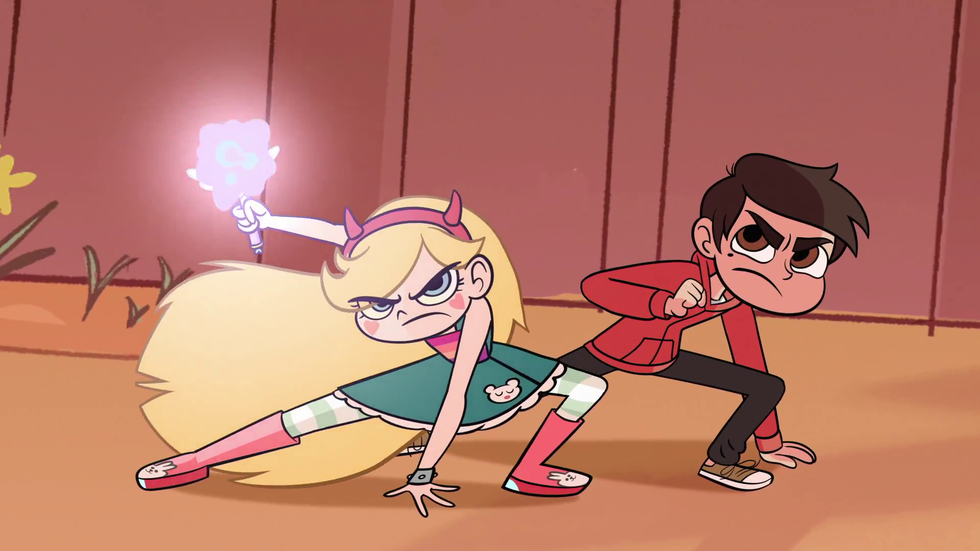
It’s a show all about puppies, rainbows, and unicorns. But, there’s a twist: the puppies shoot laser beams, the rainbows catch on fire, and the unicorns are warriors. At first glance, Star vs. The Forces of Evil seems like another point in favor of the traditional, overused gender stereotypes in the media. But when you sit down and spend an entire weekend watching all the episodes released so far like I did, you start to realize just how deep its story is, and how it manages to break out of those traditional roles, while still managing to tell the stories that writers often struggle to tell without them.
If you haven’t kept up with the world of animation, cartoons have gone through a faux-Enlightenment period over the past five years or so. Writers have started developing deeper characters, presenting more profound morals, and telling overarching plots that thread through entire seasons. This revolution started with Cartoon Network and shows like Adventure Time and Regular Show, cartoons aimed at a young teenage demographic but could still appeal to CN’s normal viewership. Disney helped further this with its hit series Gravity Falls and has now added Star to the growing roster of impressive cartoons with deeper stories.
While most people look to the Disney princesses for examples of rigid gender stereotyping, Disney’s newest eccentric princess brings a new kind of thinking to the roster. If you haven’t watched the show, it’s about a girl named Star Butterfly, a princess of a different world called Mewni. She may look like the typical overly-cute girl, she actually spends her spare time hunting the monsters of Mewni using her family’s prized heirloom: a magic wand. Her parents decide that she needs to prove she is responsible enough to handle the duties of being a queen and the power of the wand, so they ship her off to Earth where she meets Marco Diaz, a middle school student who is known as the safest student in school. Star ends up staying with Marco and his family, and the two friends must defend themselves and their friends from monsters who come to Earth to steal Star’s magic wand. The show, written by Daron Nefcy, is currently in its second season which is about to go on break until 2017.
I knew this show was something different from the very first episode, “Star Comes to Earth.” It’s mostly just exposition and setting up the show’s later plotlines, but it actually has the series’ first fight scene. Star and Marco bump into each other outside a convenience store, and several monsters come through a portal trying to get the wand. Star immediately takes a fighting stance and a brawl breaks out. Marco participates in the fight scene, but instead of the normal “guy defends girl” trope, he’s actually fighting alongside Star.
In one episode alone, Star makes it very clear that it’s going to break several of the gender stereotypes, hence why “fight like a girl” really doesn’t mean the same thing when it comes to this show. This isn’t the only instance when Star shatters the stereotype that we’ve associated with female representation in television, but it’s something that happens in the very first plot.
Star doesn’t just break the female stereotypes, either. The show uses Marco to destroy some of the predispositions that men have to be burly, good fighters, and have to get the girl in the end. Episode 7b, “Sleep Spells,” deals with Marco’s insecurities. He doesn’t like that Star is always the one to rescue him, and he tries to save her. In the end, Marco learns that it’s totally okay to be saved by her because they work together in combat. It teaches viewers that you shouldn’t be embarrassed for relying on someone, and it especially doesn’t matter what gender they are.
However, I fear the show is starting to head into some dangerous territory. A large part of shows like Star is character development and interaction. Season two has been leading up to some relationships forming between characters, and many fans speculate that there will be a rivalry between the show’s two major love interests for Marco. This is a dangerous game, as the writers could easily fall prey to some of the gender stereotypes and normalization that comes with any relationship in television. With all the progress they’ve made, it would be disappointing to see them do a complete 180 and fall right back into those stereotypes.
I do praise the show for its use of character development and plot to create a cartoon that appeals to not only Disney XD’s primary demographic, kids, but also something young adults can sit down and enjoy. Shows like Star vs. The Forces of Evil and even Gravity Falls show us that just because the stereotype has been around for so long, doesn’t mean that things can’t change. I highly recommend you check this show out, especially if you’re an aspiring screenwriter or animation student. It’s a show that has a lot of new ideas to offer in terms of plot development. I look forward to seeing where this show takes its audience next.

















