
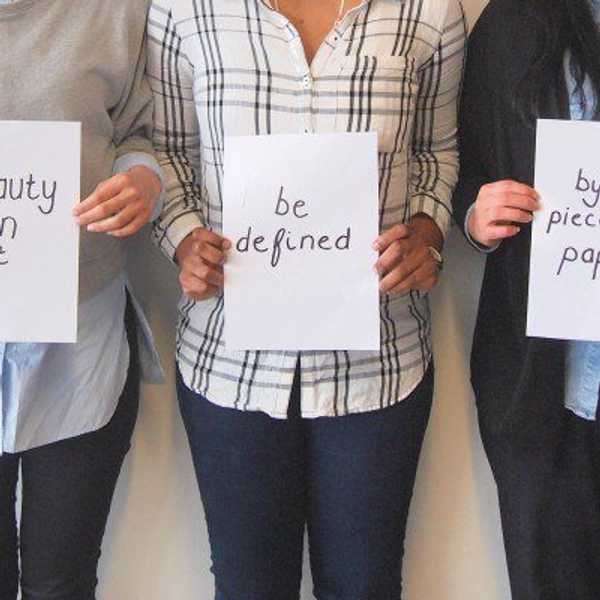
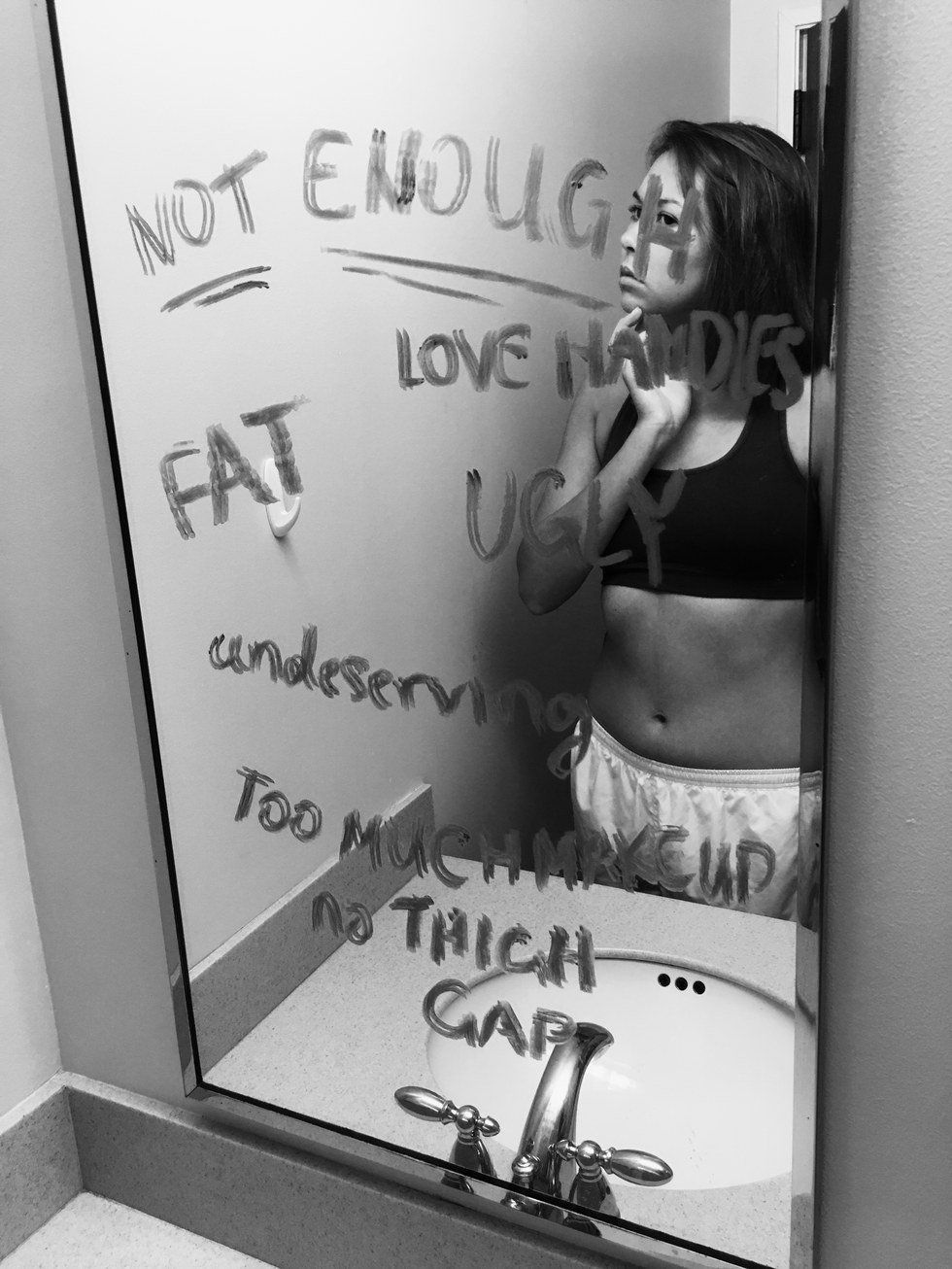
Women are constantly fighting. We have fought for the right to vote. We have fought, and in some cases, are still fighting, for the right to be whatever sexuality we please. We now fight for equality politically, economically, and socially. The battle is a long and strenuous uphill climb. The victories are few and far between, but when they are won, the joy of being treated like an actual human being instills a powerful feeling of worth and belonging. However, society doesn’t take kindly to women feeling powerful. This challenges the way things have always been, and society feels the need to assert its dominance. When women are victorious, society unleashes the one thing that pits women against each other, the thing that turns our unity and community into separation, competition, and unhappiness: the beauty myth.
Through her book The Beauty Myth, Naomi Wolf dives headfirst into describing the plague on womanhood known as “the beauty myth,” and how it has hovered over women since the 18th century. When women fight back against society and its norms, society effortlessly places yet another bump in the road. Throughout generations of the feminist movement, one of those major roadblocks has become known as “the beauty myth.” Wolf believes that “we are in the midst of a violent backlash against feminism that uses images of female beauty as a political weapon against women’s advancement: the beauty myth” (Wolf 10).
I agreed consistently with Wolf’s definition of the beauty myth. On page 10, Wolf claims that even though women may appear strong and powerful on the outside, they have been “infused with notions of beauty[:] a dark vein of self-hatred, physical obsessions, terror of aging, and dread of lost control” (Wolf 10). I agree that women are not immune to the battering ram that is society. We are surrounded by advertising that targets our deepest insecurities and preys on them. I agree that instilled within women, even at a very young age, is a sense of self-hatred, a feeling of “I’ll never be pretty enough, strong enough, tall enough, etc.” That is a very hard lie to stop believing, even when you’ve achieved power and success and recognition. I struggle with how I look every single day. However, the fact that this self-shaming only fuels the beauty myth is one very valid reason to stop believing it.
I also agree with Wolf when she points out the prevalence of the beauty myth throughout generations of women. “Every generation since about 1830 has had to fight its version of the beauty myth” (Wolf 11). On page 14, Wolf says that back before the Industrial Revolution, “the value of women who were not aristocrats or prostitutes lay in their work skills, economic shrewdness, physical strength, and fertility” (Wolf 14). Times were very different then than they are today: physical strength was valued above physical beauty; frugality was valued over material possessions. However, I believe the one thing that has remained the same is a list of standards women should meet in order to: one, meet societal standards and avoid being declared “abnormal,” and two, become more appealing to men. When Wolf pointed this out, I was dumbfounded. If we look all the way back into the 18th and 19th centuries, there were still standards that objectified women, placing a value on them. The fact that this struggle truly does date back so far into the past is slightly disheartening. Even though this list from the 18th century isn’t very relevant today, we still suffer under the weight of our own lists.
Our beauty myth today is one steeped in name-brand cosmetics, clothing lines, and accessories. This generation of women lives to obtain the things that will instill jealousy in another woman. I am just as guilty of this as the next person. Why do we do this to each other? We compete against each other for the best hair, the best clothing, the best makeup, the best body. Are we not worth more than that? Women have fought, and are still fighting so hard against a society that is rooted in patriarchy. Why do we need to fight our fellow women on trivial matters such as material possessions? Society has unleashed this new version of the beauty myth on us, and it has pit us against each other. The beauty myth does not bring us together; it only serves as a wedge that drives us apart. We might be surrounded by a patriarchal society, but we do not have to succumb to it. Women are stronger together.
Together, we can stand against the beauty myth.