
The great thing about social media is that everyone has an outlet to express themselves and their beliefs on political, social, and religious platforms in an instant.
It allows all of us who are interconnected with each other to get diverse views on many controversial issues, and essentially these differences contribute to how we shape our views as well.
The not so great thing about sharing views on social media is that people get incredibly heated over issues involving these platforms and feel that they HAVE to get their opinions out on the web. This includes the hateful and irrational opinions rooted in fake news articles and total fallacy.
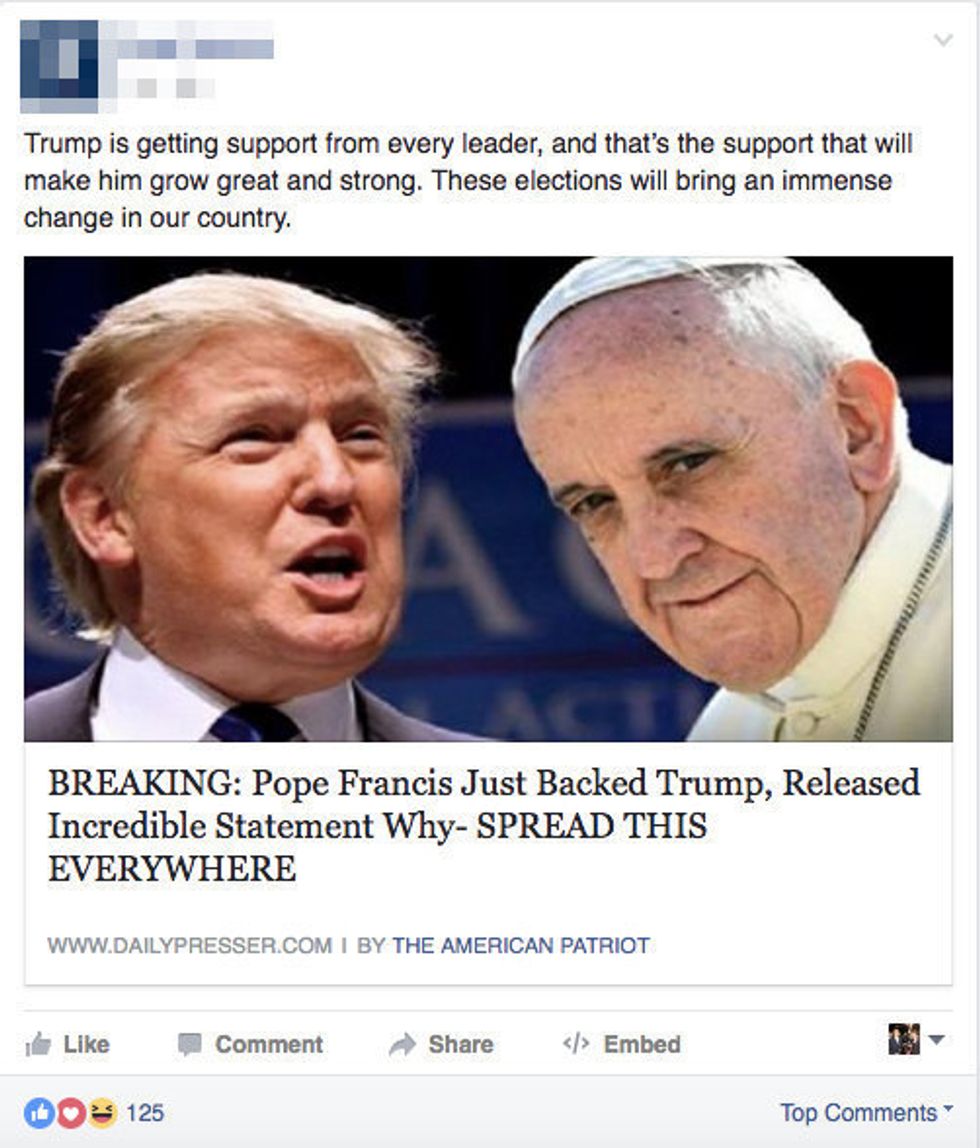
And even further down this steep slope of social media blasting, issues lie in the fact that far too many people share what I refer to as hot-button propaganda, which is insufferably annoying and irresponsible for a plethora of reasons.
When I say hot-button, I’m referring to hot-button issues like opinions on abortion, LGBT rights, and well, Trump vs. Clinton. And by propaganda I mean the material people put out that is not credible, but hits on these controversial issues in order to elicit a negative response.
Therefore, hot-button propaganda is essentially a brutal form of fake news meant to make people incredibly angry over things that are either heavily twisted or flat out lies.
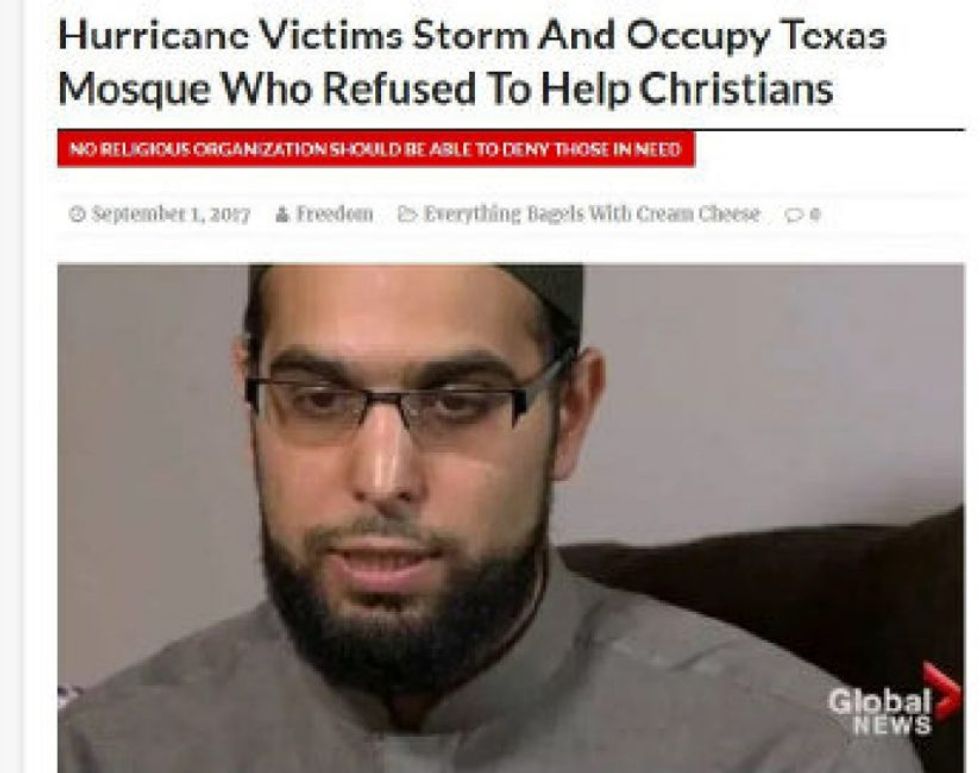
As someone who studies Communications, let me put this piece of accurate information out. The super radical articles you see that make you angry, are increasingly being linked to organizations considered terrorists to the United States.
What this means is that by sharing the fake news and the extremist articles, you are literally contributing to helping organizations who want to separate us achieve their goal. The worst part is that people do this just so they can get their radical and uninformed opinions out there on Facebook.
Here is a link explaining the severity of these terrorist organizations.
I’ll give you an example:
Currently many Americans are upset that NLF players are choosing to kneel during the National Anthem to speak out against racial violence and injustices. As a country who is struggling with communication from the seat of the president all the way down to our individual social media profiles, we’ve become incredibly divided as a whole. We all have differing opinions on what is considered respectful or not, how to represent patriotism, and what needs to be done to get people talking about racial inequality.
Because of this divide, we have become easy targets for the people who want to see one of the most powerful nations in the world shatter to pieces from the inside out.
And I mean, easy.
Almost immediately articles began circulating that are extreme on either one side or the other.
I’ve seen poorly written articles from random websites covered in SPAM that reference no refutable sources, make note of no writer or journalist, and are in every definition of the phrase hot-button propaganda being used to fuel angry social media rants.
I’ve seen them everywhere. Because they’re being shared everywhere with little to no thought about relevancy or reputability.
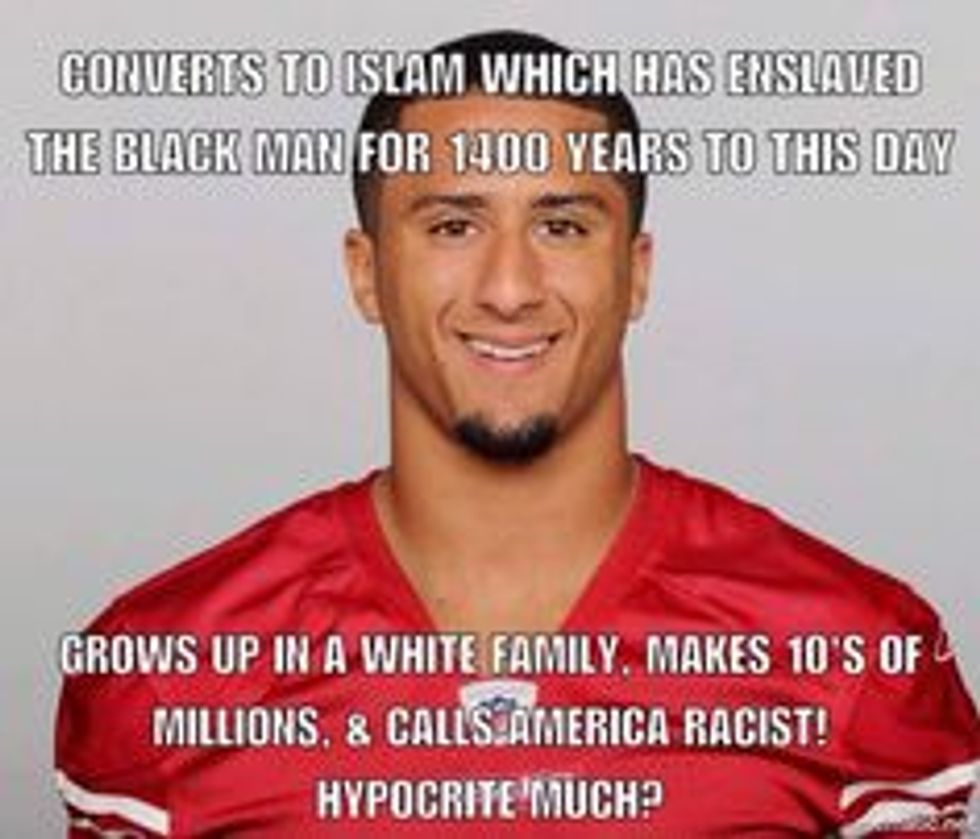
Example: No, a Braves football player did not say that all white people who do not support kneeling need to be hung.
The cover picture was of Colin Kaepernick who we all should know does not play for the Braves. Because that’s a baseball team. Yet I’ve seen the article shared countless times by people on my social media pages and have read multiple racist comments keyboard screaming about something that is a blatant lie.
This is just one of many examples as to how easily terroristic individuals, groups, and organizations prey on our division and ignorance to fuel their goal of increasing tension.
There are people both here and abroad who create this propaganda just to generate heat, and this propaganda is shared so recklessly, and in the most hateful and irresponsible fashions, just so we can vent online and share opinions that quite frankly need to be kept private.
I completely understand why we want our opinions heard and how social media creates this allusion that somehow, even the smallest and most illogical thoughts, are worth sharing for the world to see.
It has become a form of false gratification to get a like or a “preaccchhhh” comment under something you share or post that exposes your opinion (especially a far left or right opinion).
The problem is that this routine is irresponsible. Not only does participation in sharing this hot-button propaganda and fake news set a horrid example for others to follow, but helps those who want to keep us divided achieve their goal by making you angry over false information.
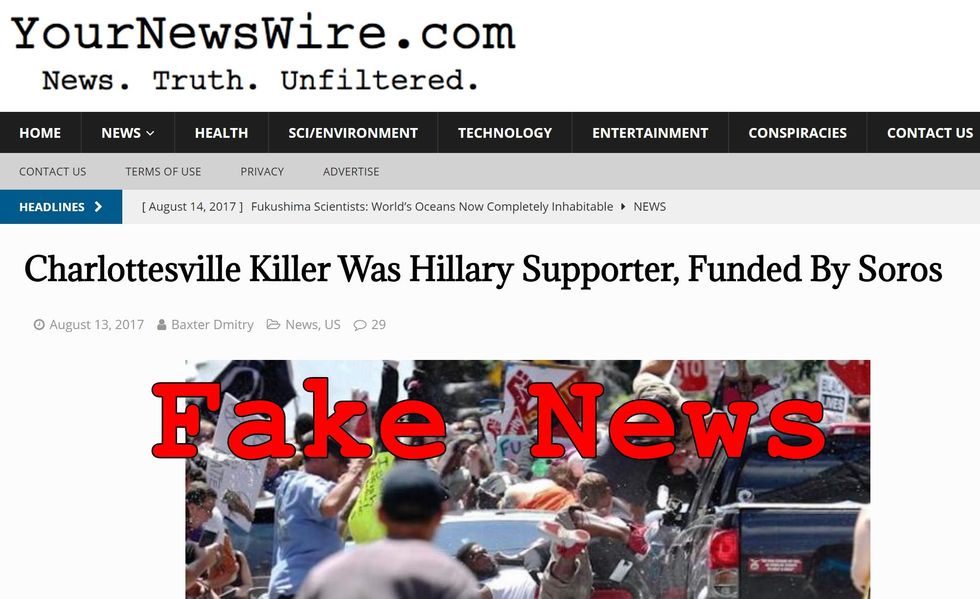
Social media has become a great platform for sharing and expressing views; however, it is also the easiest way to keep divide among us all.
By sharing these terroristic fake news articles, we are literally putting a “W” in the hands of the people who want to see us crumble to pieces. Every time we share hot-button propaganda, we are recycling the miscommunication that has turned us into hate's easiest toy and social media's greatest laughing stock.
Have passionate feelings, embrace diverse opinions, and communicate… just not with fake news and propaganda. Hopefully, we can start working to spread the hard truth worth discussing and not the hateful lies that make us look like trapped fools.
As someone who studies Communications, here are a few simple tips to help determine which articles are more credible online:
1. It references a specific person who wrote the article.
If not, there is no one to hold liable for spreading false information and this usually means the entire article itself is not worth anyone’s time. If there is an identified writer that you can find no information on, the article is not legit.
2. It comes from a reputable source.
The Washington Post, MSNBC, NPR, or other well-known resources that end in “.org” or ".edu" are typically valid. Academic articles are also perfectly fine to share. Even super biased resources like CNN and Fox News are occasionally acceptable because they have established credibility, but again, being blatantly biased leads to skewed information.
What isn’t acceptable: conservativesagainstxleft.com, 123politiconews.com, etc.
3. It has to be well written and make sense.
Little to no grammar or spelling mistakes are indicative of someone who is a writing professional. Also, the content of the article needs to be concise and streamlined enough to make logical sense. If there are multiple sentence fragments and the content goes from one extreme to the next, it’s trash.
4. Credible resources reference other credible resources.
You’ll never read an article by The Huffington Post that does not make reference to another credible source or irrefutable fact. Also, eye-witness testimony is not a credible source and should not be counted as one.
5. Look for facts, not opinions.
If an article is just someone blowing steam with no valid information to go along with it, you’re reading an extremist's work and this is never worth sharing. The message will be biased and the information will be twisted if it's even accurate in the slightest. Watch for excessively aggressive or angry tones, hateful statements, and a call to action like "share if you agree" or "who's with me?".