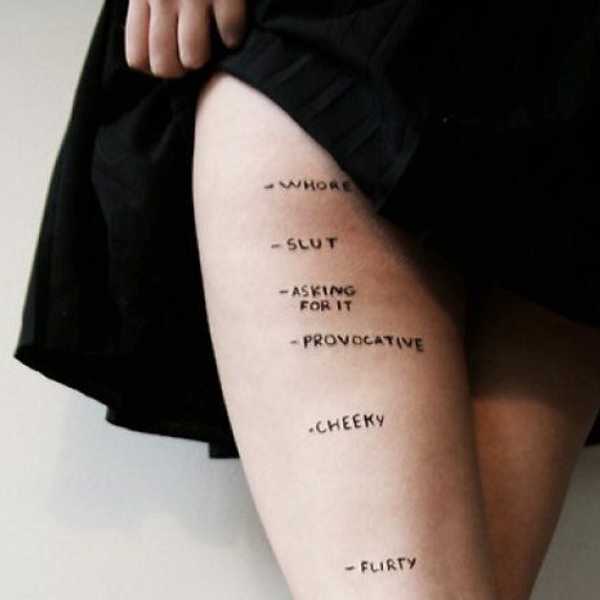


“Yeah, they totally do...” continued another friend on my Birthright trip this summer.
We were picking crops on a kibbutz in Israel when I overheard this disturbing statement. I was finding it hard to believe my friends were capable of making such a degrading and ignorant statement. Instead of going with my gut reaction (screaming at them about how offensive the assertion was), I kept my thoughts to myself until I was calm enough to have an actual discussion.
In the meantime, I walked over to my friend Jordan and asked for his take on the conversation, to which he responded, “Well, I think people always confuse wanting to look good with wanting to be objectified.” As he's also involved in Greek life, and a college student in general, I asked him to elaborate. He went on to explain that he thinks people often mistake “wanting to be objectified” for something much different. "You see," he continued, "People want to be recognized and appreciated for different things. Like some people want to be appreciated for their athleticism, their scholarship, or their politics. I think people get confused between wanting to be objectified and wanting to be valued for your looks. Why should wanting to be valued for how you look be [frowned] upon?"
I’d never thought about objectification through that lens before. For me, a part of it was valuing someone just for his or her looks. I hadn't considered that might be something someone would want. When it was framed like that, though, it made sense. I, for instance, like being valued for my fashion sense, among other things. I understand style isn't important to everyone, but I appreciate when people can respect that it's important to me. Under the surface, though, it isn't solely about the clothes I wear. It’s about my self-expression. If I want people to respect me and my values, I need to do the same for others.
Who decided one quality was valuable while another wasn't? When it comes to wanting to be valued for looks, there is obviously more to that than meets the eye. Confidence is definitely an element of your physical appearance, and looking good is about how you feel in addition to how you look.
In the end, it all comes down to respect. To be upfront about what you want to be valued for shows that you have confidence and know your self-worth. You can make clear to others what you value without putting their values down. No one “loves” or wants to be objectified, people just might not have the same values as you. And if you respect theirs and they respect yours, then maybe I would never have to get that angry on a kibbutz in Israel again.