

John Cale, one of the co-founders of the the band, "Velvet Underground" was quoted saying this, "There's much more sophistication in hip hop than in regular rock 'n' roll." Now this is a hefty statement and likely to make many classic rock fans furious. How can hip hop, a seemingly superficial and simple genre be talked about like that? I believe that hip hop is one music genre that absolutely needs context when discussing it's validity.
The start of hip hop began around 1973 when there was a trend for Jamaican dance hall music, where the DJ would talk over the record that was playing. This was referred to as "toasting" and this wasn't the actual birth of hip hop, but it's important, because it is what would lead into it. DJ Kool Herc, a DJ from Jamaica, studied how his audience would react to different parts of the music he was playing. His thesis was that people would dance the most at the drum breaks. This is the part of the song where the singer and the instruments would be completely removed and you only have the drum. DJ Kool Herc looped these "breaks" so that they would play over and over again. This was the backdrop that set of the beat for a rapper. But this simple little trick would create more than a genre, it would create a culture.
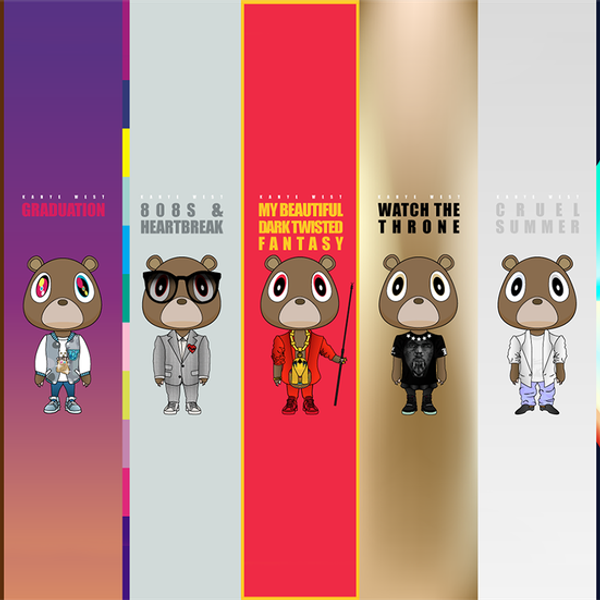
There was a lot of different aspects that surrounded hip hop, such as graffiti and break dancing. This culture began to take different forms in different parts of the country. At first it began as party music, purely celebratory. It slowly morphed it something completely different though. It became music that was socially and politically aware. One of the most notable early examples is Public Enemy's "It Takes a Nation of Millions to Hold Us Back", an album which focused on black empowerment. This and many other albums paved the way to make hip hop, the politically conscious folk music, for the urban black community. The actual overall sound for hip hop has never been set in stone. Part of the reason of this being, is that it is a genre built on sampling. Sampling is the act of using phrases from other pieces of music and remixing it. This is where hip hop was able to show its true maturity. The hip hop group, "Tribe Called Quest" relied heavily on jazz (a genre heavily accepted as high art) samples. RZA the producer for the group, Wu-Tang Clan looked to old underground Kung Fu movies and forgotten soul gems to sample. 9th wonder, a producer for Little Brother drew his production from gospel influenced music, which paved the way for the beginning of Kanye West's career.
All of these producers provided different composition and instrumentation but it could be all found underneath the umbrella of hip hop. The sound is all encompassing and with present day acts like, Clipping, Earl Sweatshirt, and Death Grips. It proves that no one is excluded as long as respect to the history of the genre is included. The other side of a hip hop song is the side of the actual rapping. At face value without any studying all styles may basically appear the same. But just as Tribe Called Quest found the link between hip hop in sound, many MC's have found their vocal delivery linked to jazz too. Kendrick Lamar, Noname, Del the Funky Homosapien are a few examples of people who take the rhythmic emphasis of the words the say seriously. They treat their voice like an instrument and like a jazz solo they organize their phrasing so it leads up to a word they want to emphasize. Some of the richest vocabulary in terms of diversity is found in hip hop. Best shown through Aesop Rock, Cunninlynguists, and MF Doom. These MC's have shown how they refuse to let their ideas be trapped by overused cliche words. Hip hop is also a very crowded culture. Everyone acts like they can do it good and usually the worst stuff goes mainstream. I can see that from an outsiders view it looks like hip hop is uneducated noise. But if we take a deeper look we see a sophisticated art form.
















