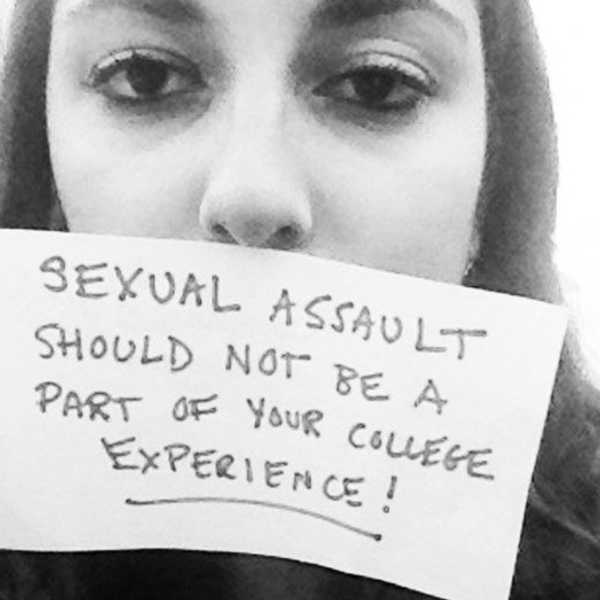

Rape and sexual harassment have recently come to the forefront of talks on my college campus.
Obviously, this is not a unique issue. It is something that our generation seems to face more than any other before us. Either that, or we are willing to talk about it more than those who have gone before us.
Because of recent events, my community has been singled out for issues in Title IX policy and administration regarding cases of rape and sexual harassment. Students on our campus have spoken up about their feelings of helplessness when faced with these situations due to an insufficiency of action.
I stand with these brave students when I say I agree that there is a problem with the way schools deal with these issues. But I do not think that the problem lies solely with school policy and administration.
Rape culture permeates college campuses and even high schools nationwide. It is not specific to any school or community. The vastness of the problem suggests that the real issue is societal.
Most people agree that college is a place for learning and finding yourself. But most would also agree that it is a time to have a good time, and to experiment. That consensus is reinforced almost daily in popular media and social norms. Binge drinking, hook-up culture, fraternity parties. It’s everywhere, and nobody can deny that.
Consequently, college campuses tend to foster a culture with the potential to become dangerous. Just about anybody can become vulnerable, or culpable, in one night. Many cases of rape and sexual harassment occur between people who know each other, people who are not in control of their actions and who consequently make a mistake that can change their lives forever.
At our age, we are in an environment that pulls us in several different directions. We are taught to value our independence and self-betterment at college, that we shouldn’t waste too much time wrapped up in a relationship. However, we are also taught that rampant sexual promiscuity is not the answer.
As a result, many college students prefer the hook-up culture, stuck between a desire for companionship or sexual experimentation, and a desire to maintain individualism. And, unfortunately, that crossroads has the potential to put them in danger, not only of rape, but also of emotional turmoil.
Please don’t think that when I say this is a societal issue, I am ignoring the lack of sufficient prevention and intervention on the part of college campuses. I think it is important, however, to acknowledge the cultural roots of the problem, and to incorporate it into the discourse. If we can do that, perhaps we will get closer to change.