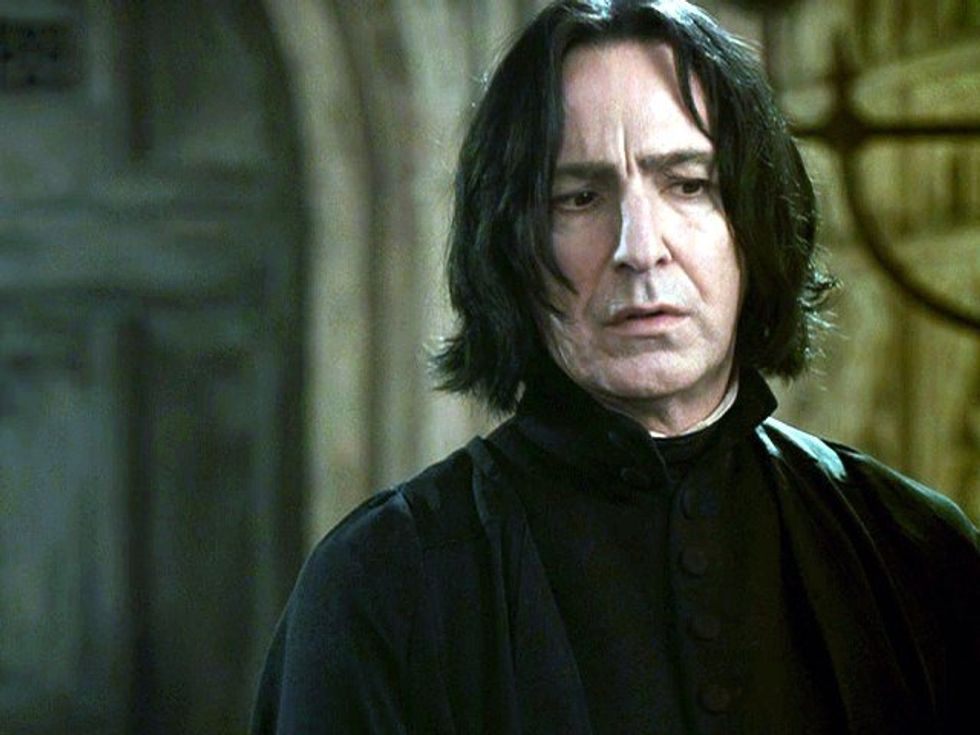
As the daughter of a reading teacher, I have always been pretty adamant that the book is always better than the movie. I normally argue that books delve deeper into character development and allow for more emotional connection, as well as a thicker plot. As much as I love Harry Potter (both the books and the movies) I must concede that, for me, Alan Rickman brought the character Snape to life just as much as J. K. Rowling was able to in her magical series. In fact, the actor Alan Rickman actually became the character Snape, for me, as I was reading the books.
The first moment we met Professor Snape, he was described as "...a teacher with greasy black hair, a hooked nose, and sallow skin," and immediately we loathed him ("The Sorcerer's Stone" 126).
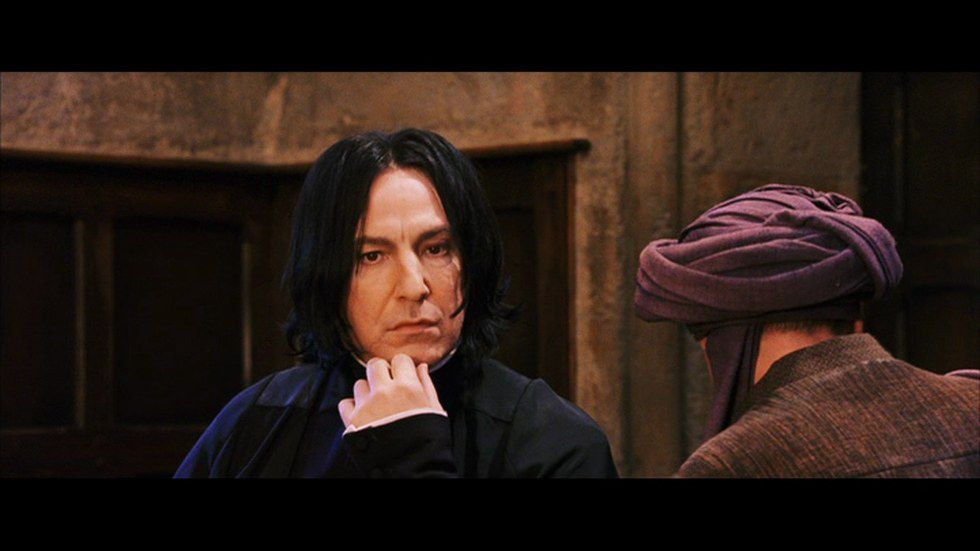
"[Snape] looked past Quirrell's turban and straight into Harry's eyes -- and a sharp, hot pain shot across the scar on Harry's forehead" (126). We assumed that the professor that was after the dark arts position was doing something evil to cause our beloved hero pain. Not only was he causing Harry pain, but it seemed that he hated him before he had even met the lovable character; "Harder to shake off was the feeling Harry had gotten from the teacher's look -- a feeling that he didn't like Harry at all...Harry watched Snape for a while, but Snape didn't look at him again" (126).
What we did not know at the time, as readers, was that when Snape looked at Harry, he saw both someone he had once loved and someone he had once hated.
Harry resembled his father exactly. From his scrawniness to his messy hair, he was told many times that he was a spitting image of his father, except for his eyes. Harry had his mother's eyes.
After finishing the series and going back, we now realize how much emotional turmoil Snape must have been going through when looking at Harry. He saw the face of his childhood enemy, but only to look deeper to see the eyes of his one true love.
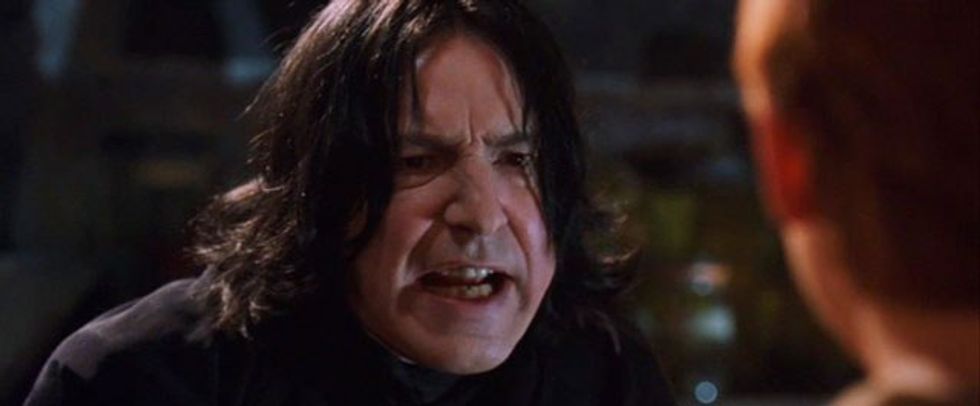
It isn't until the fifth book in the Harry Potter series, "The Order of the Pheonix," that our opinions of Snape begin to change. While giving Harry occlumency lessons, as directed by the Head Master Professor Dumbledore, it seems that Snape is trying to tire Harry out to make it easier for Voldemort to invade his mind. During these lessons, Harry finally fights back and, by blocking Snape's mind invasion, and we get a glimpse into Snape's past.
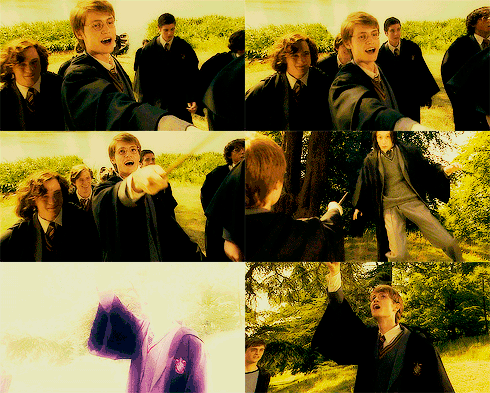
It is revealed that the reason Snape loathes Harry so intensely is because Harry's father James used to bully him while they were at Hogwart's together. It seems that Snape's hatred of James carried on and was now being projected onto Harry. At this point in the series, we start to empathize (just a little) with Snape. We realize why he has hated Harry so much for all of these years. When he looks at Harry, he can't help but see a bully and feel humiliated for the things James did to him. Although unfair, we are beginning to understand why Snape had such an extreme dislike for "the who lived."
Then at the end of the final book, "The Deathly Hallows," our hatred of the character Snape completely stops. He becomes a character that we love, and quite honestly, feel a little guilty that we hated him so much.
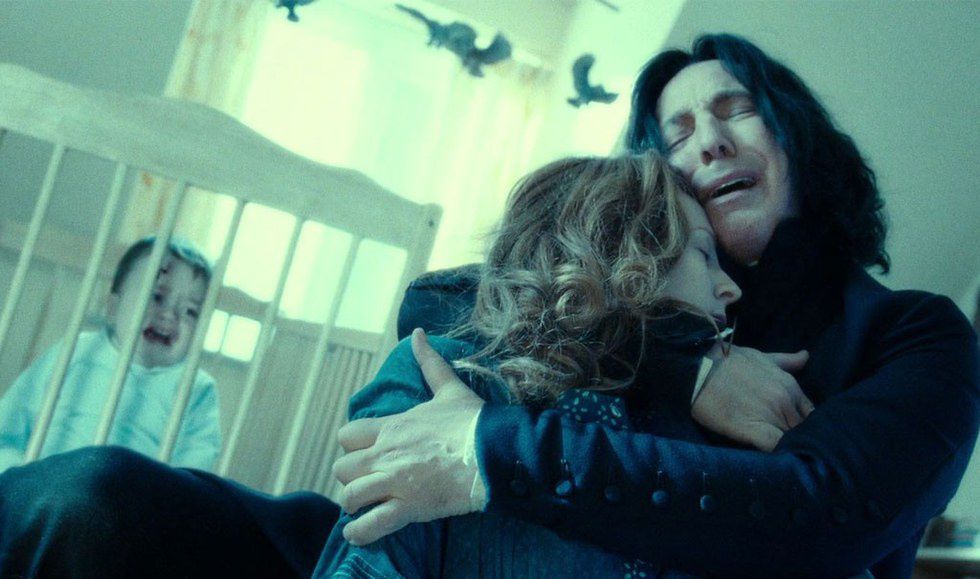
In Snape's dying moment, he gives Harry the gift of the truth. The memories in his tears tell the story of Snape's true feelings toward Harry's mother, and thus Harry: unwavering love and loyalty. Snape's true love was Lily, and although he had an extreme disdain for Harry's father, the love and loyalty won out.
J. K. Rowling created a fantastic love story that demonstrated the true power of the raw emotions love and loyalty. Her carefully strung words crafted a story that captured our attention and pulled at our heart strings. As wonderful as her story was, it was the actor Alan Rickman that, in my opinion, truly brought it to life.
Alan Rickman didn't just play the role of the character Snape; he completely captured his essence. To portray a character riddled with so much emotional turmoil took extreme skill. Rickman was incredibly talented and arguably one of the best actors in the series. As we mourn the death of Alan Rickman, we are mourning more than just an incredible actor. We are also remembering and feeling all of the emotions he evoked in our hearts: anger, hatred, guilt, and most of all, love.
We are mourning the death of an actor that reminded us that as strong of an emotion as hatred can be, above all love is most powerful. Always.