
Another day, another A. I’d bring home my paper or test to show my parents the bright red marks my teacher scribbled informing all I did a “great job.” I’d beam and they’d congratulate me on being “so smart.” Neither I or my parents realized at the time how harmful that phrase is.
It became apparent that being “so smart” would only carry you so far when I entered my senior of high school. My good grades no longer came so easily. Too bad, because I wasn’t prepared to work for them. I hadn’t ever had to work for a grade a day in my life. As far as I was concerned, A’s fell onto my paper like water fell on the ground during a rainstorm. I was confused, frustrated and scared. Was I no longer smart? How was I going to get into college and graduate if I wasn’t smart? How was I going to survive?
The secret here is always hearing about how smart I was led me to have no work ethic. I didn’t need to work when the work was too easy for me for the last 12 years of my life because I was “so smart.” When my grades began dropping, it only led me to become more frustrated and less likely to try.
I became a procrastinator. My nasty little habit that I hid away was my lifesaver disguised as stress and hurried hopes. Rarely is procrastination seen as a positive habit, but for me (and maybe for you, too), it helped and allowed me to define what “work” meant to me.
Through procrastination, I developed productivity hacks that allowed me to get my work done quicker. It sparked creativity and innovative thinking, among other things. I was forced to learn who I was. I figured out which habitats I worked best in, when I needed music and when I needed to turn it off, how I needed to take notes and a hundred other tidbits of information.
This information led me to define “work” as time devoted to productivity and activities enacted for productivity. I decided I didn’t want to spend the same amount of time as someone else doing the same work. I wanted to spend less time working so I had greater time for me. In other words, I decided I needed to increase my efficiency.
Some tips I had to learn the hard way, I’m going to give you stress-free!
1. Find something you carry all the time. Keep the information you need to remember with that.

For me, it’s my phone. It’s always on me and so I know my notes and lists will always be on me, too. If you’re like me and always have your phone on you, download an app that can help you remember things. It’ll remind you of times to do things and you can store notes on your items as well as have it synced across all of your devices. If it doesn’t work for you, try Wunderlist. With all kinds of features, being able to sync it to your calendar is probably the best.
2. Next is to schedule, schedule, SCHEDULE!

If you can plan it and put it on your calendar, do it! If it isn’t on the calendar, should you really be doing it? Not to say you have to plan everything single moment, but be mindful of how you’re spending your time.
3. Practice mindfulness.

Be aware of what’s going on, what you’re thinking, what your goals are, and what you’re doing.
4. Do it. Don't do them.
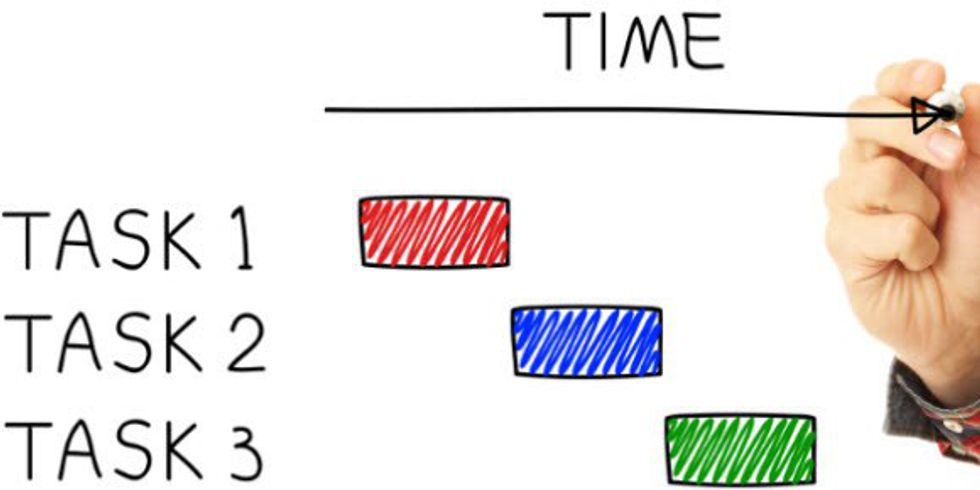
Do one thing at a time. Multitasking will only slow you down. Take the Roosevelt approach (which you can find out more on here) and block a set amount of time out to work and just work. Do it in short increments and build up. Start out at 20 minutes and slowly increase. Learn to work hard, so you can work shorter.
5. Final trick of the book? Know when you’re done and take a break.

If you realize you can no longer focus, or you’re not doing anything, take a break and come back to your work later instead of just wasting time. There are times when you’re very productive and times when the only productivity you have is in your daydreams. Learn when you are most productive and set yourself up to work at those times.
Don’t let anyone compliment you out of work ethic. Be smart and work for it!