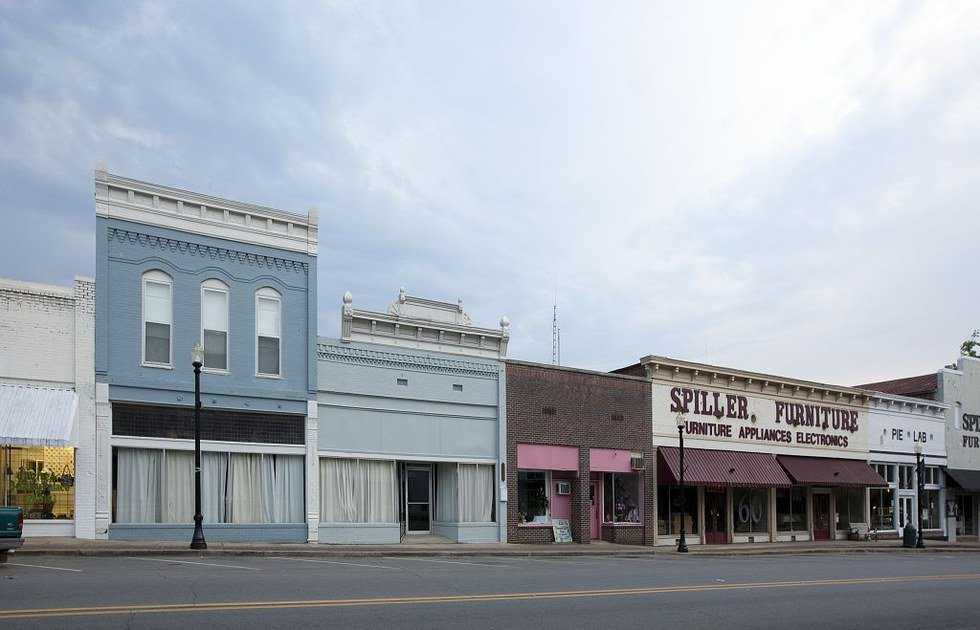
When I left for college, I moved from the outskirts of Atlanta to the small, stubborn and close-knit city of Marion, Alabama. Those who ask about my experiences in Marion often expect that as a student of a Baptist women’s college in such a community, I must find myself chin-deep in the perpetuation of prejudice, discrimination and hurtful stereotypes. It would be a lie to say that I have not often expected the same.
Luckily, though, those expectations are not always met.
Over the last few decades, the Southern small town has taken on a stereotype of its own: in the eyes of many, it is a breeding ground for hatred and close-mindedness, a place where bigotry is protected by familiarity. This image is, in fact, one that threatens many young people as they begin to build their careers. As I myself have begun to consider graduate school, I have often found myself worrying that my years in Marion will be seen as a weakness and that the intolerance so deeply associated with Southern small-town culture will follow me and threaten my chances of acceptance to graduate programs in the North.
I have begun to realize, however, that the closeness of Marion, of Judson College, and of other communities like ours offers one great weapon against ignorance, one I’ve watched build lasting and precious friendships between people who would have remained separated by intolerance in a larger, more “accepting” community: in a world where everyone knows everyone and no one is a stranger, everyone has a chance to be seen and known as an individual.
During my two years in Marion, I have watched the most conservative person I know and the most liberal person I know become close friends simply by coming to see each other as thinking, feeling, caring, hoping and real people. I have had the privilege of being involved in dozens of honest conversations about racism, about sexism, about the role of religion in political thought, about the changing face of evangelism and the adjustment of Christian goals in the larger world, and about the disastrous consequences of lives lived in misunderstanding. These moments are not constant, and they often only include students—people half-forced into cooperation by the confines of a dorm hallway or bonded together by daily conversations around a lunch table—but they do promise that more is possible. To say that Marion, or any small town, is free from prejudice would obviously be wrong, but to say, as many seem to think, that the size of the community prevents change would be no more correct.
If Small Town U.S.A. can overcome the less admirable aspects of its reputation, it can become a powerful tool in the struggle against a division in our culture. Communities like Marion are in a unique position in that struggle in that they can offer a chance for all members to become better understood without the confines of large, faceless groups. Over time, the intimacy of a small community sheds light on the reasons for people’s thoughts, actions and beliefs, and in doing so prevents the illusion of thoughtlessness, and breaks down those barriers that prevent us from seeing people as fully human, those barriers that cause prejudice and its descendants.
Is small-town culture a hub of cultural discovery and understanding? No. But if we refuse to give up, if we demand that the closeness of our communities be used to build doors instead of walls, they could become exactly that, and could begin to dissolve the misunderstandings blocking everyone from view.