

There isn’t a film out there more fun than Stanley Donen and Gene Kelly’s "Singin’ in the Rain," and it’s hard to believe there will ever be one. The film’s level of general innocence and happiness is rare and treasured, and after each viewing, its magic grows stronger and stronger.
Two of the movie’s three principle actors, Gene Kelly and Donald O’Connor, were already well-established names in film, but this was the 19-year-old Debbie Reynolds’ first big break in Hollywood. Keeping up with performers of such caliber couldn’t possibly have been an easy task, and yet she does it with such finesse that there doesn’t seem to be a difference between the three.
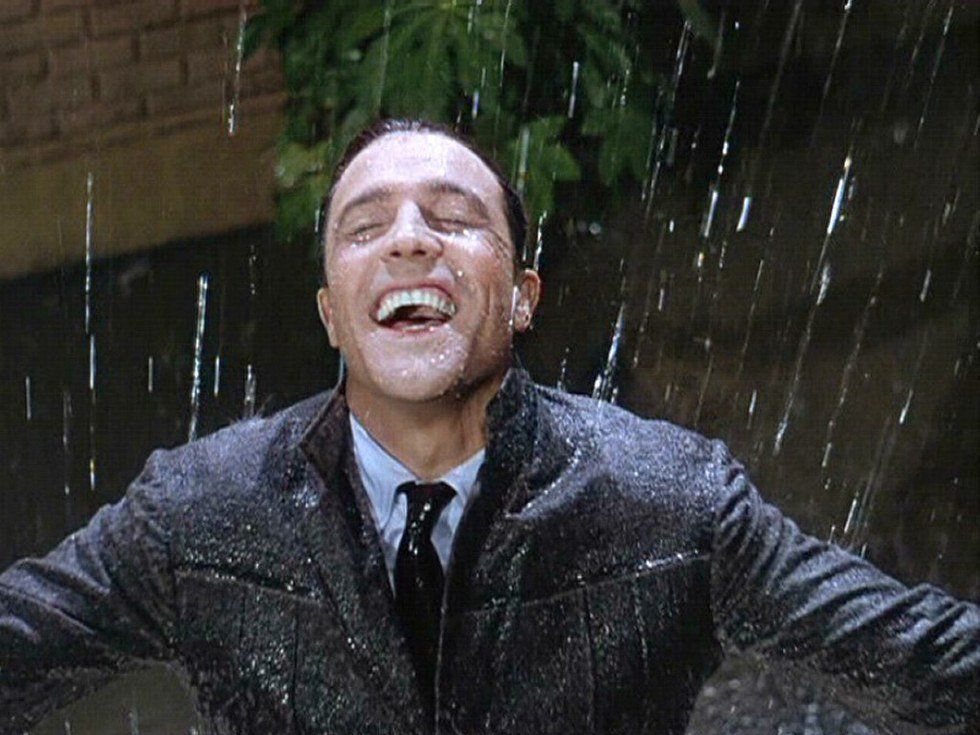
The musical scenes are as memorable as they are entertaining. The acrobatic dancing sequences choreographed by Kelly must have taken countless rehearsals and hours of preparation to perfect. But the end result of that dedication is special for not only the audience but the actors. For example, during the “Good Morning” number, which is one of the film’s most memorable scenes (the others in my mind being the drenched Kelly’s “Singin’ in the Rain,” and O’Connor’s comical sideshow, “Make ‘Em Laugh”), Kelly, O’Connor and Reynolds sing and dance their way around a mansion until finally collapsing onto a couch, all are in hysterics. Throughout the entire scene, the three are smiling, and joy beams off their bodies while they glide about; it’s impossible to not notice the enjoyment in their faces.
"Singin’ in the Rain" is set during one of cinema’s most important periods - the transition from sight to sight-and-sound. "The Jazz Singer" hits theaters, rolling in accolades as the first ever talking picture, much to the dismay of silent-film stars Don Lockwood (Kelly’s character) and Lina Lamont (played by Jean Hagen, who was nominated for an Oscar for this performance).
Lockwood and Lamont are Hollywood’s hottest couple, subject to magazine front pages and screaming fangirls. Off the screen and behind closed doors, the two have quite different opinions of their relationship. Lamont believes the fables she reads in the fan magazines and is grotesquely in love with Lockwood, but Don wants nothing to do with her, she is his trademark female-in-distress and nothing more. And unfortunately for Lockwood, his partner has a major piece missing in her acting abilities. Her voice is beyond repulsive, and she makes Monumental Pictures’ jump to sound all the more difficult.
By Don’s side is his childhood best friend Cosmo Brown (O’Connor) and baby-faced lover Kathy Selden (Reynolds). Lockwood’s romantic relationship with Kathy is what draws audiences towards his character. It is refreshing to see Lockwood choose personality above all else when it comes to his girlfriends. Instead of joining Lina’s strange fantasies or living the life of a Hollywood bachelor, Don goes after Kathy, the kind-hearted nobody who intrigues him because she is the first girl in years that hasn't spontaneously fallen for him.
Selden plays a much bigger role in the picture as well. After the pre-screening of the first Lockwood-Lamont talkie tanks, Kathy suggests making “The Dueling Cavalier” a musical and she becomes Lina’s new voice, dubbing over Lamont’s lines in the sound studio. She risks her own career to save Lockwood and Lamont, and even though Don protests, she insists, and “The Dueling Cavalier” becomes “The Dancing Cavalier.”
The story is delayed during the new-film’s production of the “Broadway Melody” number. This twelve-minute section is the last scene Lockwood intends on putting into “The Dancing Cavalier,” and though it is epic in size, it does not benefit the actual film. Kelly plays an ambitious young man attempting to make his dream (“Gotta dance!”) come true on Broadway. He lands an agent, becomes a star and finds love in a mobster’s girlfriend (Cyd Charisse). MGM musicals generally interject a big production number randomly into their plots, but it is possible to enjoy this scene and still wonder whether it’s needed, as I did. The only purpose this scene serves is as a more direct look at Kelly’s abilities as a dancer.
The film’s climax has become so legendary that it now seems cliche, but it is a perfect ending. The conclusion doesn’t stray away in any fashion from the main goal of the film’s second half, the downfall of Lina by the uprising of Seldon. In other words, good triumphing evil. After “The Dancing Cavalier” premiere succeeds, Lina goes on stage to deliver a speech. The audience obviously doesn’t expect her real voice, and Lina is quickly trapped into singing a song. Don, Cosmo and head-of-studio R.F. Simpson (portrayed by Millard Mitchell) have Kathy set up behind the curtain to once again cover for Lina. But mid-way through her A-flat rendition of “Singin’ in the Rain,” the three men lift the curtain, revealing Kathy. She flees the stage, tears of embarrassment down her face, as Lockwood calls out “Ladies and gentlemen, stop that girl! That girl running up the aisle! Stop her! That’s the girl whose voice you heard and loved tonight! She’s the real star of the picture! Kathy Seldon!” It’s perfect.
“What a glorious feeling!” "Singin’ in the Rain" is such a wonderful film that it can’t possibly tire out. In modern pictures, dark themes are so common they’ve become almost an expectation, but with this one, it’s nice to spend the entirety of a film in a good mood.















