

Simulation is like practice before the big game. It's a learning tool that allows students to put skills into practice before actually going into practice. Many professions utilize simulations to help out their students. Pilots use flight simulators to practice flying an airplane before they operate the machinery and cause possible harm. Medical students utilize simulated patient interactions with standardized patients to ease conversation and improve communication when they begin practicing.
Recent debate surrounds the increase of use of simulation in Nursing Schools around the country. Historically, simulation in nursing school has made students feel more comfortable, confident, and competent in the workplace and during clinical rotations. Students can work on IV insertion technique along with other basic skills, practice their routine walking into rooms and introducing themselves, and go through scenarios to sharpen assessment.
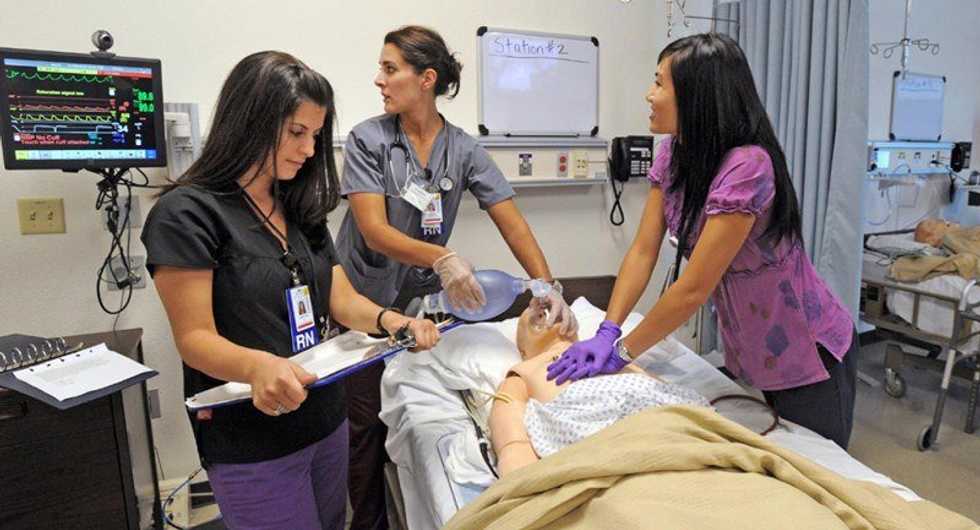
Most of the time, simulation uses high tech mannequins that have special abilities. Some of the newer ones can even seize or give birth! However, as advanced as these tools have become, they still lack one very important piece: human emotion and response. That's where the standardized patient comes in.
A standardized patient is an individual who volunteers or is paid to act out a certain scenario. These individuals receive a script with lines and actions detailing how they should respond in a situation and can provide feedback for the student based on how the student's actions made them feel as a patient interacting with them. A really cool perspective to learn from.
I recently volunteered to be a standardized patient, and learned a lot from the patient side of care as I hope the students on the healthcare side of the simulation did. There are a lot of things that you can do when you're handling lots of things at once that you don't notice. Often times, during simulation, it's easy to forget that there's a person you're taking care of when the mannequin is sitting there, fancy a hunk of plastic and metal. Likewise, when you're on the floor and have lots of things to do, it's easy to focus on tasks and be less than attentive to your patients.
Dr. Cathy Coram at Colorado State University - Pueblo is a huge supporter of implementing more extensive simulation and more hours into nursing educational programs in order to better prepare students for clinical and professional work experience. While funding and cost can be an obstacle, feedback from students indicates that more hours of simulation would be beneficial to their feelings of security on the floor.
It makes sense to practice on a mannequin before a real human being, so as not to cause harm to any individuals. So, while simulation can sometimes feel a bit stressful or overwhelming, be thankful to have it as an experience to help you better your skills to be the best nurse possible and provide effective patient safety!
















