
"My paddle's clean and bright,
flashing like silver,
swift as the wild goose flight,
dip, dip, and swing."
old Voyageur stroke song
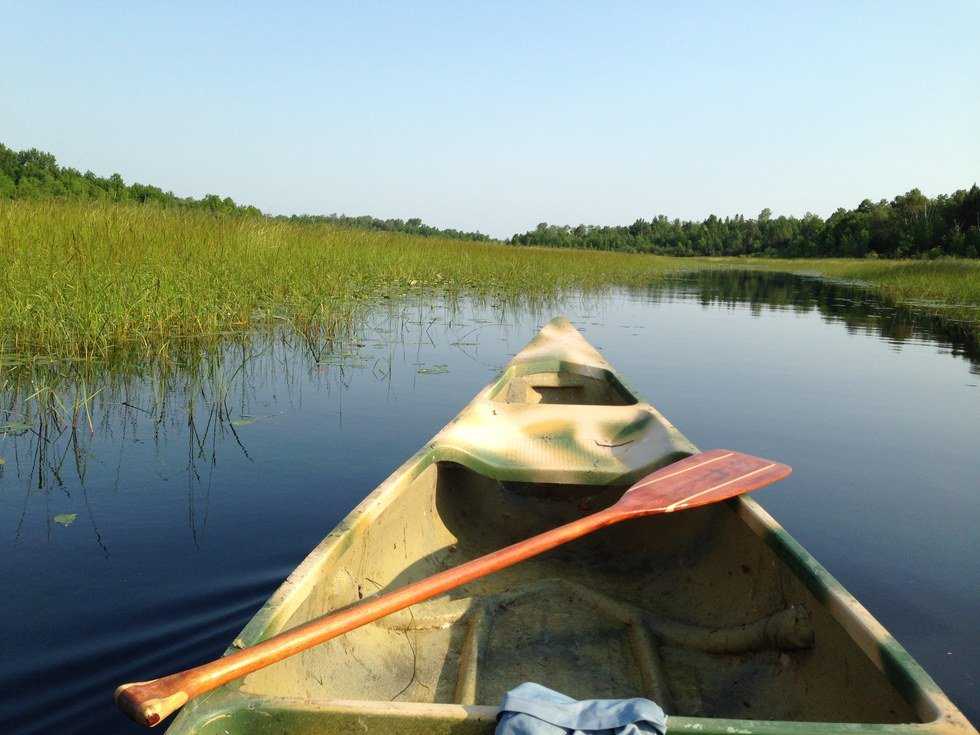
With water smooth as glass, a slight chill in the air, sunlight barely showing on my face and nothing but the sounds of waterfowl, I have yet to find something more relaxing than early morning canoeing.
In a state overrun with bodies of water, one could say that canoeing is as Minnesotan as ice hockey and Norwegian family reunions. From the early Ojibwe traveling by birchbark canoe, to the french voyageurs transporting loads of beaver pelts during the fur trade in 12-person canoes, to todays explorers and recreational paddlers exploring seemingly endless waters, the art of canoeing has evolved dramatically over the years.
As a kid growing up in a multi-generational Minnesota family, canoeing was simply just another part of the summer. With 21 lakes within the city limits of Minneapolis, over 1,000 in Itasca County (home to my family's cabin) and roughly 11,842 in all, you can make a pretty good claim that the "Land of 10,000 Lakes" is a canoeing paradise.
But not all these boats and the people who paddle them are created equal. For starters, we may be beyond the age of birchbark boats, but there are 2 common modern canoe materials: aluminum and kevlar. Both can produce high-quality boats if used correctly, but each serves a special purpose. Aluminum is the classic material for the summer camp, heavy and sturdy, these boats are stable and turn with ease. Aluminum canoes can take a good beating and are perfect for recreational paddling with large groups, where the odds of collisions increase. Unfortunately, aluminum is also noisy in the water and travels very slowly.
For the more experienced paddler, kevlar, or a similar composite material, is the way to go. Kevlar is light (some kevlar canoes weigh as little as 40 pounds) and are known for their speed and silence through the water. This is the material of choice for canoe racers or those who have a good understanding of canoe balance, so that they are able to pack the interior as efficiently as possible. Kevlar canoes, however, are fragile, easy to tear up if handled poorly, and difficult to steer.
The only canoe my family has ever had is not made of either of these things, but rather fiberglass. It is a quiet boat, but also very heavy, and literally falling apart.
Whatever you choose, definitely take the time to enjoy the water by way of a certain symmetrical, tippy, human-powered watercraft.
Enjoy your paddle-happy summer!

















