


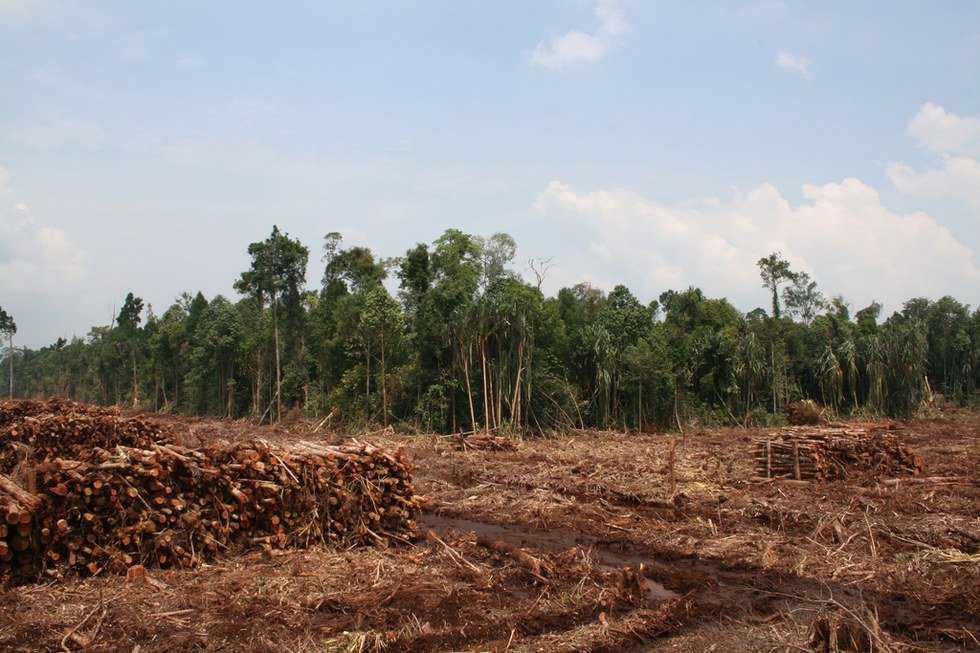
You wake up one morning and take a look out of the window. It's a beautiful day full of sunshine and a nice 70-degree atmosphere that makes a perfect day for being out and taking care of some errands. You turn to see your home and the family that you love inhabiting it happily. Then it gets crushed, battered, and upturned from beneath the earth. Trees are crushing everything and everyone. You try to save them, but you can do nothing. Everything is too big and heavy to lift. You hear them screaming and crying, and then the screams begin to die away. You emerge from your battered home, shaken and injured. There is a massive logging crane before you, lifting the new lumber that destroyed your family and your home.
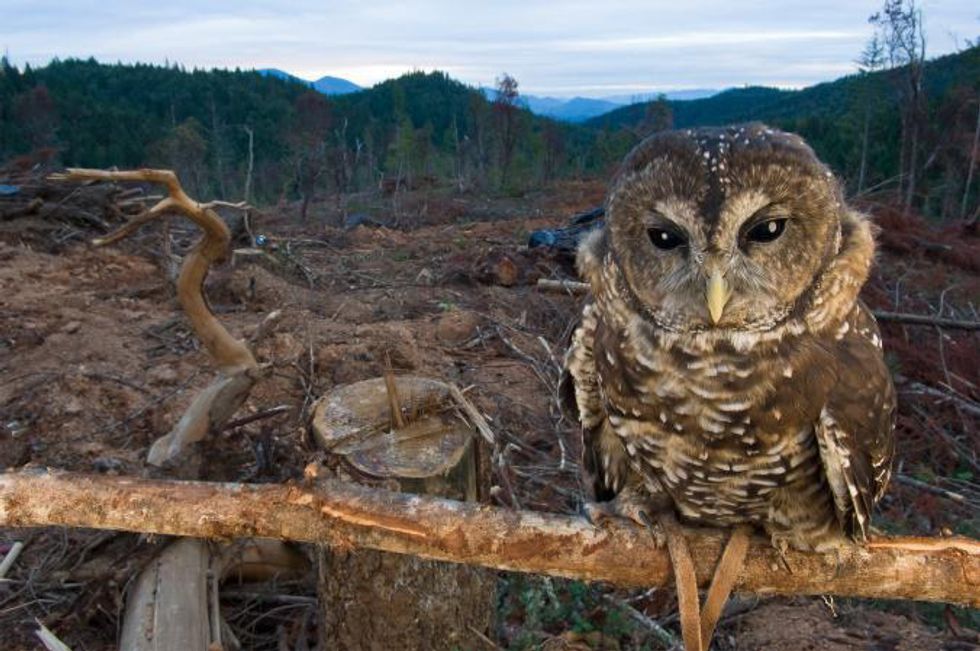
Photo via National Geographic
The spotted owl that inhabits forests in western North America experienced this on a daily basis until they finally got dubbed as a species that is "threatened," much to the distaste of major lumber companies.
Something to consider: The population of mammals, birds, reptiles, amphibians, and fish on Earth decreased by 52% between 1970 and 2010.
The decrease in animal population reflects an increase in demand for natural materials required for the industries that run much of the economy. In fact, it would require 1.5 Earths to regenerate the amount of natural resources utilized by humans each year.
That's clearly impossible. Further, the quest for natural resources affects marine wildlife significantly. The 2010 BP oil spill affected approximately 6,000 sea turtles that were already listed as five species that were federally endangered and threatened. Nearly 26,000 marine mammals were affected by the spill as well, with multiple other species affected, too. Approximately 25 percent of the oil from the BP oil spill was recovered, leaving 154 million gallons of oil and 2 million gallons of toxic dispersants at sea.
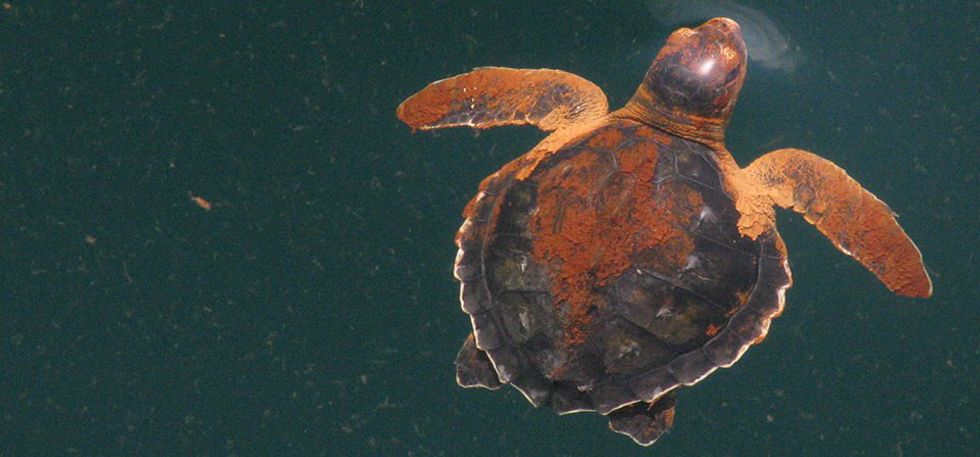
Photo via National Ocean Service
However, some conservation efforts to prevent the endangerment of species have been successful. The mountain gorilla population has increased by 30 percent in recent years, all thanks to wildlife conservation efforts made by the World Wildlife Fund (WWF).
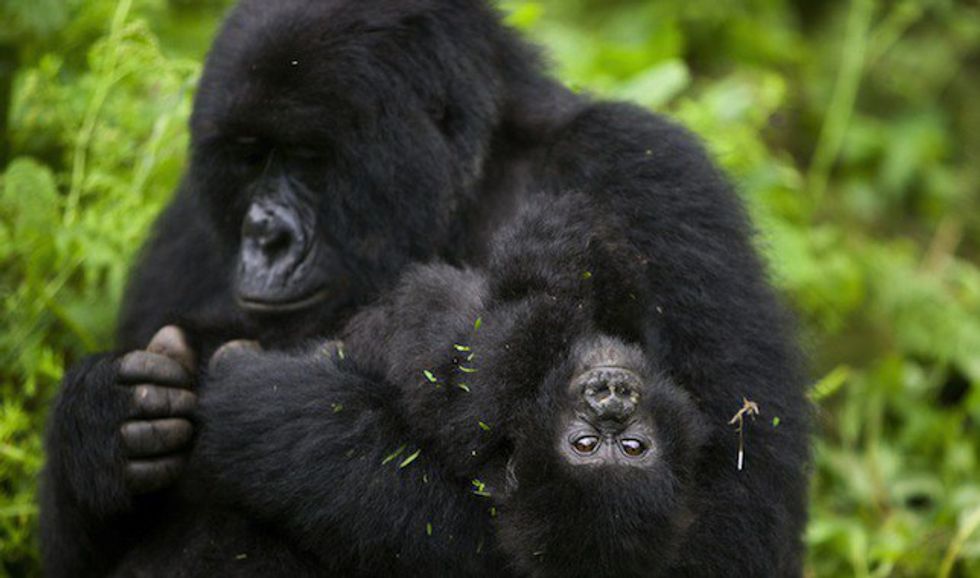
Photo via Mother Nature Network
It's as easy as spreading the word about conservation efforts to make an effort yourself. A quick article share, photo post, or small donation to a conservation effort makes an immense difference compared to doing nothing to recognize this issue. Speak for those who cannot speak for themselves.
"The scale of biodiversity loss and damage to the very ecosystems that are essential to our existence is alarming. This damage is not inevitable, but a consequence of the way we choose to live. Although the report shows the situation is critical, there is still hope. Protecting nature needs focused conservation action, political will and support from businesses." -- Ken Norris, director of science at the Zoological Society of London.
To view multiple wildlife conservation funds that accept donations and provide stats on where your money goes, click here.
To read more, click a link below:

















