

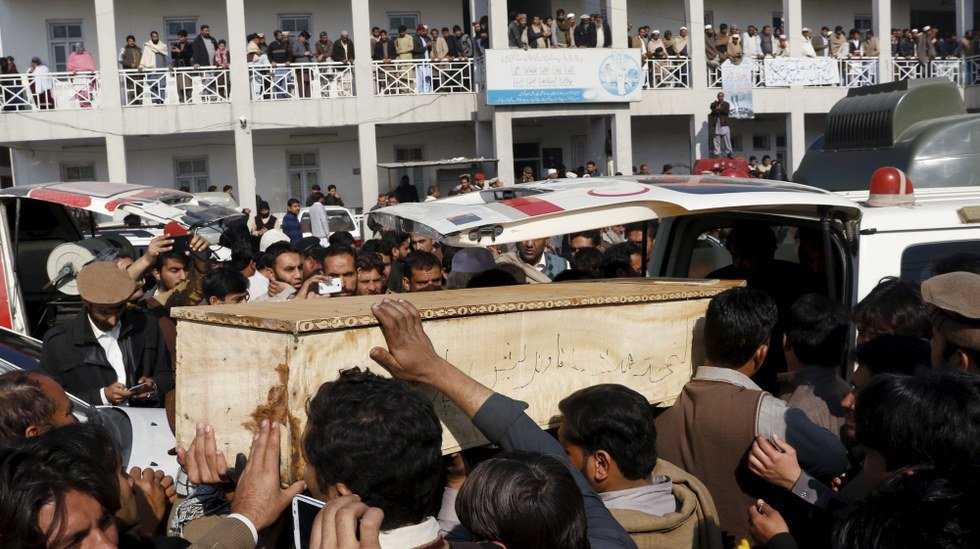
Over 6,000 students trapped. At least 21 dead. Over 30 injured. On Jan. 20, 2016, the image of a militant terrorist group was unveiled as they emerged through the thick fog of the morning and climbed over the back wall of Bacha Khan University in Charsadda, Pakistan. After the three-hour stampede, the ringing of gunshots echoed in the ears of mothers and brothers. As they peered into the faces of the students that walked out the university's gates, they hoped to find their loved one's face amongst the crowd.This case is not a singular incident in Pakistan. Among many other locations such as a Shia Mosque and an air force base, militant terrorist groups in Pakistan have targeted schools before. On Dec. 14, 2014, Pakistan's Army Public School was attacked by a militant terrorist group in a city just 30 miles from Charsadda. In this gruesome attack, known as the Peshawar Attack, 145 people were killed, including 132 innocent children.
Investigations in the Charsadda attack lead to the same fragmented Taliban group that was involved in the Peshawar Attack. This group has been in Pakistan since 2007 and after the Peshawar Attack, Pakistan increased strides to suppress the group on the border of Afghanistan, but their National Action Plan has not been put into effect yet. Another reason Pakistan's Taliban cannot be suppressed is due to a lack of cooperation and partnership between Pakistan, Afghanistan, and India. Afghanistan and India blame Pakistan for attacks on their soil while Pakistan believes India is giving the Pakistan Taliban weapons and financial support. All countries have denied these allegations. This discord and division eliminate the opportunity to treat these attacks like the major global issue it is.
Undoubtedly, the right to an education is an inalienable universal right. However incidents such as the attacks in Pakistan, the Sandy Hook shooting, racist threats at the University of Missouri, the Boko Haram kidnapping Nigerian schoolgirls, and the Moscow high school shooting in 2014 and the list could go on, the right to learn is being infringed upon on a global scale. A huge part of resolving these issues begins by understanding that these are not isolated events, but rather a global issue. In the attack in Charsadda, a teacher defended himself and his class with his own rifle, not to his avail. So, will teachers need to be given military training in the future, to completely fulfill their job requirements. The fear of one student in the attack consumed his body to the point where he felt the need to escape by jumping out a window, but never got up. So will that same fear exist in students every day as they enter their schools everyday, not knowing if they will get to exit alive.
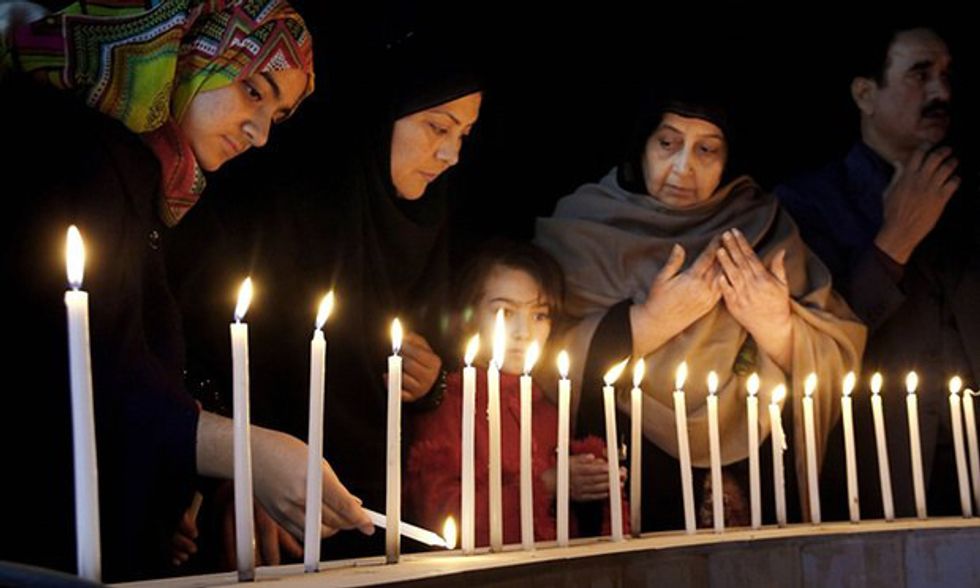 A photo from the vigil for the students at Bacha Khan University. (Above)
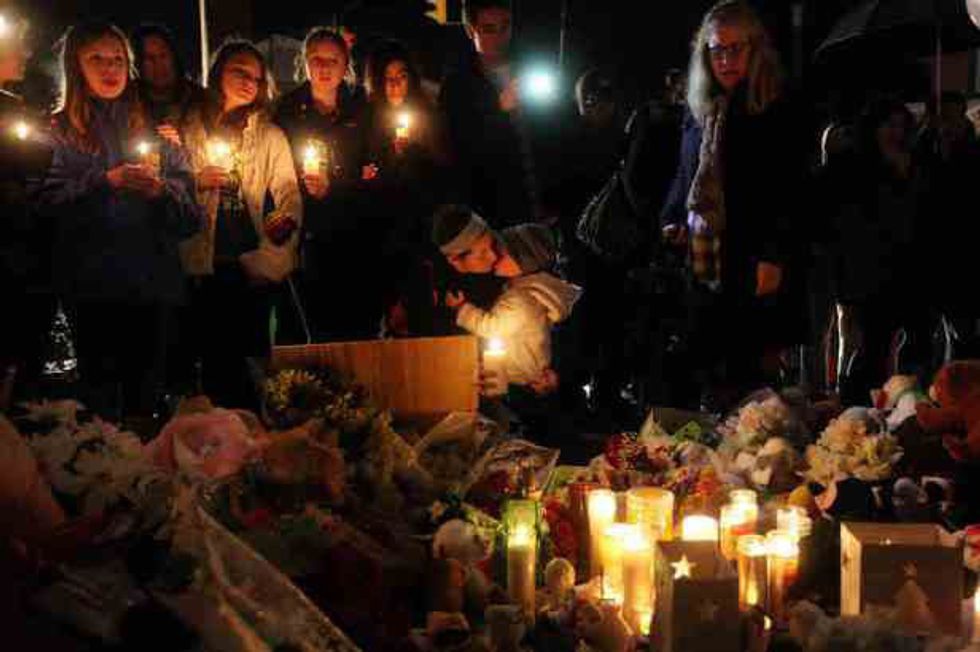 A photo from the vigil for the students at sandy Hook Elementary. (above)
When government structures work to create solutions to tragedies that mirror these, collaboration needs to be involved. Terrorism isn't an isolated problem because terrorist attacks exist around the world, and terrorists are people from all over the world that fit the mold of many different demographics. A universal approach to this issue will provide an aerial view that can eliminate some of the unnecessary fear that exists. It will do so by creating a broader scope of understanding, allowing people from different areas of the world to discover the interconnectedness that exists among us.

















