


I wrote this piece in my senior year of high school. I recently discovered it and felt, despite its many flaws, that it was worthy of sharing. More introspective than any piece I had written for a class previously, it demonstrates my belief that I was walking through a crossroads, a large part of my future to be irrevocably changed.
Five:
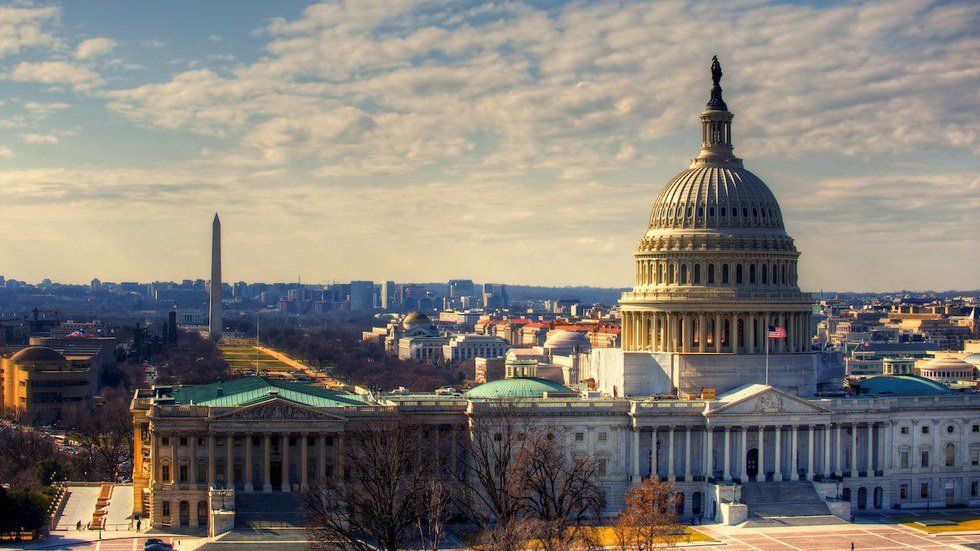
I sit on the steps of the Lincoln Memorial, reading the Economist magazine, occasionally looking up at the Washington Monument, and bearing down on the reflecting pool. It is December of my senior year, a little cold to hang out on the National Mall, but almost certainly worth the discomfort. Barely visible in the distance, behind the Washington Monument, is Congress, covered in scaffolding for renovation. The midterm elections were last month; the Republicans won control of the Senate.
My interest in history has finally caught up to the present. Politics is my foremost interest, I’m looking into schools in which I could major in Political Science. George Washington University is virtually an arm's reach away, I wonder if I will find myself sitting here on many more occasions.
I suspect that I know what it is about Washington D.C. that I love. It must be that this is where history is made, so many of the choices that have made the world what it is, and those that remain to be determined, happen here. The intersection of the past and the future is almost a physical presence to me. The new Congress across the mall will meet in a month and begin to decide the future of the country. As that future is made by politics, I must decide whether my future is in politics.
Four:
Sitting at a desk in my history classroom, I tear open the plastic cover of the Advanced Placement United States History exam and take a deep breath. My entire sophomore year has led up to this moment, in some ways, I’ve been preparing myself since the start of high school. I have recently begun to think about college and what I might like to study. History seems like the logical choice, whether or not its “marketable,” as my parents protest. This is a test, not only of my knowledge of American history, but also of my capability to flourish in a college level course.
My interests in history have grown broader since middle school. I still get engrossed in particular topics. In freshman year it was World War II, now it is the Cold War, but I have also begun to enjoy studying trends in history, larger movements and the inevitable march of progress. As I begin to bubble in the answers to the first problems, I notice that sets of questions go in chronological order. Shortly after the test is done, I will wonder if my own interest in history is similarly accelerating towards the modern day.
Three:
I am reading books and watching movies about the fight for Southern independence, spending much of my free time learning about the generals, the strategies, and the politics of the 1860s. It is eighth grade and my interests have taken a turn toward the contemporary. In a couple years, I have left the aqueducts and amphitheaters of Greece and Rome for the battlefields of the Civil War.
I am also becoming interested in counterfactuals and Alternate History, stories set in alternate realities, created from some change to historical events. For the first time, I am thinking critically about history, examining and learning about events, but also imagining the consequences had it occurred differently, or not at all.
I am trying to write a timeline, that is a sequence of events, resulting from a Confederate victory in the war. Perhaps they would have created a colonial empire and restarted the slave trade, or perhaps they would become too backwards to survive and simply fallen apart. These “what if” counterfactuals interest me greatly, how decisions made in the heat of the moment can change history, potentially dooming a civilization to the fate of the ancient Greeks and Egyptians.
Two:
I wade through the mud, slowly making progress with my mother across a paddy field. We are in Sri Lanka, somewhere in the central part of the country, visiting relatives as we always did in the summers. Only this time my mother was taking me on a detour. Emerging from the mud with a couple leeches on my legs, we arrive at some kind of a small mining facility. A couple of poor, lanky looking men approach us and offer to sell us uncut gems.
It is July, my first year in middle school has just ended, and my passion has begun to shift towards archaeology and geology. My friends have started to tell me that dinosaurs are too juvenile, playing with dino toys is looked on as childish. Rocks and ancient civilizations hold much of the same appeal though, so my interests undergo their own kind of evolution. I can name all of the Greek gods and most of the Egyptian ones. How such mighty and prosperous civilizations disappeared into the history books reminds me in many ways of the dinosaurs.
The gems offered are not diamonds or very rare stones, but semi-precious ones like topaz and sapphires, of lower quality, the kind they would rather sell to tourists than jewelers. We buy a couple and move on, this time towards a museum about ancient Sri Lankan kingdoms. As we walk, I daydream of Indiana Jones and the adventures that await me.
One:
A thunderous roar escapes from my mouth as I sprint around the living room in a state of frenzied excitement. A similar scene is taking place on the television, where an Allosaurus is bearing down on a herd of herbivorous dinosaurs. My prey is a bowl of spaghetti which, to my parent’s alarm, I attempt to eat without silverware.
Dinosaurs. No one word can better describe my life at the age of six. My family has just moved into the suburbs from an apartment in Cambridge and I am enjoying the newfound freedom. I do not have very many friends at school, but my imagination proves more than enough company for me. "Jurassic Park" is a daily adventure, as is the BBC documentary, "Walking with Dinosaurs". To the distinctive sound of Kenneth Branagh's narration, I rewatch the same episodes and scenes over and over again, ceaselessly fascinated by the titans on the screen. Whenever asked what I want to be when I grow up, I grin and reply: “A paleontologist!”
This obsession is hardly new, it precedes even my earliest memories. Before moving, I knew the layout of the Harvard Natural History Museum by heart. One of my elementary school birthday parties will be held there. I am not sure what it is that first fascinated me so much about the creatures, perhaps it was their size or fear factor. Although, I have a suspicion that it was the fact they are extinct, that such a powerful and fearsome race of reptiles could simply vanish into bones and dust.

















