

Since the 80’s, world renowned architect Shigeru Ban has been using some of the most unlikely materials in his designs. From paper tubing to used eye shadow pallets, Ban has showed his unquestionable ingenuity, while highlighting some nonconventional ways recycled materials fit into our daily lives. In response to the 2015 earthquake in Nepal, Ban and his volunteer organization, Voluntary Architects’ Network, designed emergency accommodations for displaced families. The modular and easy-to-construct shelter applies his famous cardboard tubing, wood framework, plastic tarp for roofing – and most interestingly – brick rubble to fill in the walls. The material, found in abundance after the disaster (one of the worst to ever hit Nepal), can be reused to help create inexpensive housing for the affected people, as melancholy as it may seem to be using the scattered pieces of a community.
The Nepal house, like many shelters of its kind, is quick and easy to set up, and can be done by the families living in them – the reused rubble filled walls can be completed at the family’s own pace, and the tarp roof can set up before the structure is fully completed. Most importantly, however, the shelter was designed in traditional Nepalese fashion – a simple comfort of home that can make all the difference in a time of confusion and reconstruction.
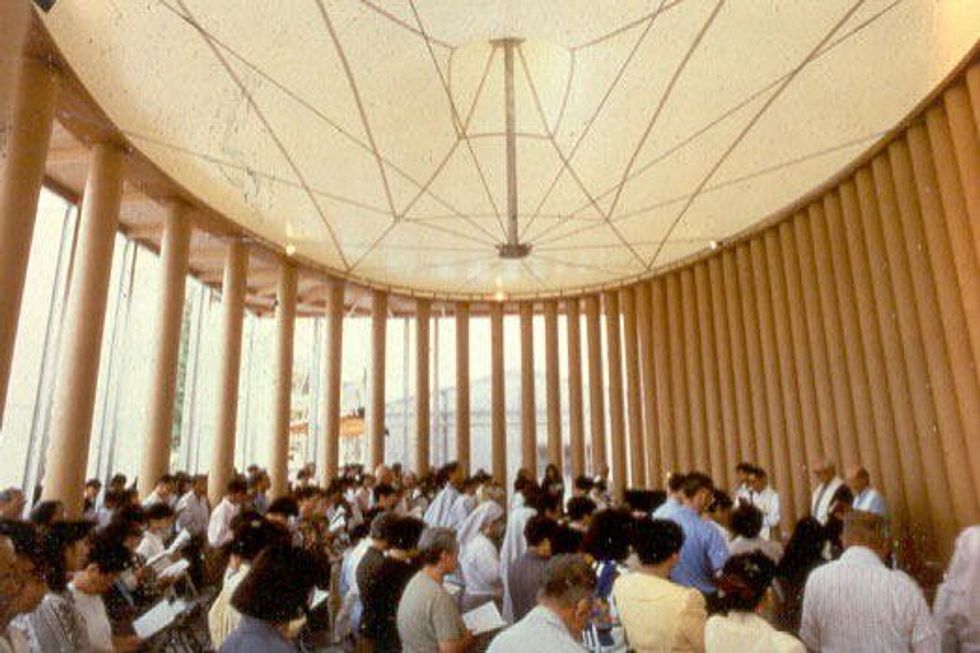
What is most interesting about this work, to me, is its breadth. Besides working for over 30 years on projects before the word “sustainability” was used daily, he has been blurring the line between permanent and temporary modular structures. His paper tube church, constructed for Kobe, Japan, as they were recovering from a devastating earthquake and fire in 1995, was initially meant to be a temporary comfort, but grew into a more permanent installation once it was moved to Taiwan. In a presentation the architect gave for TED in 2013, he noted how structures are only lasting because of what they can give to the community: “Even a building made in paper can be permanent as long as people love it. Even a concrete building can be very temporary if that is made to make money.”
Ban obviously isn’t the only one in the world working with refugees and developing efficient national disaster response, but his attention to the human need for comfort sets him apart. His paper tubing partitions, created for large spaces housing many refugees, focus on the importance of mental recovery and personal space after a disaster. His work with churches recreates many communities' most beloved buildings and recognizes the importance of not only the physical roof over a family’s head but also what it takes to help a community get back on its feet in a well-rounded and supportive way.
















