
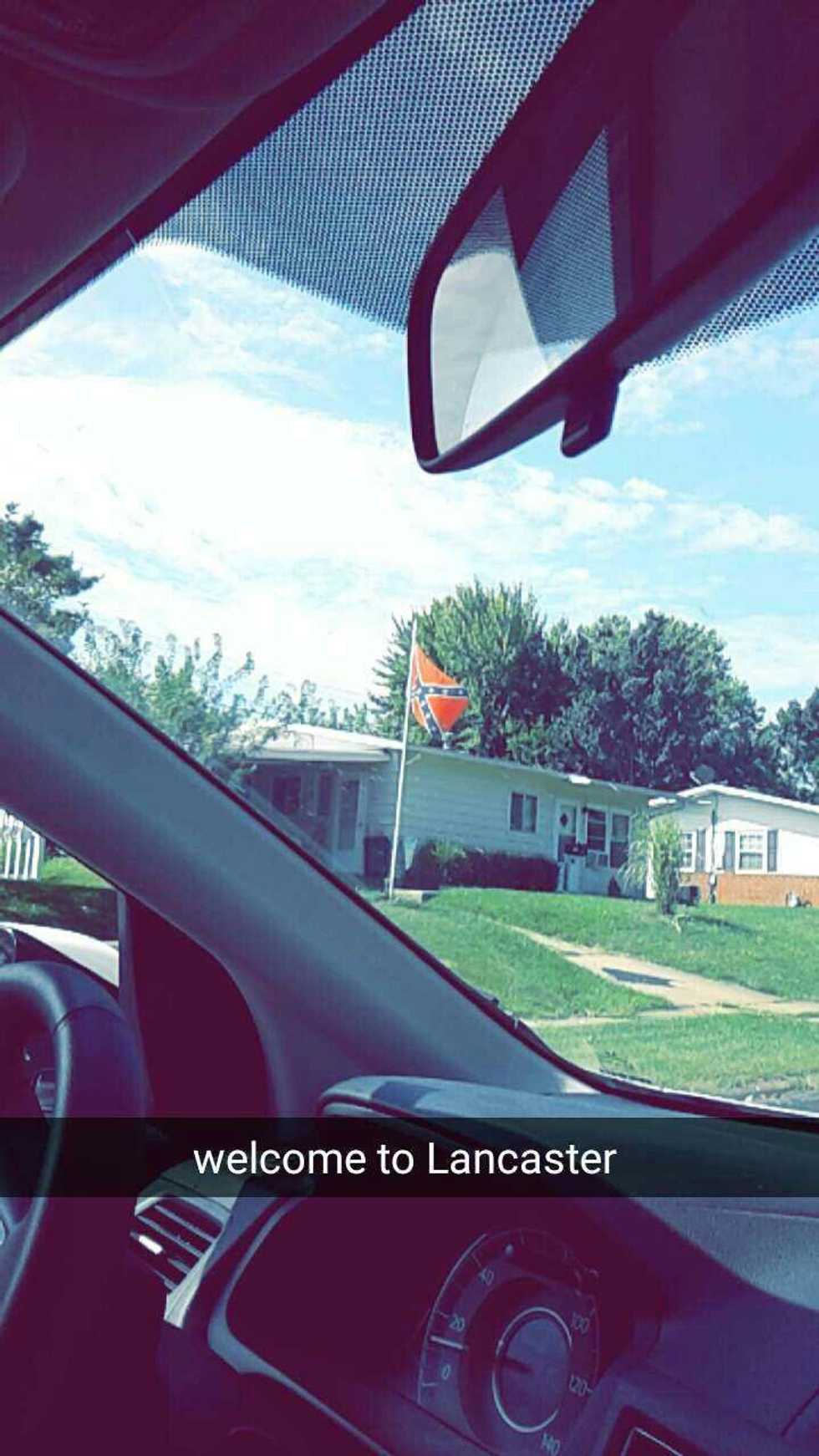
What would General Sherman, one of the Union’s greatest generals, think if he returned to his hometown today to find the Army of Northern Virginia’s battle flag flying above ordinary homes?
While flying the Confederate flag has long been controversial, over the last few years questions over its proper place in the public spotlight have come to a head in light of incidents such as the Charleston church massacre. While many claim the Confederate flag is a symbol of heritage, others view the banner as an emblem of racism, segregation, and white supremacy.
The purpose of this piece is not to discuss these questions in a southern context, but rather to explore the rationality of a home in Southeastern Ohio flying this flag.
During the course of the Civil War Ohio contributed approximately 320,000 soldiers to the Union war effort, more than any other state save New York and Pennsylvania, and many prominent Union generals including Ulysses S. Grant, William Tecumseh Sherman, and Philip Sheridan also hailed from Ohio.
Residents of Lancaster, a modest sized town in Southeastern Ohio, grow up hearing about their city’s famous son General Sherman, and in the city’s Downtown District a prominent statue and mural remind passersby that his home, now preserved as a museum, stands nearby adjacent to Main Street.
Sherman is best known for his March to the Sea campaign which destroyed large swaths of the Georgian countryside, and reduced Atlanta to ruble. While in Lancaster he is regarded as a hero who saved the United States, in many parts of the country Sherman remains a highly controversial figure. To this day I have been told not to say I’m from Lancaster when visiting Atlanta.
Given that this is the heritage of Lancaster, Ohio I struggle to understand why some residents find it appropriate to fly Lee’s battle colors over their homes and on their vehicles. Ohio is not the south and the Confederate flag is certainly not a part of our heritage.