

As I was cleaning out my closet the other day, I came across this book with the plastic cover protector missing. It was black, with a silver signature in the bottom right corner. When I opened it up, I saw that it was none other than Shel Silverstein's "Where the Sidewalk Ends." I instantly remembered the first time I had ever read his works: I fell in love with the goofy, scribbled drawings that framed his poems and the way I could easily understand what his poems were about. I thumbed through the pages, trying to remember which poems were my favorite-- my younger self had made this easy, since I dogeared some pages through out the book. I remembered my elementary school teacher talking about Silverstein, and reading us his poems. I'm sure some (or most) of my classmates hated it, but I adored Silverstein's short poems. When I reread "Early Bird", it dawned on me that Shel Silverstein was a children's author that adults needed to read, as well.
If you don't recall or haven't read this poem, here it is:
Oh, if you're a bird, be an early bird
And catch the worm for your breakfast plate.
If you're a bird, be an early early bird--
But if you're a worm, sleep late.
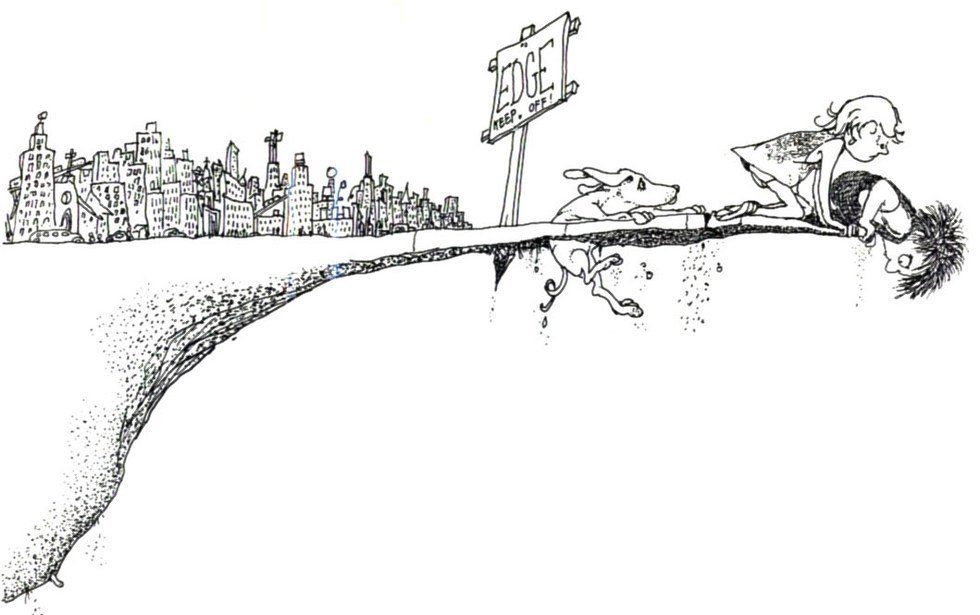
I wish I could add the illustrations in since they just complete the piece, but I can't. I'm not sure why six year old me had this page bookmarked, because I'm positive I didn't understand this poem fully until now. This poem is about recognizing your capabilities, strengths and weaknesses alike. As an adult, this teaches that by recognizing what you are (I identify with the worm, to be completely honest), you are only aiding yourself and making yourself the best you possibly can be. Knowing what you're both good and bad at will only help you in the long run, which is comforting advice to someone who is trying to do it all and mostly succeeding, but sometimes failing.
Another poem where Shel Silverstein disguises the deeper meaning of his poems from children is as follows:
"MA AND GOD"
God gave us fingers-- Ma says, "Use your fork."
God gave us voices-- Ma says, "Don't scream."
Ma says eat broccoli, cereal, and carrots.
But God gave us tasteys for maple ice cream.
God gave us fingers-- Ma says, "Use your hanky."
God gave us puddles-- Ma says, "Don't splash."
Ma says, "Be quiet, your father is sleeping."
But God gave us garbage can covers to crash.
God gave us fingers-- Ma says, "Put your gloves on."
God gave us raindrops-- Ma says, "Don't get wet."
Ma says be careful, and don't get too near to
Those strange lovely dogs that God gave us to pet.
God gave us fingers-- Ma says, "Go wash 'em."
But God gave us coal bins and nice dirty bodies.
And I ain't too smart, but there's one thing for certain--
Either Ma's wrong or else God is.
Now, how in the world will a child ever be able to understand the existential issue that Silverstein is writing about? The conflict between humans and them finding their spirituality, their deity has been going on since the beginning of time-- How do we talk to God? Why did He give us this or that? Why does this happen? Why does God make it so? You can think of a million other questions that humans have probably asked themselves about God. Understanding the kind of gravity that accompanies itself when pondering the existence of God is not easily done by a child, but questioning whether or not humans have God figured out is an issue all (or a portion of) adults face.
Shel Silverstein is a children's author. You can go read any of his poems and find some whimsical stories with chicken scratch drawings around them. You can take his poems at face value because they're great little poems to read; but you can also search for deeper meaning because they're definitely there. Shel Silverstein will always be one of my favorite poets for his simplicity, his quirkiness, and short and sweet style. To end, here is one of my favorite poems by him:
"LISTEN TO THE MUSTN'TS"
Listen to the MUSTN'TS, child,
Listen to the DON'TS.
Listen to the SHOULDN'TS
The IMPOSSIBLES, the WON'TS.
Listen to the NEVER HAVES,
Then listen to me--
Anything can happen, child,
ANYTHING can be.

















