

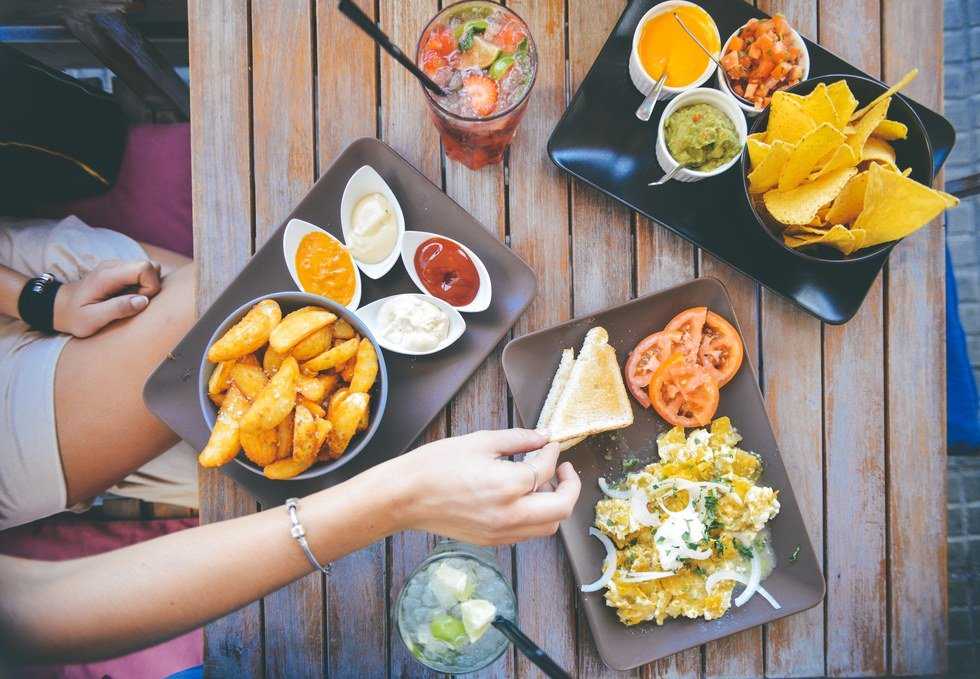
Growing up, my family of four ate dinner together almost every night. While I don’t remember all of the conversations we had, I remember being with my family around our little table in the “breakfast room” (who knows why we called it that — we ate dinner in there more than breakfast, but I digress) and talking about our days. It wasn’t perfect; not every meal was home cooked (some of my favorite nights included KFC buckets — it was a rare treat) and as young kids, my sister and I definitely had our share of arguments over someone kicking someone else under the table. No, it wasn’t perfect, but it was home.
I moved off to college, then Texas, and Emily will attend college soon, so we don’t have family dinner anymore. While I wish I had known how to savor those nights when I was younger, my appreciation for sharing meals is certainly rooted in those evenings at home.
There’s a difference between eating food and sharing a meal. When we eat food, we’re eating because it’s part of our routine, because we are bored (guilty), or because we’re hungry. Maybe we’re by ourselves or with others, but we’re not present with them; we’re often tuned into the television or too preoccupied in our own thoughts to enjoy being with someone else. When we share meals, we usually do so for the experience. We make eye contact, we share stories, we discuss ideas — or sometimes, we just discuss how good the food is. Good food = good mood. That’s my motto.
Meals were meant to be shared; just think about Jesus and the Twelve Disciples during The Last Supper, all congregating to share food and fellowship out of love for one another and their Teacher. Meals have also been shared during celebratory times; consider a wedding reception or birthday party without a meal or some sort of cake or champagne. Even in mourning, meals are delivered to families to be shared together. Children host tea parties and gather their friends. Sometimes, the elderly stop eating because they have no one to share it with; eating has become a chore. No matter the moment, people need each other in life, and food can be a common denominator to unite them.
By sharing meals with my family when I was growing up, I learned:
1. How to have proper manners.
At my house, there was no smacking and no talking with your mouth full. I learned how to slice meat and how to swirl pasta on my fork. I know that when I finish my meal, I place my silverware at the “4 o’clock” spot on my plate. However, I also learned that if I want to stab my fork in an entire chicken finger at home, I can do that, too.
2. How to listen.
I feel like a lot of people know how to talk, and very few know how to listen. Sharing meals taught me (and continues to teach me) how to be present when I might not have an investment in what the other person is saying. Not only should we do this out of support for others we care about, but also to recognize different ideas we hadn’t previously considered.
3. That others are just as important — if not more so — than you.
This goes along with listening. When we give everyone their due time to speak, we are recognizing that everyone else’s days, thoughts, or struggles are just as valuable and worth sharing as our own.
So the next time you sit down for dinner with someone, whether it’s you and your spouse, you and your children, or you and your friends, decide to listen to one another; turn off the television and sit across from someone. If you see someone eating alone, ask to join them. It may be awkward at first, but I guarantee it will help you appreciate how sharing a meal can ultimately become sharing more than food.