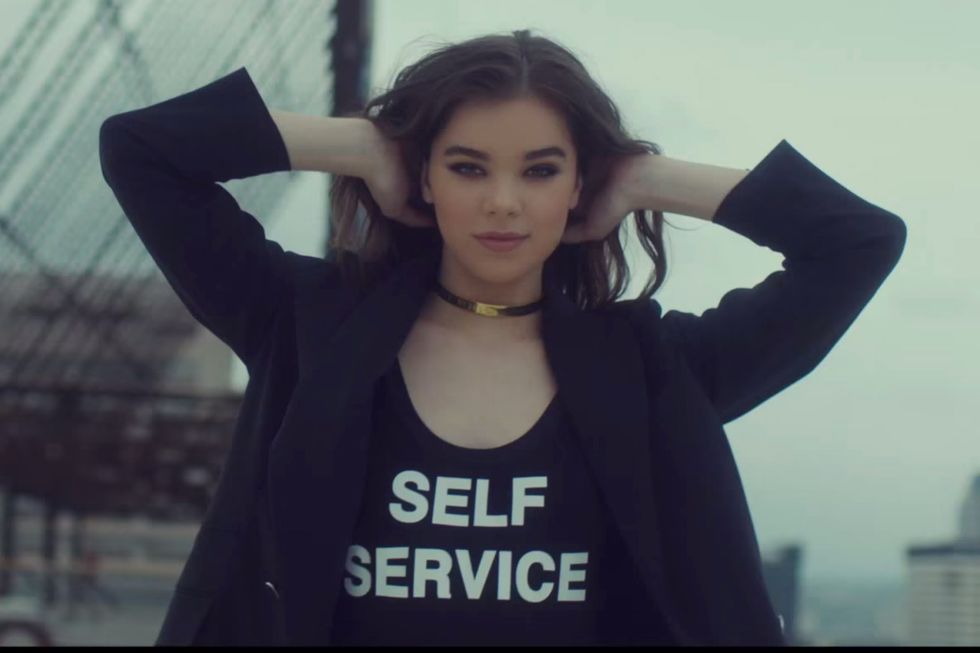
If you’ve turned on a radio to any popular music station in the past month, you’ve probably heard Pitch Perfect 2 star Hailee Steinfeld's first hit single, ‘Love Myself’. After hitting the charts in a rather explosive way following its release on August 7, quite the stir was left in its wake. Unsurprisingly, most of the conversations surrounding the tune are coming not from praise about it’s catchy rhythm or danceable beats, but rather from a situation many have found unusually puzzling. Shocked listeners quickly took to their social media accounts in disbelief: could this truly be something circulating around popular airwaves? Did I really dance so jovially to something so bawdy in nature? Could it be that this song is about... masturbation?
In short? Well… yeah?
Maybe I’m a bit more of a progressive thinker than most, but when I first heard the song a few days after it's debut, I recognized it immediately for what it was: a self empowering statement about appreciating your own independence following the loss of a close relationship that had previously helped define you. I fell in love immediately, realizing that this was a highly empowering conversation about female sexuality that could only serve to go forward and improve the current discourse surrounding the topic, allowing for progressive thought and actions. But the twitterverse seemed to lose its collective shit when the first stirrings of possibility about the actual topic came to light. In an interesting show of what seems to be a challenging plethora of mental gymnastics, people still attempted to turn it into a song about anything but masturbation.
I honestly have to question why it seems to be a topic that is so taboo. No one needs me to point out that songs about sex make up perhaps over 90% of the topics sung about in today’s pop charts, and that girl power tunes are on the rise. The song is no more blatant about its intended topic (of consensual self love, mind you) than Robin Thicke's fortunately deceased song about sexual coercion that assaulted the airwaves and now subsequently holds the title for longest running single of 2013.
So now we must ask ourselves: is this uproar in response to opposition of sexual deviancy? Or is it something a little more complicated that comes along with the stigma of open discussion on women's sexuality that makes people grimace in distaste? Did Steinfeld truly come out of left field with a deceptively invigorating song that flew right under the moral radar of the general public, in order to sucker punch a bout of feminist ideology into the core of modern culture? Regardless of the case, it would be impossible to deny the song's impact, and the fact that it makes a damn good #MotivationalMonday tune.
You can purchase the single now on itunes for $0.69. Someone give that marketing team a raise.