

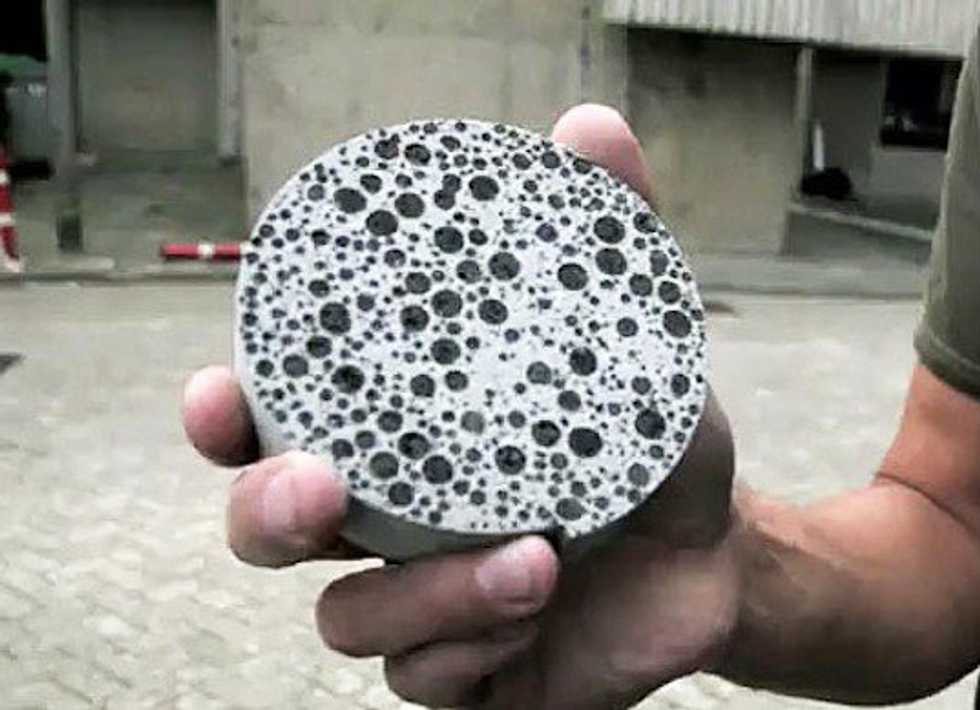
Advances in science have demonstrated to us that things that once seemed possible only in science fiction can actually become a reality. People have long dreamt about a thing that can restore itself, just like cells in human beings. And after all those years of research and dedication, the dream has finally become a reality. Engineers and scientists have invented a concrete that can actually heal itself.
Hendrik Jonker, a Dutch microbiologist and scientists invented what he calls “Bioconcrete” which actually can heal itself. Considering that human cells can repair the wound, he tried to make concrete heal itself and it worked. To tackle the problem, he used a bacteria that can survive in an alkaline condition for more than 200 years and can repair the concrete by producing calcium carbonate.
This invention earned him a nomination for a European Inventor Award.
How does it work?
The concrete is embedded with capsules of limestone-producing bacteria, either bacillus pseudofirmus or sporosarcina pasteurii along with calcium lactate. Selection of bacteria was done such that it can survive centuries in harsh alkaline condition (up to pH value 12) without food and oxygen. Bacteria of gene bacillus was the right fit for the job.
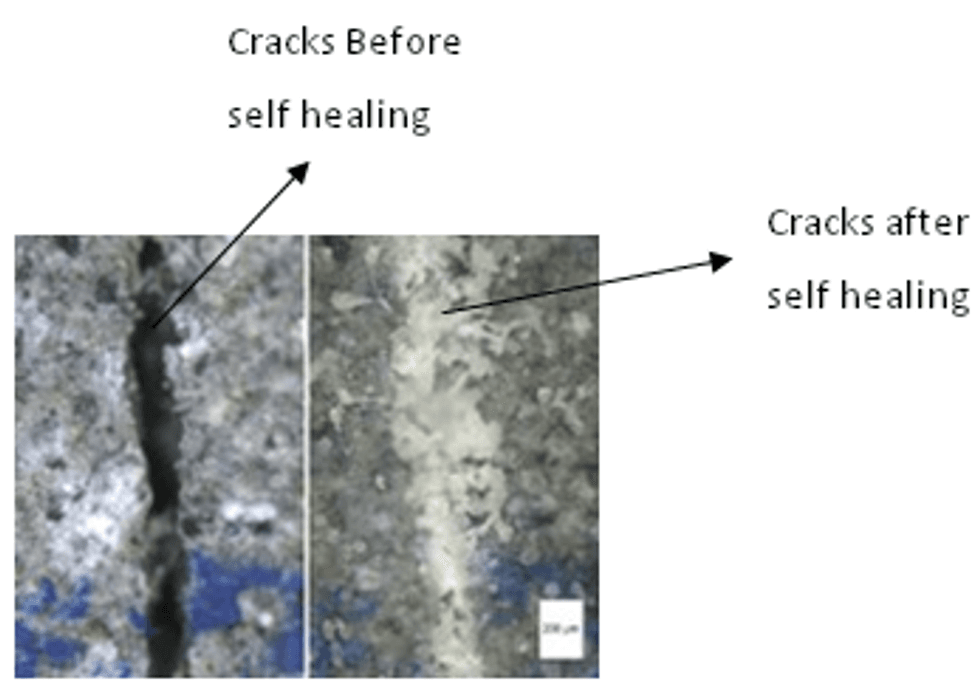
When the crack appears on the concrete, water flows in and activates the bacteria. the bacteria then undergoes simple chemical reaction forming limestone. Limestone then bridges the gap, thus, healing the concrete.
Its potential.
People have been using concrete for past 2000 years and ever since cracks have been an immense problem. Cracks potentially decrease tensile strength of the concrete which substantially decreases durability of the structure. It weakens the compressive strength of the concrete and in the worst case scenario, it could even result in failure of the structure.
The addition of bacillus not only increases the tensile and compressive strength of the concrete but also repairs any crack. Since self-healing concrete resolves both the problems, it inevitably holds a huge potential, especially now when people are desperately opting for green development.
It could be an important tool in green development. With the invention of self-healing asphalt, prospect of “self-healing” grows even bigger.
But is it appropriate for large-scale construction?
Unfortunately, not yet! The cost of these types of concrete is substantially high. A study estimates that the cost would click around $33-44 per square meter.
But self-healing concrete definitely holds potential. In fact, it can transform the way conventional buildings have been built. But, the biggest challenge is to make it cost effective. If it is made cost effective, the world is set for a new transformation.