


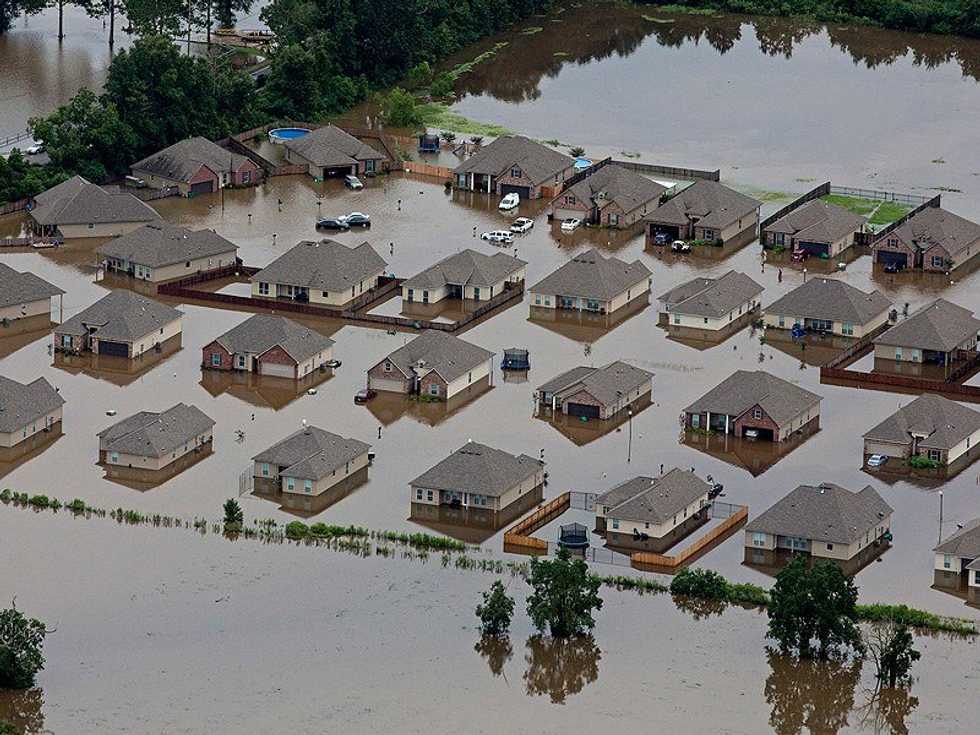

Nothing can explain the tragedy and the loss of life Louisiana experienced from recent flooding events that occurred within the last week. I grieve for those who have lost everything and try to help in any possible way that I can. All the families are in my thoughts and I hope they receive the proper care that they need. But if you are like me, you are always wondering why this has happened. Well, I am here to tell you about the science behind the flood. I'm not going to go into all the scientific detail and boring facts, but what makes this weather system so interesting is the fact that it was very similar to a hurricane without the high winds.
According to the Weather Channel, a "deep, tropical moisture in combination with low pressure near the earth's surface and aloft were the main ingredients that fueled the serious flooding in Louisiana and adjacent parts of southwest Mississippi". They also reported that a weather forecast discussion from the National Weather Service in New Orleans last Friday morning said that the moisture content in the atmosphere was higher than what has been observed there during some tropical cyclones. It was even close to an all-time record for the area, they added( https://weather.com/storms/severe/news/louisiana-flooding-why-it-happened-things-to-know ). This means that since there was so much moisture in the atmosphere, storms were able to develop and produce a great amount of rainfall over time.
But why was the system so slow moving? Mark Hoekzema, chief meteorologist at Earth Networks, told Gizmodo that: “This time of year, tropical easterlies give us these tropical waves that march across the Caribbean, drifting northward onto the US coast.” Hoekzema explained that when a few of these low-pressure air masses crossed Florida and entered the Gulf Coast region last week, they essentially became trapped. Hoekzema added, “You had a couple of these systems stall out on the Gulf Coast. With very slow movement, you can get excessive amount of rain” (http://gizmodo.com/why-this-weekends-record-floodi...).
To me, this was a very weird weather event, because it shared so many similarities to a hurricane. The counter-clockwise rotation, torrential downpours, and inches of rain that were historically unspeakable are all some of the characteristics in comparison to a hurricane. Along with this, the ocean temperatures in the Gulf rose up to 90 degrees Fahrenheit and led to an evaporation of moisture in the air.
The Red Cross says that this natural disaster was the worst U.S. disaster since Superstorm Sandy in 2012. About 30 parishes were declared disaster areas and at least 13 people have died as a result of the flooding. More than 40,000 homes have been affected and 30,000 people have been rescued. Shelter numbers have begun to drop, though, due to people finding temporary housing with family members or safe returns to their homes. While this was all happening, I watched many videos of people who were rescued out of vehicles. My advice to people is the common phrase, "Turn Around Don't Drown". According to NOAA, "six inches of water will reach the bottom of most passenger cars causing loss of control and possible stalling, a foot of water will float many vehicles, and two feet of rushing water can carry away most vehicles including sport utility vehicles (SUV’s) and pick-ups"(http://www.srh.noaa.gov/tsa/?n=hydro_TADD). It is very important to follow the many safety precautions during a flooding event.
After reading everyone's scientific explanation of why the flood happened, it gave me a better understanding of how these weather systems form in general. Even though this one was out of the ordinary, it still had similar characteristics to an actual hurricane. Honestly, this was a weather event like no other I ever heard of before.
















