

At this point, we have all seen some sort of headline or news segment having to do with the Greek economic crisis. It seems to be consuming news coverage, from domestic to international reports, as economists and policymakers alike try to understand how this crisis could affect the overall economic climate. As important as it is to acknowledge this pressing issue, it can be insurmountably hard to understand the logistics of the crisis. Even as an economics major, I am still a little shaky in my understanding of what is currently happening in Athens and the Eurozone. So, if you are anything like I am, and could use a little more simplistic, relatable way to understand what is going on: keep reading. Hopefully my attempt at a comical, personal spin on the debt crisis can give you a little leg up next time you overhear someone talking about Greece and the Euro.
Lets use this hypothetical. You are heading into your freshman year of college. You are definitely going to need a bunch of essentials — a printer, dorm room storage, a shower caddy and so on. Aside from that, your high school wardrobe is in desperate need of an upgrade. And how can you not invest in a nice new duvet cover with the cute little monogram in the middle??? In all the excitement and preparation, these expenses add up, but you don’t want to worry your parents, so you keep assuring them you are spending within your means — and your credit card limit.

Freshman year comes and goes, your expenses keep coming in, but you do your best to make your minimum payments on your monthly credit card statements. You aren't in the clear, but you aren't worried ... yet. Again, every time Mom and Dad ask, you say you are doing fine on money. You are staying within their idea of "safe spending" and reasonable credit use.

On comes senior year, and there is so much to look forward to: homecoming, spring break and graduation. Before you know it, those credit card bills are climbing higher and higher, but you can't miss out on the fun, so you put it in the back of your mind and keep on spending.
Unfortunately, living beyond your means is not as sustainable as you thought, and you are in way over your head by this point. You have no choice but to ask your parents for help. They agree, as they don't want to see you struggle, but it comes at a price. They will lend you the money you need to pay off some outstanding bills, but you will have to pay them back incrementally over the next few years. For the moment, you are in the clear!

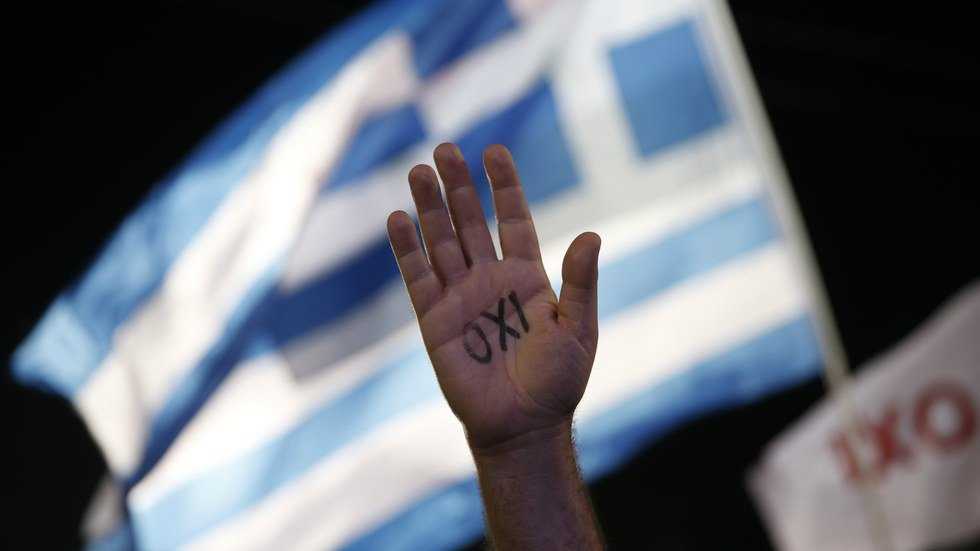
Six months pass, and you are coming up on your first payment due back to your parents, but even with their help six months prior, you are still low on cash and don't have the means to pay them. Needless to say, Mom and Dad are not so pleased to hear this, as it has put a great deal of stress on their own finances. But with a lack of options on the table, your parents come back to you with a new payoff deal, one that places many more restrictions on your potential spending, which subsequently affects your potential lifestyle choices in the future. NOT what you were hoping to hear. So you say OXI! (or maybe not, unless you speak Greek) and walk away from the negotiating table, promising to return to them with a new plan that will allow you to pay off the debt on your terms, in your own time. This puts a pretty serious strain on your and your parents' relationship, but there isn't much they can do to force your hand, so off you go with your heavy-handed need for cash, outstanding debt and little to no solid planning done towards your next steps. End hypothetical.
Its not a perfect metaphorical comparison, but it helps to
put things into perspective. And while my goal with this piece is to attempt to
scale down the issue seen throughout the news to something more relatable, I
would have to think most people in the finance and policy world would not find
the current economic climate much of a laughing matter. The Eurozone
undoubtedly will be less forgiving than your parents, and a few months worth of
credit card debt can be far less threatening than a forced exit from the
Eurozone and a Greek default on its debt. It’s a serious issue, culminating
after years of negotiations and discussions and the resounding voice of the
Greek people looking to preserve their autonomy over their own economic future.
But there is a lot we can learn from this crisis, from both a global and personal perspective. Whether you are interested in the markets or not, keeping up with such a pressing global issue is important to help maintain a basic understanding of what is going on in the world around you — aside from E! Online’s reports of Kourtney and Scott’s shocking split.
Taking a quick glance at the headlines in the Wall Street Journal every morning can be all you need to do to stay up-to-date. Or, if you are looking for more of a entertaining spin on the news of the day, subscribe to the Skimm! You’ll get an email every morning outlining the days biggest news stories in a way that will keep you reading and maybe even make you laugh along the way. These small actions can keep you from feeling like a deer in headlights the next time someone asks you about your thoughts on a current event at a lunch meeting.
Understanding what is going on in Greece can also act as a financial lesson, while on a much smaller scale, to emphasize just how important keeping track of your personal finances can be. While we aren’t all a part of a larger currency union, where our economic choices can have serious repercussions to the economies of our neighbors, our financial choices today can have a real effect on our future choices — or lack there of. Recognizing the importance of spending within our means and making smart saving and spending decisions are lessons that, learned now, will absolutely make a difference in our personal stability and financial security in the future.