

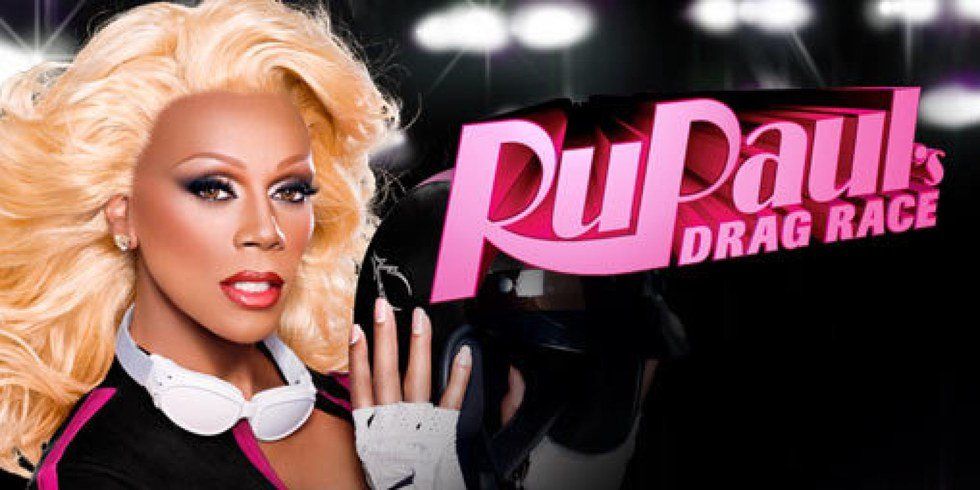
As I eagerly await the eighth season of one of my favorite shows, "Rupaul's Drag Race," I decided to look back through the first seven seasons and think about why I love the show so much. If you are unfamiliar, educate yourself, Queen, or continue reading. "Rupaul’s Drag Race" is a competition reality show which airs on Logo (or you can stream it here) and is hosted by legendary drag queen Rupaul. The show started with season one in February 2009. Contestants compete in the running to become “America’s Next Drag Superstar.” Along with the title, other prizes are given away, like trips courtesy of Al and Chuck Travel, lifetime supplies of makeup and cash money honey to the tune of $100,000.
The season is made up of challenges that test contestants' "Charisma, Uniqueness, Nerve, and Talent," to see if they are worthy of the title. Each season the queens enter the workroom and introduce themselves to their competition and the world. Sizing up the queens on the first episode is a classic Drag Race activity, arguing with your friends about which queens are "top 3 material" and which are busted. Each episode there is a mini challenge and a main challenge, or "maxi challenge." Mini challenges have included a Soul Train-style dance off, recreating famous red carpet looks with paper, and a "Real Housewives"-style introduction with Scotch tape plastic surgery. The winner of the mini challenge becomes team captain of a team, earns a reward towards the main challenge, or gets another prize (like a phone call home).
Main challenges vary wildly, from acting and comedy, to construction and sewing. Some of my favorites over the seasons include: the "Face of Cakes" couture challenge from season 3, where the queens had to make a dress inspired by a cake assigned to them. The Fabulous B*tch Ball, a challenge inspired by dogs where the queens had three distinct looks, and the crème de la crème of main challenges, Snatch Game. Snatch Game, a returning challenge starting with season 2, has the queens impersonate a celebrity on the Snatch Game panel, just like the classic game show "Match Game." Snatch Game, normally occurring around episode 5, separates the contenders from the pretenders.
Every episode ends with a runway extravaganza. Sometimes it has to do with the challenge—if, for example, they are constructing a garment or have to dress for their perfume launch party for the perfume they had to create -- or it's an idea outside of the challenge. These can include "Pretty in Pink", "Girly Girl Glamour," "Death Becomes Her," and more.
Besides all the drama and excitement of the challenges and runway, there are several aspects that really make the show for viewers. The first and most important is how each episode ends. There are "Top Queens" for each challenge and "Bottom Queens." One or more of the queens at the top will win the challenge and some prize, and two of the queens at the bottom will lip-sync for their lives, darling. The queens are aware of what song they will be performing and they are to impress Rupaul and are told not to mess it up. After the lip sync, Rupaul decides who stays and who goes.
The judging panel consists of, as of season 7, Rupaul herself, her best friend Michelle Visage, and either Carson Kressley or Ross Matthews. There have been other judges in the past, including Merle Ginsberg for seasons 1 and 2 and Santino Rice for seasons 1 to 6. Almost every episode there are guest judges, who are sometimes the best part of a runway presentation. Some of my personal favorites have been Kathy Griffin, Khloe Kardashian, and La Toya Jackson.
Another aspect of the show that makes it so addicting is its roots in drag culture. Like in gay culture overall, drag culture has its own language. Terms like "shade," "realness," "beating a face," and "reading" have different meanings in the drag community. These terms all grew out of early styles of drag and the underground scene, which started to form in the 1960s and expanded throughout the decades but mainly remained an underground activity. Just as the show says, reading is fundamental. Reading is insulting someone skillfully and with proper knowledge, never aiming to be malicious, but just getting a subtle crack about somebody. Shade is the developed form of reading. Drag legend Dorian Cory explained "shade" as “I don't have to tell you you’re ugly, because you know you are ugly.” Queens use many other terms like these. It would take several pages just to explain them all, so just watch the show and you’ll catch on.
Lastly, the most important part of the show that really gets viewers going is the real-life stories we hear from the queens. Most of these stories come out because producers want to create drama and have interesting television, but some of them really are helpful for the young, mostly gay male audience of the show. Queens' stories about their coming-out process, relationships with family members, or struggles they have dealt with in their lives are heartbreaking and heartwarming at the same time. We don’t always get to see the true humanity of reality show contestants, but at "Rupaul’s Drag Race," we often do.
"Rupaul’s Drag Race" has captured a special place in my heart and the hearts of many. It’s inspirational, entertaining, and fierce. I cannot truly put in words how much the show has meant to me, though I attempted above. I would recommend the show to anyone; You just need to have an open heart and an open mind, because that’s what the show is all about: expressing oneself and enjoying what you do. I would give up a date for the start of next season, but Logo hasn’t told us yet, so I cannot. However, you can stream the other seasons now and get your life and gag on its eleganza.

















