

We’ve all heard this phrase somewhere. Maybe in high school from an exasperated teacher. Perhaps from a frustrated parent. “It isn’t rocket science..” or “It doesn’t take a rocket scientist to [fill in the blank.]” It is common knowledge that, if something isn’t rocket science, then it really isn’t all that hard. For the longest time I had a notebook with that saying on the cover, inscribed over a collage of planets and constellations. Everyday of senior year I opened that notebook without a second thought about that seemingly inconsequential string of words or the connotations it had. It was meant to be motivational, after all. But what are we actually saying about the STEM fields as opposed to other areas of study?
I never had a great relationship with math. When I first took algebra, it would take me hours to get the homework done. In fact, the only reason that it took me less time as I got older was that I realized exactly how much work I had to do to scrape by with a decent grade. After completing my math and science requirements at the end of junior year, I transferred to Interlochen Arts Academy, where I focused all of my energy on creative writing. The two mandatory academic classes I had to take each semester were either English or Social Studies. As college loomed closer and closer, I discovered that Kalamazoo College didn’t require science and math classes unless it was part of your major. Instead, all undergraduates are required to learn a second language. People tend to gawk at this, appalled that an institution would dare to remove such an important part of education. Although I was grateful that I would never have to write a proof ever again, part of me wondered if it was a smart move to allow college students to receive a degree without a single class in a STEM field. Don’t science and math teach vital critical thinking skills? Aren’t they the epitome of logic and reasoning? The short answer is no. They are not the core of those abilities, or the soul subjects where students learn such mental prowess. However, they are regarded much more highly than the humanities and, considering how many people have cautioned me to avoid it as a major.
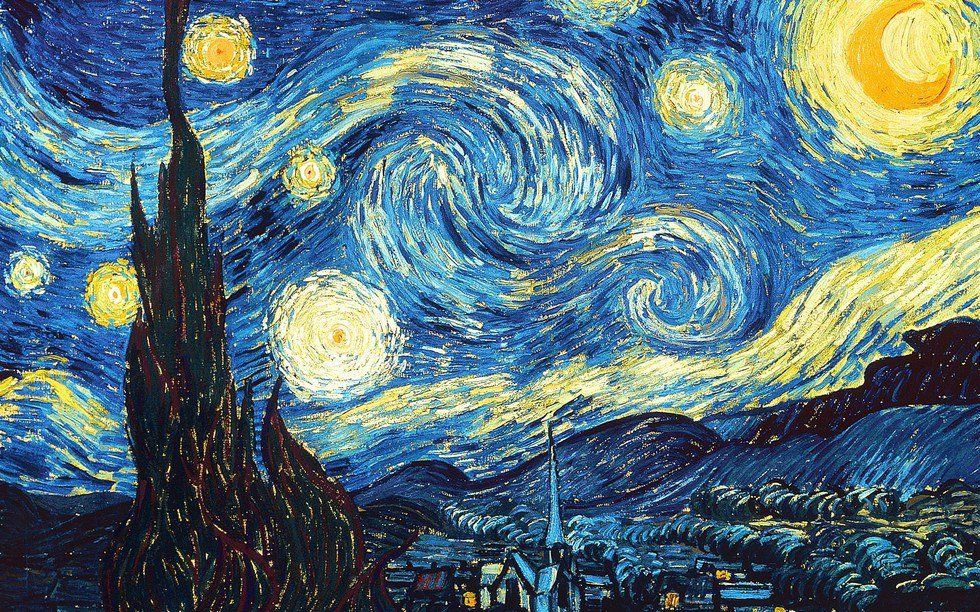
Despite the countless warnings, for the past four weeks I have been taking an art history course, specifically focusing on art since 1945. I can tell you, with absolute certainty, that it is by far the most challenging class I have ever been in. Despite having both Dictionary.com and Google at my disposal, the readings took an excruciatingly long time to understand. In the art world, most concepts are fluid; concrete definitions are few and far between. The first paper was gruelling to write, and it only had to be four pages long, double-spaced. For upwards of ten hours I studied the same piece of work, trying to find as many connections to my thesis as possible. By the time I reached the conclusion, I was pulling at straws, completely convinced that half of what I was seeing wasn’t actually there. While I wrote this paper, I realized that I never learned how to analyze an image in high school. In fact, my school didn’t even have a high school art teacher until my junior year. Up until then there had only been an online program which was, according to my sister, as helpful as watching paint dry. All puns aside, I realized that the TV show Glee really wasn’t that far off. Arts are not a priority. Some people act as though majoring in art is a cop out, an easy way to get a degree. I, as well as the twenty-some other students in my class, can assure you that it is not.
Don’t get me wrong; this article isn’t arguing that studying art is more important than science, math or any other discipline. I merely want to suggest that it is just as important and just as rigorous as any other field of study. It is a piece of culture that I wouldn’t want to live without, and I don’t think you’d want to either.
















