
According to the 2010 United States Census Bureau, 50.8%, or approximately 157 million, of the United States population is female. Therefore, half of the United States is composed of women and around half of the population of this country has a unique health concern that the other half does not have to deal with. That’s right. In simple terms, we get periods.

People in the United States tend to shy away from the topic of the menstrual cycle and stigmatize the issues that come with it as just “that time of the month.” Yet, periods are a serious health issue that women all over the world have to deal with. It is a biological function that women cannot control and cannot ignore. Thus, “Sanitary products are vital for the health, well-being and full participation of women and girls across the globe.” (Valenti, Jessica) Yet, we are taught from a young age to hide this fact and to not talk about it, as if it were a dirty and improper topic, rather than a simple biological function.
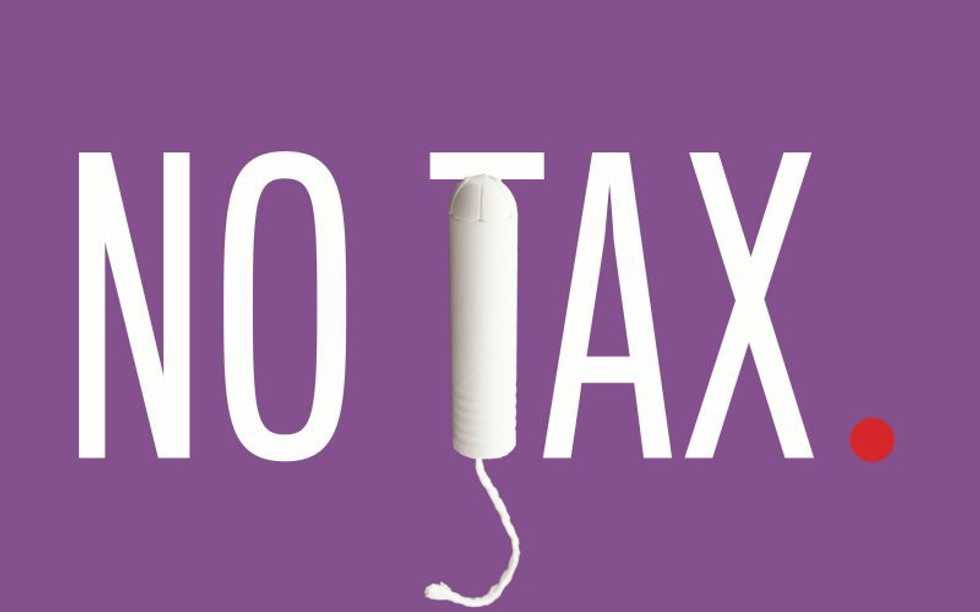
This may be why injustices regarding women’s menstrual health have been allowed to continue for so long. According to Fusion author Taryn Hillin, tampons and similar products are taxed in all the states, excluding a handful of states, including Maryland, Massachusetts, Pennsylvania, Minnesota, and New Jersey. Most states in America tax all “tangible personal products,” but do not tax certain “necessitates,” or non-luxury items, such as groceries, food stamp purchases, medical purchases, clothes, and agriculture supplies.(Hillin, Taryn) Of course, these exemptions vary from state to state.However, tampons are rarely considered a necessity by the government. “Yet as every woman who has ever gotten her period knows, feminine hygiene products are not a choice; they’re a required part of being a woman.”(Hillin, Taryn) On top of this, food stamps do not cover feminine hygiene products, adding an extra stress on low-income women.

And the prices do begin to pile up rather quickly. According to California assemblywoman Cristina Garcia’s office, women in California pay seven dollars a month for 40 years of tampons and sanitary napkins. That is around 84 dollars a year and approximately 3,360 dollars for forty years, per woman. For 157 million women, that equals approximately 527,520,000,000 dollars over forty years. Statewide, it adds up "over $20 million annually in taxes.”(Larimer, Sarah) Basically, we are being heavily taxed for being a woman and for having a natural biological function that we cannot control. A representative for the Idaho State Tax Commission argued in an email to Fusion, “Tampons and pads are used for feminine hygiene and not for use in the diagnosis, cure, mitigation, treatment or prevention of feminine diseases.” While periods are not a disease by any mean, they are still a serious health concern women must deal with that tampons and pads are required to control.

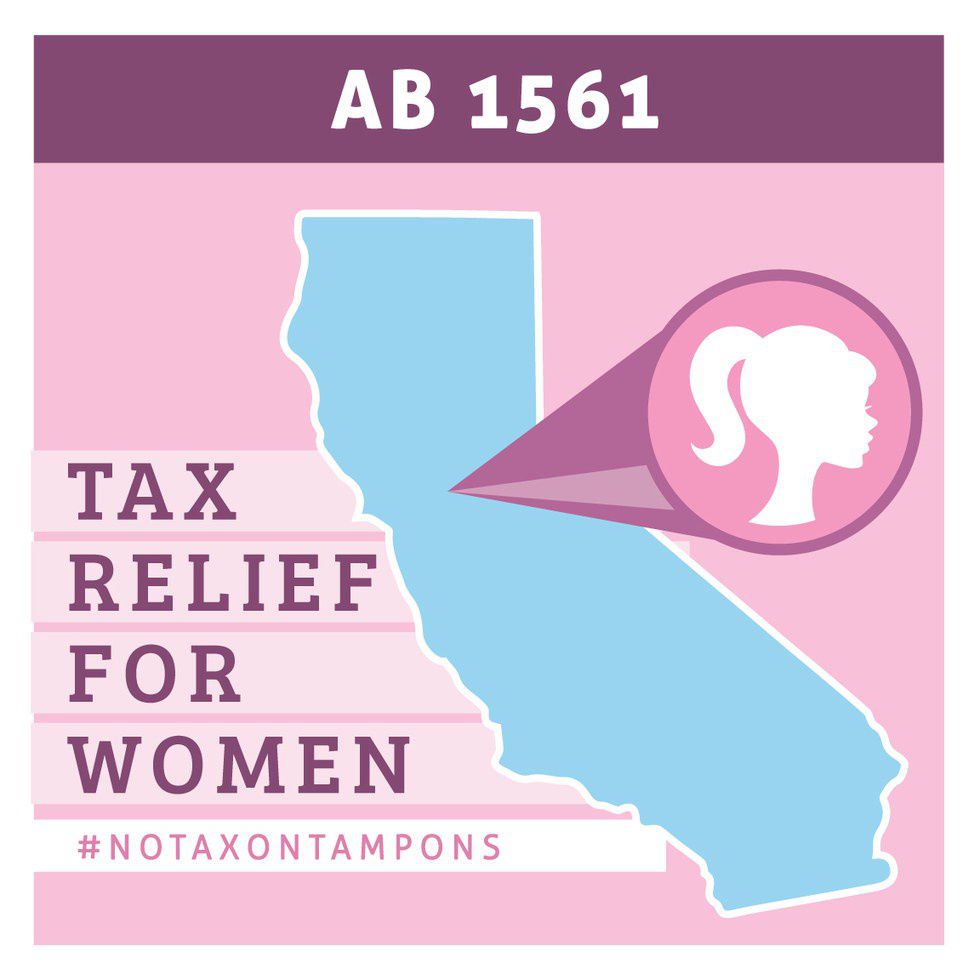
So how can we fix this problem? Canada has become the first country in early 2016 to remove the tampon tax in response to an online petition that thousands of Canadian citizens signed. Now, even more, women are fighting to ax the tampon tax in the U.K., Australia, and the United States by staging public protests. In California on the first day of its 2016 legislative session, Assemblywoman Cristina Garcia announced Assembly Bill 1561, which proposed an end to the tampon tax. However, in order to truly relieve all American women from this rising strain, the government would need to slash the sales tax on all feminine products. (Hillin, Taryn) Thus, we, as American citizens, need to pay attention to the injustices occurring around us and vote accordingly to end it.
The United Nations and Human Rights Watch have both linked menstrual hygiene to human rights. Jyoti Sanghera, chief of the UN Human Rights Office on Economic and Social Issues, called the stigma around menstrual hygiene “a violation of several human rights, most importantly the right to human dignity”.(Valenti, Jessica) This concern is not just a problem of women around the world, but to men as well. You all know women who are affected by this injustice and who must pay the price for simply being a woman. We all must stand together to help bring equality to the United States.