


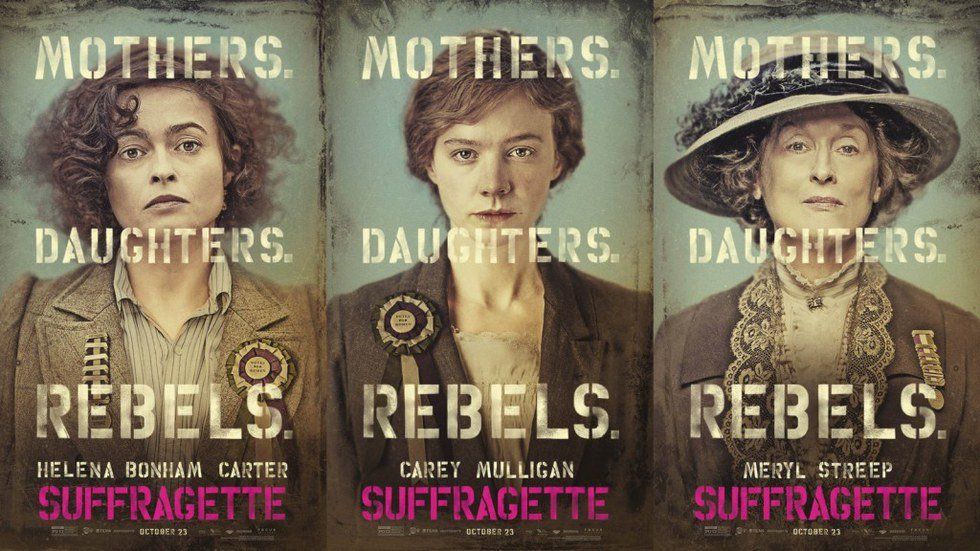
On Nov. 6, the film "Suffragette" marched its way into theaters. The film, based on true events and people, documents the suffrage movement in London 1912, starring Academy Award nominees Carey Mulligan and Helena Bonham-Carter and three-time Academy Award winner Meryl Streep.
I had the pleasure of viewing a prescreening of the film through my school's newspaper.
The film follows Carey Mulligan who plays a poor, young laundry maid in East London named Maud Watts near the height of the suffrage movement. Watts meets many women who identify as suffragettes through work and acquaintances, allowing her to discover for herself if she is one. Women were deemed "unfit" or " not mentally sound" to cast a vote, obviously that is not true. Suffragettes — women who protested for the right to vote— were public enemy number one.
Police brutality was common as it was seen to "put women back in their place," and surveillance was enacted on key members of the suffrage movement (the first time surveillance was used on civilians during peacetime). For Watts, it is a big decision for her to chose whether or not she wants to become a suffragette since she has everything to lose.
After meeting Edith Ellyn, played by Helena Bonham-Carter, a middle-class pharmacist and a quick run in with the fugitive leader of the suffrage movement, Emmeline Pankhurst played by Meryl Streep, Watts makes her final decision and deals with the consequences after.
"Suffragette" is a very well done film that was directed, written and produced by women — BAFTA Award-winning director Sarah Gavron and BAFTA Award-winning screenwriter Abi Morgan, produced by Academy Award winner Alison Owen and Faye Ward. The film is very and for good reason, female-centered but balances out by displaying both gender's ideas of the time.
Set in 1912, it does not feel like a period piece in terms of costuming — characters were dressed for their status of the time and since Maud was a poor woman, the audience sees her disheveled most of the time, keeping a bit of relatability. The film keeps pace and uses dynamic camera angles that keep the viewers engaged.
A movie like this is very much needed at this time. It illustrates the difficult fight for the right to vote and why those who have the ability to vote, should. At this point and time, women around the world have just been granted the right to vote in Saudi Arabia. The film also tackles unequal pay, sexual harassment and violence at the workplace.
I strongly encourage everyone to go see "Suffragette." It reminds us of how far we have come and how much more needs to be done for women's rights. It isn't just a "women's" movie, it's a "people" movie about the fight for equality.
Here's the trailer for Suffragette:
And a timeline of when women's suffrage granted by country:

















