“The employers will love this generation, they are not going to express many grievances… They are going to be easy to handle. There aren’t going to be any riots.”
So went the prophecy by the president of the University of California in a 1959 publication of the American Council on Education reporting a conference on the college student. Looking back on his comment, it does not merely have a curiously outdated ring -- what was in all likelihood a simple, matter-of-fact statement has proved so flagrantly wrong that it now seems smug, self-assured, even arrogant.
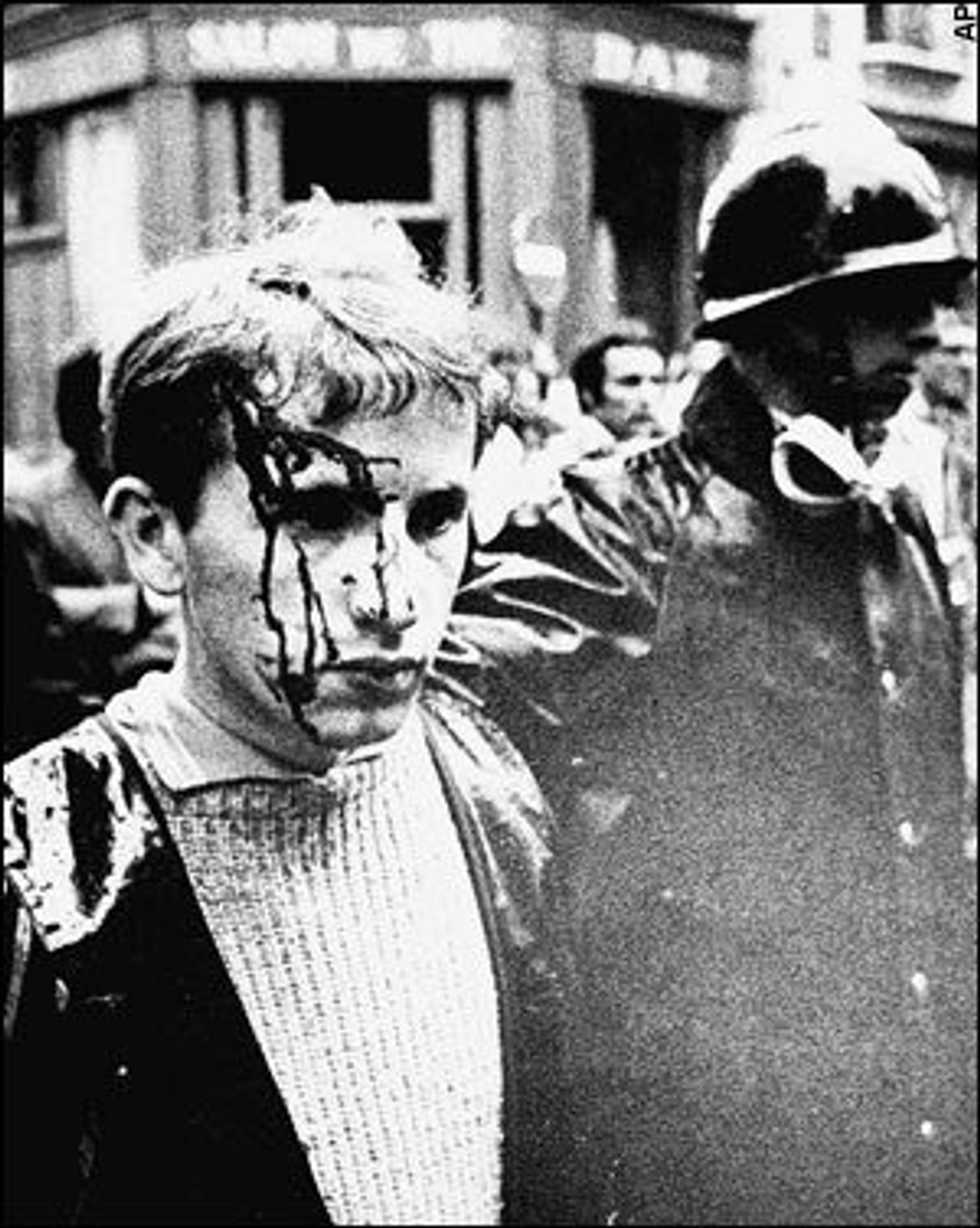
By 1960, Bay Area newspapers were exploding with the news: Students Riot At House Un-American Committee Hearing. The years following revealed more stirrings of youths’ discontent; a moiling-and-toiling brew which culminated in the rebellions of summer 1968. The “easy to handle” youth -- apathetic and conformed, perfectly silent and deferring to authority -- was a label better left in the '50s.
Now, in our day and age, as the clever hopes expire of a low, dishonest decade: we continue to be mired in the same unresolved international conflicts, the agents of the largest economic crash since the Great Depression go apprehended, economic inequality is steeply rising, corporations continue to encroach on every aspect of our lives, the solution to impending environmental catastrophe stands yet to be taken seriously, and there is no real counterculture to offer an alternative.
Where is the voice of dissent?
For all of the surface-level insipidity and self-sated homogeny of consumer culture which predominates in the younger generation, there are fissures beginning to show among the rank-and-file. It seems there is a growing crop of students becoming conscious of the historical moment -- just as in the 60s -- finding radical actions and solutions the only reasonable way to react. Dawning is the understanding that there are brave and good causes to be fought for and there is little time for existential anomie. Thus, though fully conscious of their dreary prospects, people are increasingly voicing dissent “as if” (Valclav Havel’s sarcastic phrase-tactic of subversion against Absurd Soviet power, which he dubbed “The Power of the Powerless”) they are being listened to, and will continue doing so until the cumulative effects are felt.
Principles of Resistance
There is a resurgence of the moral in leftist politics. Perhaps it is in reaction to the blatant amoral -- and oftentimes immoral -- behavior of members of both parties, an invidious bunch whose unprincipled approach is guided solely by powerful interests, outworn platitudes, and a sort of cynical realpolitik. And so we can observe the focus shifting from pragmatic operations within the current system to a more fundamental and deeply searching line of inquiry: is our society just? Are those who run it representative and/or competent? What alternatives are there?
There is never a change in power dynamics, save for the natural process in which power tends to aggregate itself, unless the public makes demands and makes them vociferously. But beyond the raising of voices in a choir of admonishment, those who want legitimate democracy and not just a polyarchical parade of facile engagement must back up their words with hard power. Never has the ruling class relinquished power willingly. The options must be made forcibly clear, for, on top of their advantage on the scale of power differentials, class consciousness is understandably high among elites, which makes them a much more formidable and unified force. With a vastly complex propaganda apparatus (i.e., corporate media) and the “acceptable” violence of the state (i.e., law enforcement and military, a couple with the unfortunate condition of looking alike) at their aid, resistance seems evermore a tall order.
But even among the twin pillars of Media and State, there are allies for the progressive cause. With sites like The Intercept, Jacobin, Bill Moyers, broadcasts like Democracy Now, and politicians like Bernie Sanders and Elizabeth Warren, who speak truth to power within its corridors, there is already in place a network of strong, well-articulated dissent. In fact, statistics suggest this is a new age of dissent. In this, we can find hope -- but we should not get too heady with sentimental cheeriness for an expected brighter future. Inertia only works if there are no outside oppositional forces at play.
Rather than clinging to our delusions so desperately in avoidance of an unsatisfactory and downright terrifying reality, a salutary dose of pessimism and a sense of moral imperative is needed. Beyond that, indignance is the basic motive of any truly revolutionary movement. Incapable of resigning to the unsatisfactory present, the downright unbearable conditions of humanity -- this is the impetus which drives protest. Our society has ceased to be ambitious: Programs like pensions allowing workers to end their days in dignity and Social Security, which guaranteed that no citizen would go without basic means to survive, are being undercut. And these are merely exemplifying the lowest of failures: the failure of society to support its poor and weak and elderly. There are many, many more issues to lose sleep over.
Therefore, it is a welcome development that people are starting to demand that a true democracy, both economic and social, be established (which implies the eradication of the economic and financial feudalism regnant in our current economic system). We have remained disengaged for too long. The hour for engagement is now; there was never a more necessary time in history to be involved: The world is being led by men who are robbing humanity of its birthrights. More than protests, most needful is organized resistance to the highly concentrated pockets of private power. But that by its nature is difficult, because, for one thing, they are not as identifiable or considered as responsible to the public as a government tyranny.
What is always important to keep in mind is the principle of self-determination. Just as the anti-war groups, Yippies, and SDS took the initiative at the 1968 Democratic National Convention and came out to Chicago in droves to make the cause of democracy heard, rather than letting establishment candidate Humphrey slip in without a hitch in Soviet-style party nomination; so did Occupy Wall Street in castigating financial capitalism; and so does Black Lives Matter in criticizing police brutality. However, the differences between the times are extreme. Not least in that the former carved out a movement with a spirited vigor and intellectual tenacity not yet seen in today’s protests. Most importantly, they ceased to merely behave “as if” and started effecting the change they wanted to see in the world.