
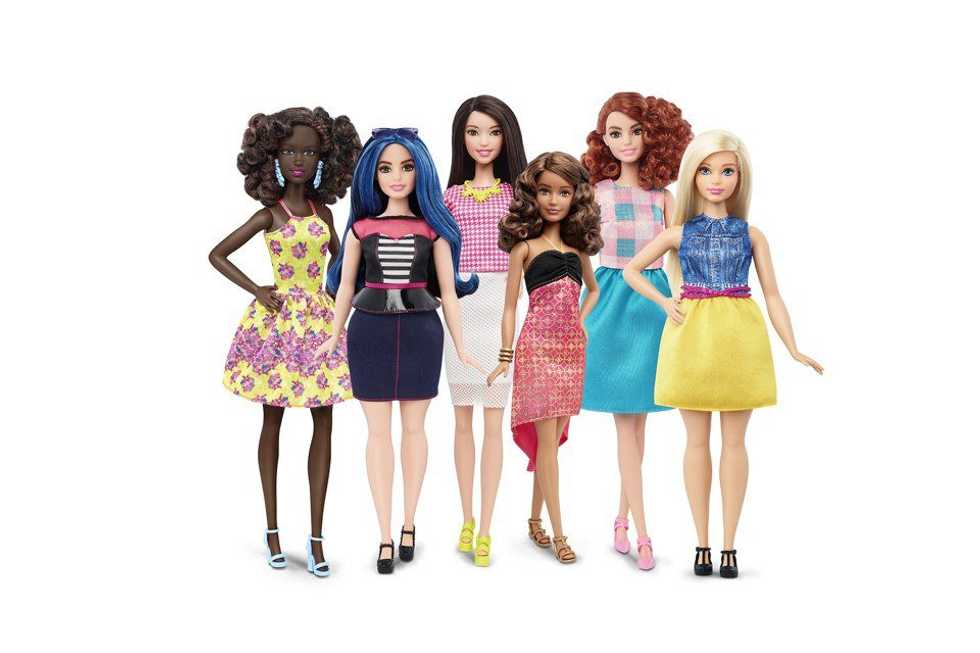
When I was three or so, I received my first American Girl doll as a gift after eye surgery. I named her Angel and loved her, partially because her hair color was so similar to mine. I had never seen a doll with dirty blonde hair before.
Later, in 2007, the year I turned nine, American Girl came out with a Doll of the Year named Nicki. She had green eyes and curly blonde-ish hair, and I think I teared up when I saw her picture in the catalogue. I was so excited to see a doll that actually looked like me, with curly hair, and I still have her to this day. As small as it may seem, the lack of curly-haired dolls really bothered me as a kid.
As a smart, blonde, curly-haired girl, it's difficult to find a representation in modern media who both looks and acts like me. Most blondes on TV are the stereotypical bleached blonde, popular, ditzy girl, and I used to be incredibly sensitive to blonde jokes because of how demeaning they felt. Most girls have either straight hair or very manufactured beach wavy hair, and that's what the media pushes as attractive. The only smart role models I could find were nerdy male characters, and the only blonde female characters I could find were dumb and arrogant. It wasn't until age 12 or so that I truly understood just how much that impacted me.
I grew up with a warped perception of my own beauty and potential just because of how difficult it was to find a person who matched me. To this day, I still have yet to find a female on TV or in a book who looks like me and acts like me. Rose Tyler from Doctor Who wasn't insanely skinny, which brought me to tears because I had a moment of "wow, this girl is a major character in a TV series and she looks like a normal human!", but Rose and I are not incredibly similar personality-wise. I related to Spock from Star Trek, but his situation is incredibly different from mine. Hot girls are usually portrayed as ditzy, and smart girls are normally made fun of for not having style or being unattractive. Men are portrayed as stoic and buff, and the male characters who do express emotions are often made fun of for being "weak" or "feminine." The media's portrayal of people, especially women, relies so heavily on stereotypes that there is no room for people who don't fit in those very narrow definitions.
Full disclosure: I am a white, middle-class girl. I know that in the grand scheme of representation, I have more role models in the media than most. But consider this- if I, someone with media representation, have such a hard time finding someone who I can relate to or who looks like me, how much harder must it be for people who already have minimal representation? What about anyone on the LGBTQIA+ spectrum? What about minorities and people in lower socioeconomic classes? How left out might they be, and why is nobody doing anything about it?
It's time to change how we view representation and what we choose to embrace in our media. Even if you've never felt underrepresented in the media, there are other people out there who have. The world will never improve if we all simply work to change what hurts us and us alone; we have to stand together and work to make life more fair for everyone, not just people of our own gender, our own race, or those who come from similar backgrounds. Token representation is not enough. Instead of saying, "Oh, but there's a gay person in this show, so why do you want another one?", make having a mix of sexualities, including the lesser-known ones, the norm in media. Advocate for a wider array of relationships between characters on TV and in books, and let it be simply a part of the story rather than the main premise or that character's entire personality. Include Hispanics and Asians in shows and movies.
Consumers drive production; what we ask for in our media is what it will eventually become. If we want a world where people grow up with a positive self-image and have role models who act and look like them, we have to be the ones to push for change. It's not an obscure problem; it's a real and widespread one. And fixing it? That's up to us.