

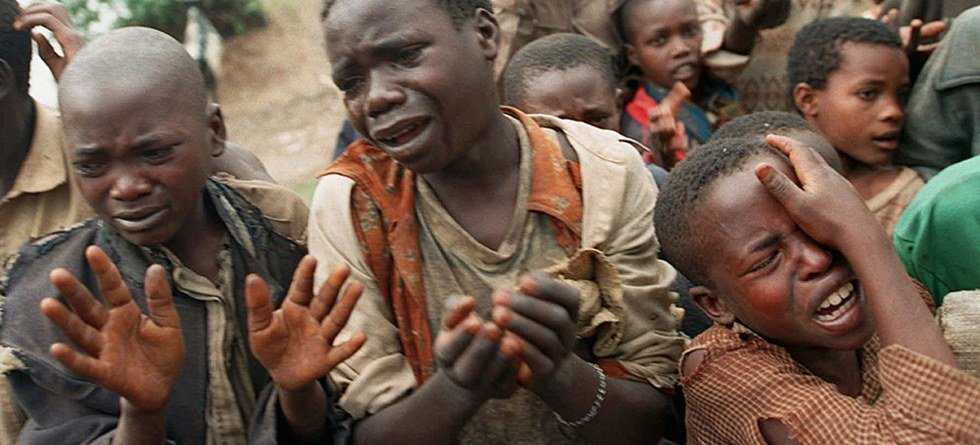
On April 7, 1994, the plane of Rwanda's President Habyarimana was shot down while flying into the capital city, Kigali. Almost immediately, the Interhamwe, a group of radicalized Hutu, began slaughtering innocent Tutsi people all throughout the country. This marked the beginning of the 100-day Rwandan Genocide.
The conflicts that escalated into genocide go back many decades prior to 1994. In fact, they can be traced all the way back to when the Belgians colonized Rwanda in the late 1800s. Before colonization, the Tutsi and Hutu distinction was one of class and caste, not one of ethnicity or race like many people believe today. Tutsi were cattle herders and Hutu were farmers. Back then, it was even possible for a wealthy Hutu to become part of the Tutsi class. This distinction became even more pronounced, however, when the Belgians chose the Tutsi, who were the minority, as the ruling class. This led to the Hutu becoming disenfranchised in Rwanda, which caused resentment that grew over the next few decades.
Just before the Belgians left Rwanda in the early 1960s, fighting broke out between the Hutu and Tutsi, and the Belgians helped the Hutu overthrow the Tutsi government. Widespread murder of Tutsis caused many to flee to neighboring countries. Although there were random outbursts of violence against Tutsis in the years that followed, Rwanda as a whole was peaceful, and Hutu and Tutsi were neighbors and family. While some in the older generations were still prejudiced against Tutsi, some Rwandan children did not even know what the two labels meant. Until April 1994.
For months prior to the start of the Genocide, Hutu extremist groups had been disseminating anti-Tutsi propaganda over the radio. They began dehumanizing them and riling up hatred in the Hutus against the Tutsis. The extremists called for the Hutu to arm themselves against the Tutsi, who were allegedly planning to attack the Hutus (which was untrue propaganda). This is why, mere hours after Habyarimana’s plane was shot down at Kigali Airport, mass killings of Tutsis were already underway.
During that 100 days, over a million Tutsi were killed in Rwanda, a central African country the size of Maryland. Unimaginably gruesome murder tactics were used; no Tutsi was spared, not even unborn children. The Belgians began an identity card system, and in the days of the genocide, roadblocks were set up and, in order to pass, one had to show their identity card. If you could not prove that you were Hutu, you were killed on the spot. Many people believe that these killings were just part of a Rwandan civil war. This belief led the international community to delay aid for months, allowing thousands of preventable deaths to occur. This was not a civil war; it was a full out, premeditated and orchestrated genocide against the Tutsis.
I write this article now because April 7, 2016 marks the 22nd anniversary of the start of the Genocide. Every year on this day, Rwandans begin a 100-day mourning period to remember and honor the loved ones that they lost. I write this not to highlight the horror and suffering of the Genocide, but instead, the miraculous recovery that Rwanda and her people have experienced over the last 22 years.
In November 2015, I had the privilege of visiting this wonderful country. I learned a lot about the Genocide, its causes, and its lasting effects. I visited memorials where thousands of bodies were laid to rest, and a church where hundreds of people were murdered. But what I remember from this trip isn’t misery; it’s hope. As a whole, the Rwandan people are the most joyous, friendly, and trusting people you can imagine, even though pretty much every family in Rwanda has been deeply affected by the Genocide.
Because of a prison ministry and great leadership by President Kagame, thousands of prisoners who were suspected killers were released a few years after the Genocide. Upon hearing this, one may think that this sounds irresponsible and dangerous. However, the prison ministry facilitated the return of these prisoners to society and even, in some cases, helped begin the reconciliation process between the perpetrators and their victims. Perpetrators who murdered multiple people have, in many cases, been reconciled to the very families of the people they killed. This is so foreign to Americans, as it was to me when I visited. But these people know that the act of forgiveness and emotional healing is not possible on their own. They look to and fully rely on God for their healing, and follow His example of forgiving those who betrayed Him. My group visited a Reconciliation Village, which is one of many; here, perpetrators and their victims live among one another in peace and love. They consider each other family. The victims not only forgave the perpetrators, but were also reconciled to them. This facilitated the emotional healing of the victims, and also the perpetrators.
Visiting Rwanda impacted me in ways I never expected. I felt such a deep connection to the people I met there; I think of them every day, and during these 100 days my heart will be with them. Although the majority of the year in Rwanda is joyous and peaceful, these 100 days are annually set aside for mourning. The Rwandan Genocide is not something that everyone knows about. In fact, I only learned about it once when I was in school. The story of Rwanda’s Genocide and recovery is one that every person and country can learn from. So for these 100 days, please keep Rwanda in your thoughts and prayers, and seek to learn as much as possible from and raise awareness of the horrific events that occurred here in order that it may never happen again anywhere in the world.