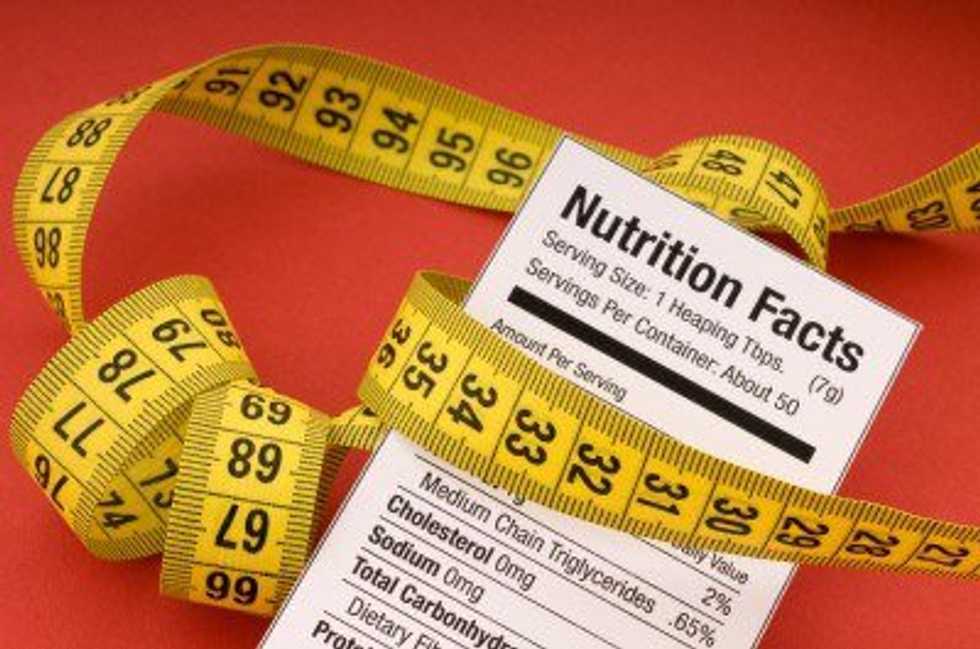
The good news is that the U.S. Food and Drug Administration is equipped to alter the Nutrition Facts Label on almost all packaged foods notably to be more honest. The bad news is that this well-meaning repair could genuinely backfire.
As part of a relabeling initiative the FDA is proposing to revise the serving sizes on food labels to better replicate the quantity consumers can actually eat. The proposed changes are anticipated to come into effect by the end of this year, if the rule passes. The changes will alter packed drinks and foods, including common items like potato chips, soda and ice cream. The agency also wants food nutrition labels to quote the amount of added sugars they enclose as a percentage of suggested daily calorie intakes.
The proposal gained immediate criticism from producers of foods and beverages, which argued that food labels baffle consumers and that the dietary limits, suggested by the FDA, on added sugars are not scientifically supported.
The rational supporting the relabeling initiative is quite straightforward. It's aimed at correcting the fact that recent studies discuss that American consumers tend to consume more food in one sitting than is specified on current food labels. The existing nutrition fact labels was last regulated 20 years ago, based on statistics collected from a survey from 1977 to 1988.
But what reads well in theory usually doesn’t work out that well in reality.
Research has proven that customers misunderstand serving size information, with the vast majority mistakenly deeming that the serving size on food labels denotes the amount that is appropriate to consume. The proposed Nutrition Facts label is anticipated to aid customers in making improved dietary decisions, but the existing research advocates that this may likewise backfire, leading customers to serve more amount of the product to others and themselves.
“Although the numbers can look good, the product may not be real food and have no nutritional value,” said Dr. David Kessler, who as the commissioner of the Food and Drug Administration championed the development of the existing label.
Additionally, given the high cost of reprinting countless food labels, the rule, though positive over all, does not go nearly far enough.
Primarily, it fails to provide anxious customers a quick and easy way to differentiate products that look alike, possibly by using strategies to emphasize the good, bad or neutral nutrition and health value of a food or beverage.
Furthermore, the proposed rule is lacking communication that would “actively encourage consumers to purchase real foods rich in fruits, vegetables and whole grains,” Dr. Kessler said. “The answer to obesity, if there is one, is eating real food and moving away from foods laden with fats, sugars and salt. Highly processed food goes down in a whoosh, but real food slows down eating.”
Larger serving sizes may just lead American consumers to increase the amount of food in their pantries and, ultimately, their stomachs. This will likely happen because of the fundamental misinterpretation of what the phrase "serving sizes" really stands for. Customers infer serving sizes as parameters and hence tend to consume a larger amount of food as the serving sizes grow. The nutrition facts label on a bag of potato chips, frequently has the serving size represented as an equivalent number of chips, and can have a weighty result in the number of chips a consumer feels appropriate consuming.
A particular manner to address this misunderstanding about what serving sizes imply would be to simply eliminate the term "serving" on the food labels, which infers an individual amount or a single meal. Another method, proposed by researchers, is to state clearly on the label that the serving size "does not refer to how much of the product can be healthily consumed in one sitting."
For more than two decades, the Nutrition Facts Labels have used identical serving quantities to converse nutrition facts to the public. Regulating for current eating habits without involuntarily leading to increased gluttony might just be a little more difficult than we believe.