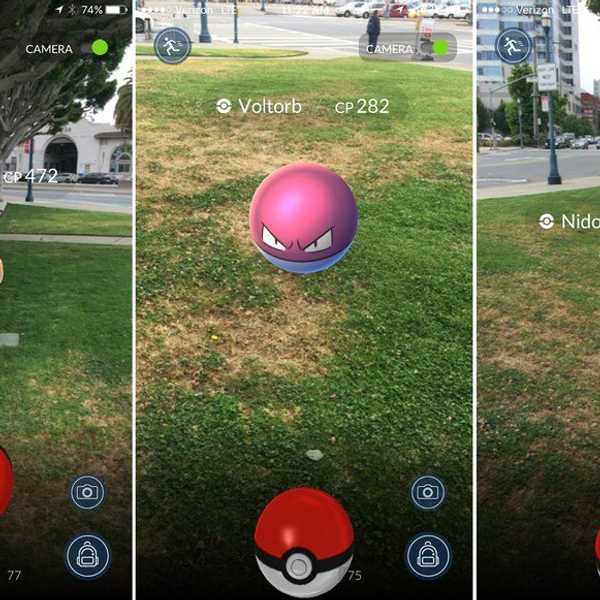
At first I said no because it’s Pokémon and I’ve never been into that type of thing. But now it doesn’t matter; I really want to play. But I won’t.
I know that if I play I’ll get consumed. At first I’ll play in public because “why not” catch some extra Pokémon if they’re there? Then, I’ll look for reasons to get out of the house just to catch Pokémon, and I bet I’d justify going wherever I go for a completely different reason besides playing the game.
What makes the idea of playing worse is that I know I’d ask friends to go places with me just to feel like going places is to spend some quality time with friends. We’d walk around with Pokémon Go and casually discuss what level we’re on, which unique Pokémon we’ve caught, and probably some frustrating moment of the game like when we were driving too fast for our Pokémon eggs to hatch (because, ya know, you have to go at walking speed to hatch the eggs).
I’ve overseen this cycle with my family and friends enough to know I want to stay away. Addictive games like Pokémon Go play toward the reward centers of our brain. Simply put, when a player catches a Pokémon, he receives some level of reward (be it points towards a higher level, a rare species that is valuable in a Pokémon match, or maybe just the bragging rights over friends who are also playing). This reward manifests in the brain through the release of chemicals that make you feel “pleasure” or that sense of accomplishment.
Pokémon Go is so addictive because of this reward and the right model of reinforcement. If a player knew he would find a Pokemon every half hour, he’d only try to play at those scheduled intervals. But since there’s a chance a player will find a Pokemon around the next corner, every corner he turns, putting the game down would chance not getting that reward. This is a model known as a varied ratio of reinforcement. The player receives a reward at unscheduled intervals, so he feels he must play at all possible times since there’s the chance his behavior will be reinforced at any moment. While he is playing, he is not actually seeking the Pokémon, per se, but actually the “pleasure” response in the brain. It just so happens that the Pokémon initiate this response.
Of course, no one playing Pokémon Go knows this is happening to them in the moment. I credit Nintendo for engineering a game that ties perfectly into human psychology. From a business standpoint, this game is a brilliant masterwork and their justification of the game, to motivate people to be active, is a great temporary objective. But, even though millions swear by Pokémon Go, I refuse to play and will find my sense of accomplishment elsewhere.