

OK, obviously everyone can wear whatever color they want, but the negative connotations around the color pink cannot be ignored. Our society views the color pink as that of damsels in distress, of girls too delicate to risk hard labor lest they break a nail. Now I realize -- and I hope you do too -- that assigning that kind of powerful connotation behind any color is wrong. In the English language, colors have no gender. So where did all of these binary notions originate?
Traditionally, the color pink has been used to denote both innocence and seduction, the desired double standard many women are expected to represent. And boys, afraid of appearing weak or having their sexuality questioned, tend to shy away from being associated with any shade of pink. This division is fairly recent. Before the 1940s, there was never such a strict visual divide between the feminine and masculine.
The notion that pink represents girls and blue represents boys is a Westernized ideal.
Growing up, the women in my life were some of the strongest I have ever met. My mom is a single mother and did most of the raising herself, with the help of my grandmother. This instilled in me a healthy dose of the power of the matriarchy. (Girl power, if you will.) Within my household, I wasn’t forced to align myself to as strict of a gender binary as other girls my age, but all around me it was still happening. By the time I was in elementary school, I struggled to accept the feminine (and subjectively weaker) role that many of the little girls around me seemed so happy to do.
In order to reject the role placed on me, I decided to hate the color pink.
I used to tell myself I hated it because of what I was told it represented. But by hating the color, I was still letting the societal binary have control over my life. It’s important to remember that we still have power over our opinions. When I was little, I saw the stigma of the color pink and how it was being fed to my generation. I rejected it, but I also made a mistake. I didn’t differentiate between the color and the societal opinion that color represented. I hated pink for years simply because someone told me I had to like it. But the truth is, I do like the color pink, and that’s okay.
Now pink is my favorite color, and characters like Elle Woods from "Legally Blonde" have changed my perspective on it. Elle is a woman breaking the typical pink stereotype. Although she comes across as an airhead at the beginning of the film, we soon discover that she is more than a Prada-wearing ditz. Her intelligence and tenacity speak for themselves. Elle is able to shatter stereotypes of the color pink and the delicate behavior associated with it.
I hope to abolish the negative opinions people are told to feel toward any color.
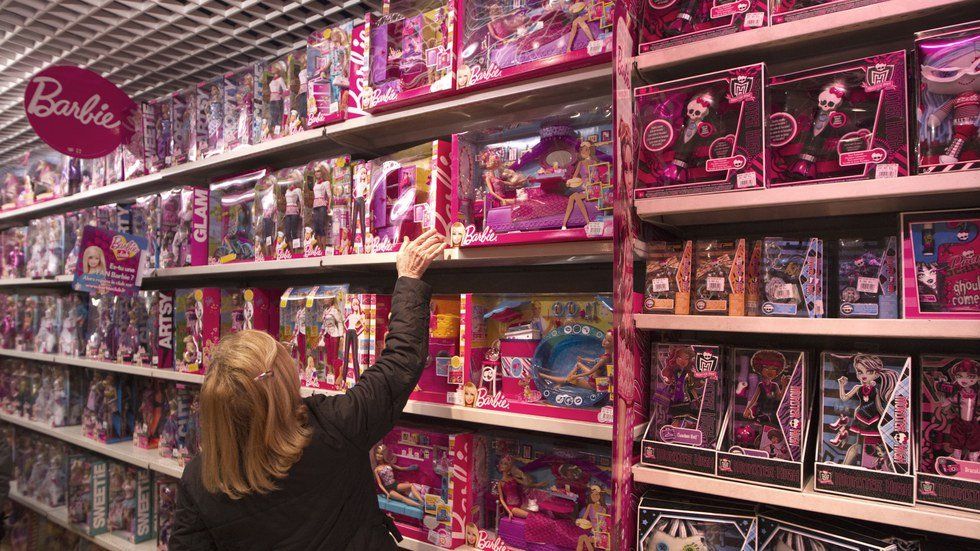
While I love the color pink, I am in favor of campaigns like Pinkstinks, which fights against the ‘pinkification’ of toys and products targeted towards a young female audience. They actively work to reverse the separation between genders this color war has caused and stress the importance of positive body image and media literacy. It’s important to note that getting rid of the color pink will not resolve the problem. Our solution lies with giving the colors pink and blue a non-gendered definition and creating an inclusive space where all genders can feel represented. As Pinkstinks’ website states, “There’s more than one way to be a girl…”
And I couldn’t agree more.

















