
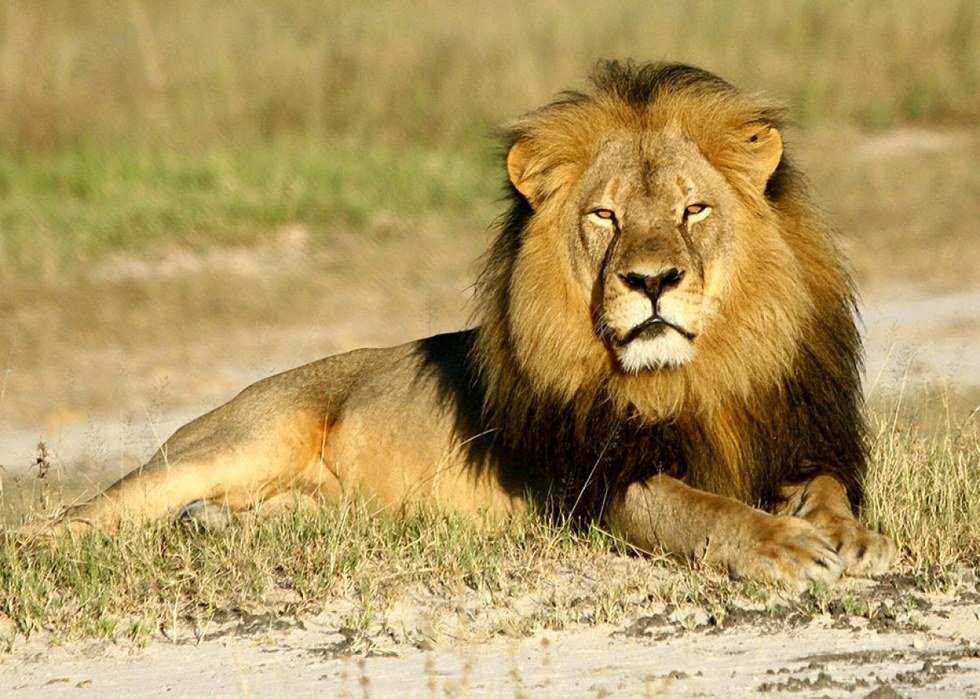
The killing of beloved African lion Cecil sparked an overwhelming reaction of outrage by people from all over the world, but it also brought to light an issue that has, for many, fallen under the radar.
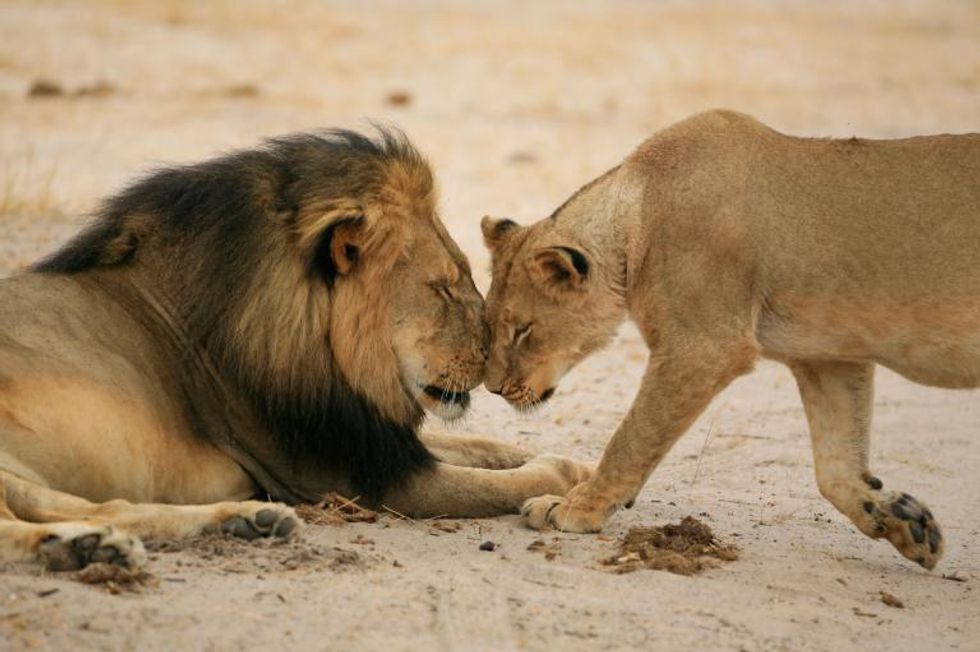
Doctor Walter Palmer, 55, a dentist from Eden Prairie, Minnesota, killed Zimbabwe’s most beloved lion on July 1 — a 13-year-old black mane male named Cecil.
Cecil primarily lived in the Hwange National Park in Zimbabwe, where he was the leader of 22 other lions in his pride. He has been tracked and studied since 2008 by the Wildlife Conservation Research Unit at Oxford University and is a beloved attraction because of his calm disposition when around humans.
Dr. Palmer, now one of the most hated men in the world, paid at least $50,000 for a permit to kill Cecil. At the time, he was unaware that the lion he was hunting was Cecil, but the Zimbabwean government and the U.S. Fish and Wildlife Service are now investigating the legality of the kill.
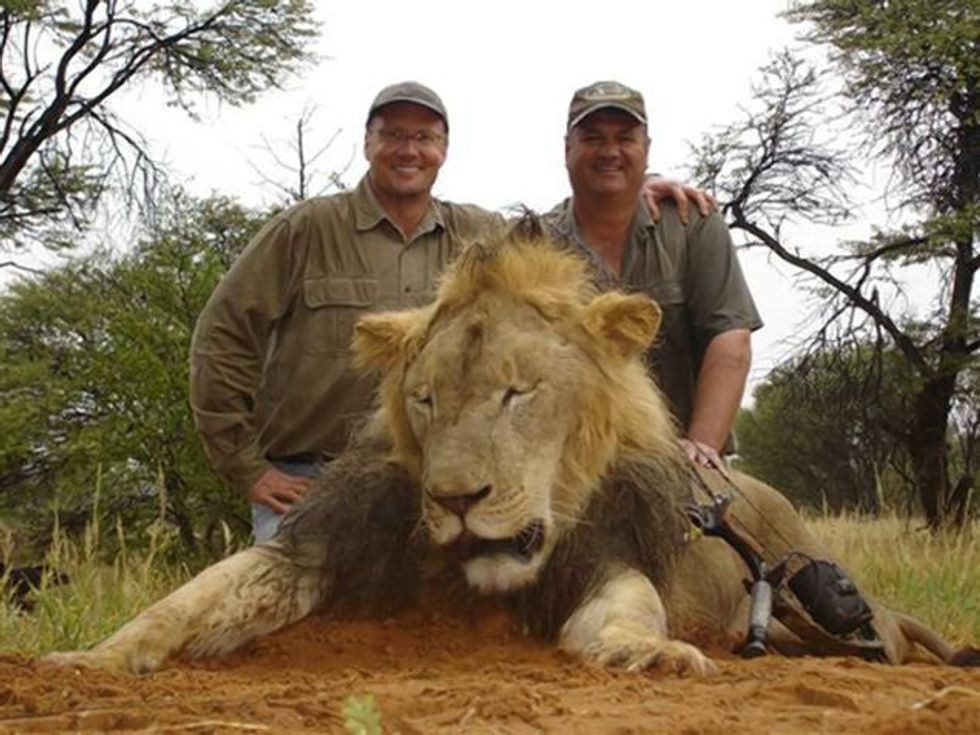
Under Zimbabwean law, Hwange National Park is a “free roam” zone, meaning that any hunting inside the park would be illegal. So, after luring Cecil with fresh meat outside of the park, Palmer shot Cecil with a bow and arrow. He then tracked him for more than 40 hours through the savannah to finally shoot and kill him with the riffle. Palmer and his two assistants, Theo Bronkhorst and Honest Ndlovu, then skinned and beheaded Cecil.
Bronkhorst, an expert hunter, and Ndlovu, a local landowner, were both arrested by Zimbabwean officials on poaching charges. Palmer has since gone into hiding, his whereabouts unknown.
The question that so many are asking now is why has it taken the death of one of Africa’s most beloved mammals to finally bring to light the main problem?
Trophy hunting is a long-time problem that is just now getting attention, first with the Texas cheerleader Kendall Jones and now with Dr. Palmer.
There are thousands of people from all over the world who are willing to pay large sums of money for permits to hunt big game and take their “trophies” back to their respected countries. The hunter’s thrill in killing these animals combined with the local’s need for revenue has increased the popularity of the sport.
According to Slate, foreign hunters export the carcasses of about 665 African lions, which are about two lions each day. This is not a new problem; over 200,000 African lions roamed the savannah a century ago, and now that number has dwindled down to just 32,000.
Of course, this number does not just reflect the effect of trophy hunting, but also the loss of habitat. Lions are now forced onto just 20 percent of the land they formerly lived on.
An advocacy website called “In Defense of Animals” (IDA) says that trophy hunting laws disregard species under the Endangered Species Act, meaning that just about every animal can be hunted with the correct permit. For the hunters themselves, this means that the more rare the animal, the more thrill in killing it and more bragging rights they receive.
The species in African that are at most danger because of their rarity are the African Big Five, including the leopard, elephant, lion, rhino and buffalo. However, they are not the only animals in danger.
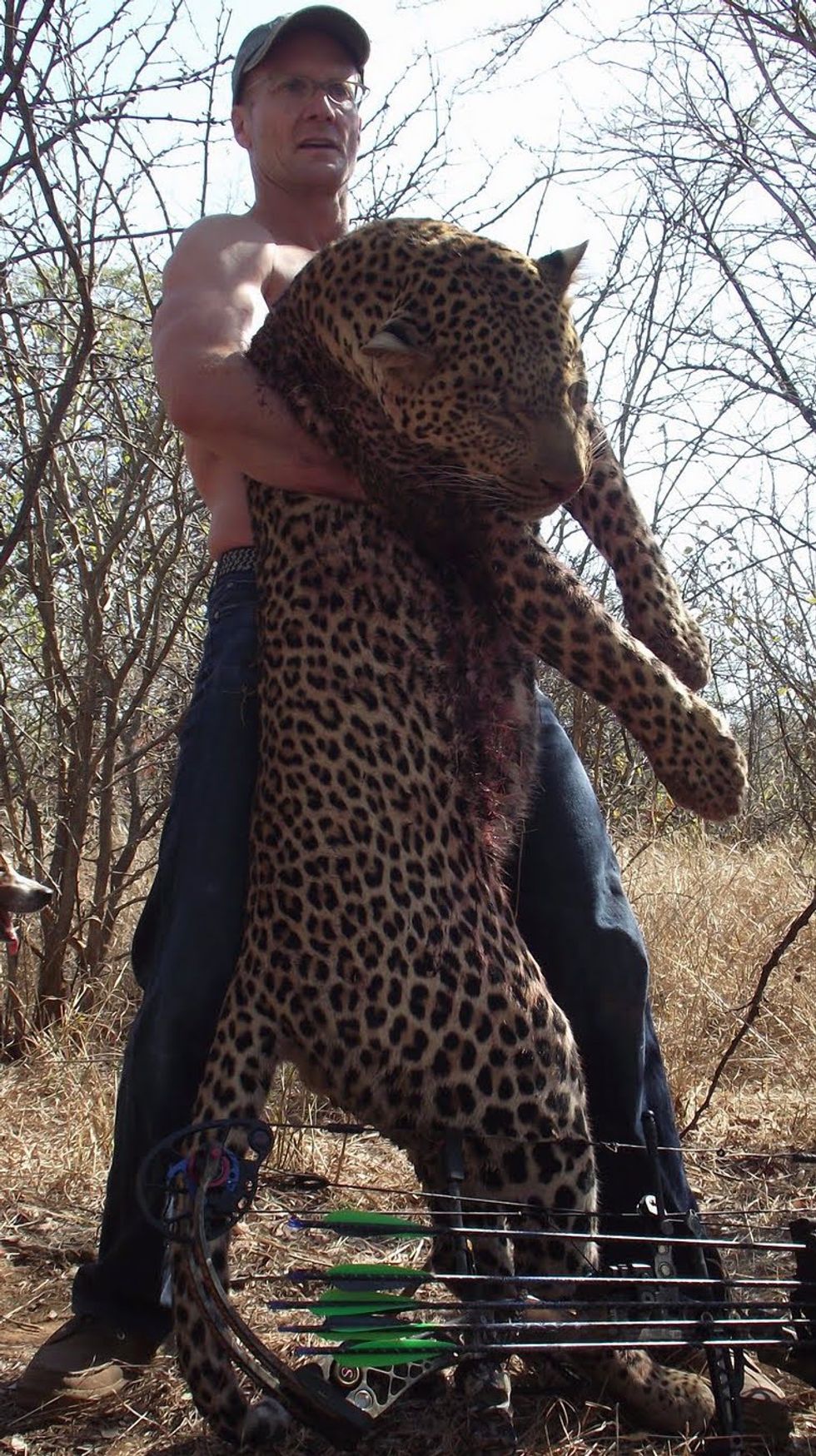
Within a group called the Safari Club International (SCI), a club of big-game hunters, which promotes competitive trophy hunting, gives to its members 29 different awards. To win all of these awards, a hunter would have to kill 322 different species or subspecies. Record kept by the group show that more than 1,100 different species have been killed by their members, some of which have since becomes extinct.
This group is not the only one of its kind and so far, there is no way to stop them. Some claim that by hunting big game, they are helping with conservation of these animals. However, the numbers just keep dwindling as the sport becomes more and more popular.
The death of Cecil has struck many people’s hearts, and there is now an outcry for something to be done about the issue. Proof of this lies with reactions toward Dr. Palmer himself. His whereabouts unknown, his online websites taken down, and his office vacant, Palmer’s life has been shattered by his mistake.
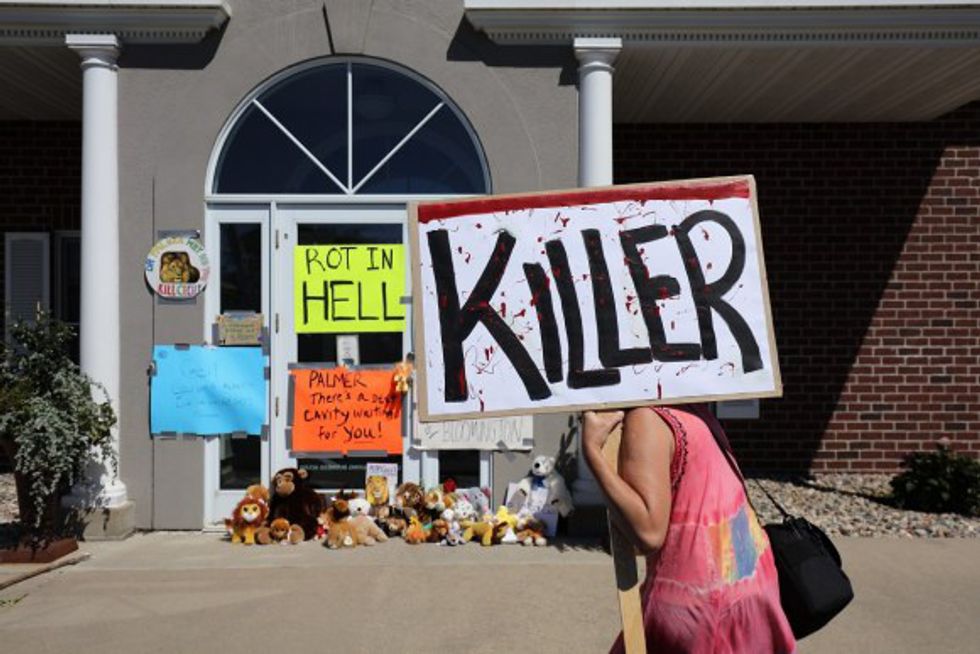
A memorial of stuffed animals is set up outside of Palmer’s office; right below a large neon sign that reads, “Rot in Hell.”