


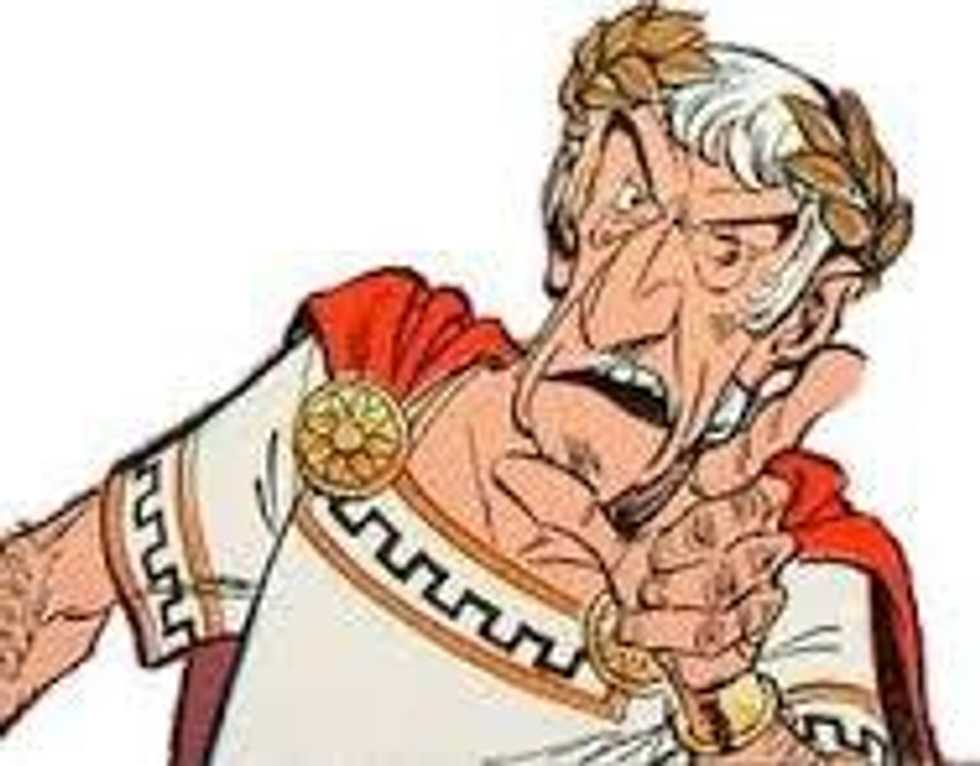
One man started the Roman Empire, and his efforts started when he was no more than 19 years old. Creating an empire is an unimaginable feat, but what is truly amazing was how Caesar Augustus was able to maintain this power for the majority of his life.
He remained in power for more than forty years, the longest tenure of any emperor. He did not retain power by being a tyrant and inducing fear to the people of Roman, but he rather utilized the resources around him to increase his popularity with the people in order to empower his regime. Though he did have multiple legions that were intensely loyal to him, he exploited avenues such as literature and the arts to keep the hoi polloi and the patricians from revolting against him. His exploitation of funding works in Latin literature was arguably the most important resource that Augustus had.
Due to this exploitation, Latin literature reached its zenith under Augustus. He funded the works of celebrated poets such as Horace, Virgil and Livy. Divus Augustus was more than an emperor; he was a master politician who maintained control over the empire without exploiting violence. By shaping the arts, he in turn shaped the way people saw him and the power of his regime.
Augustus had an ideology when it came to his empire, and it manifested itself in the literary works he funded. The prominent literary authors of the day placed themselves before Augustus for a multitude of reasons. Each author had his unique reasons for having Augustus as his patron, but the four main themes included: to celebrate the second birth of Rome, the return of prosperity and peace, the reign of youth or to earn the respect and favor with the Imperator.
As with the poets, Augustus’s ideology can be broken down into four themes: peace, social order, the defense of the libertas and for the return of the four Roman Virtues of bravery, leniency, justice and piety. These themes pervaded themselves in all aspects of the arts.
The intense power of literary imagery was utilized and exploited in order to announce the dawn of the Golden Age of the Roman Empire, and some would argue the dawn of Latin literature itself. Though the majority of the patricians were literate, many plebeians could not read and by enriching the stories with imagery, literature captured the imaginations of both classes.
The leading poets of Augustus’ day were the prime driving force in maintaining power in his regime. Within each of these poets Augustus had discovered a powerful vehicle for his propaganda. They wielded a unique and powerful influence over the beliefs of the populus through their writing.
This idea was by far not an original one; it was common in the days of the res publica for the patricians to influence literature through their patronage. The aspect that separated Augustus from the patricians of a bygone age is that he refused to stop at retaining client poets to write to advance his personal political status; he carried this further in order to establish a dynasty both old in history and able to extend into the future.
This promotion was also for the status of his venerated ancestor Aeneas. By promoting Aeneas, he was promoting his own bloodline. This strategy served the Imperator well as he tried to connect himself with Aeneas. This connection was further strengthened when Virgil wrote the Aeneid and portrayed the qualities of persistence, self-denial and obedience to the gods that built Rome and connected the Aeneid to Augustus.
Even with Augustus’s long list of accomplishments, he still required help with recruiting these authors. His chief advisor, Maecenas, had the role in securing the prominent poets early in their careers. Through Augustus’ personal auctoritas and patronage of these poets he managed to exert great influence over the literature that was produced.
Augustus believed that with being the descendent of the god Julius Caesar he then had the auctoritas to lead the Empire of Rome. The addition of his client writers showed his determination in having Rome believe it as well. Augustus was a master in politics because he saw the value in having writers on his side, and in turn these poets wrote verses celebrating the accomplishments of the new Roman Empire and its heroic past. This can be especially seen when Horace, the court poet, wrote the “Secular Hymn” for the celebration of the Secular Games.
The solidification of his power was not to simply rule an empire. Augustus wanted to provide both political and moral leadership for an empire that was rightfully his in his mind. He valued auctoritas as the vital attribute to his rule. Auctoritas affected more than just politics, it shaped the tastes and opinions of the classes and can be seen in the literary works that Augustus funded.
He as the wielder of this power was able to limit what could and could not be published, which in later years would become more restrictive. The strong ideas and moral beliefs of the princeps was witnessed in the works of the Augustan writers. The influence he exerted over the legend of Aeneas shows his efforts were not simply political propaganda, rather it was a reshaping of Roman literature.
The works of this time can also be seen as a product of his auctoritas and the authors attempting to curry favor with the Imperator. These works were not for pure entertainment, historical record, or even legitimate social commentary. This was a deliberate attempt to shift the focus of Roman literature towards the unflagging support of his imperial regime.
The evidence found in these works highlights the pervasive influence Augustus asserted to influence the populus of Rome and to create an age of literature in his own image. The concept of literary patronage had achieved its maturity when Augustus exploited it to further his political and moral agenda. This was the key to his political success and the reason for his long tenure, even after officially stepping down from the consulship.

















