
It's a familiar scenario: I'm standing at the top of a hill, sunlight on my face, gazing down at the corpses of my enemies strewn across the landscape like so many used candy wrappers. We did well, all told: the goblin army put up a fight, but we managed to get through with minimal injuries, and with a +1 Sword of Maiming for our trouble. I turn to my companions- all white, all male, save for one scantily-clad elven lady who winks at me and says, "Nice job, handsome."
At which point I remember: in this game, I am not a 19-year-old woman sitting behind the computer screen and struggling not to eat an entire bag of Kettle chips. No, I am Belgoth, slayer of dragons, seven feet tall with a long red beard and several chest plates and very, very manly.
None of this is by choice. When I booted up this game and many others like it, the title screen gave me all the information I needed to know: white male hero starts from humble beginnings, claims his birthright as the savior of the land, kills some monsters and saves some damsels and has some awe-inspiring sex while he's at it. There is not a lot of room, in this dialogue that is the game story, for someone who doesn't fit that description.
I am hesitant, as a woman, to tell people that I play video games. This puzzles me sometimes. After all, I am the first to broadcast my all-consuming love for "Star Trek", or the Discworld series, or "Ace of Cakes." Why should something that involves pressing buttons on a keyboard to make things happen be any different?
We've seen a lot of this, even as the gaming industry has been employing more women, and as more female-identifying people have begun calling themselves gamers: because that identity carries with it a lot of baggage. It recalls the speckly, nerdy boy in your ninth grade biology class on his Gameboy color, or the guy getting way too into the "Call of Duty" display at the mall. And it's not necessarily that women are unwilling to embrace this identity: it's that men, very often, are unwilling to give it up.
I don't get into shooters, or MMORPGs, which tend to be the battlegrounds for the most sexism and abuse in the inter-gamer community, and my online presence in those circles is nonexistent. But it's obvious even from the outside that kind of behavior discourages women from joining those communities, which can be breeding grounds for all kinds of hate (racism, transphobia, you name it) but still carry with them the mark of a certain kind of prestige. If you're in, you're in; if you're out, you're cannon fodder.
And it's not limited to individuals either. Games are still very much targeted at men. This is evident from the standard game package featuring a large-breasted lady looking sulky in the background while the man brandishes his sword/gun/other phallic object in the middle. It's a problem with advertising everywhere, a double-standard that women face pretty much everywhere you turn.
And then there's the matter of game design. I can't count the number of times that I have been stuck playing as a dude in highly-regarded releases when the few games that feature women exclusively as the main character (I can count the examples I know of on one hand! In every genre!!!) get slammed and often disregarded because of it.
Granted, many games nowadays do let you choose your character's gender. But very often I find myself playing as the man anyways because the noises the female character makes every time she runs too fast or slips on a rock are so grating and overdone that I just can't deal with them for a 30+ hour gameplay, and her clothing is almost nonexistent. Male, it seems, is the default: no weird noises, normal clothing (well, normal for medieval Britain) and dialogue options that actually fit their situation.
(On the subject of clothing: the excellent comic "Rat Queens," which deserves an article all to itself, recently published a short strip about this very conundrum. Check it out here.)
And the ramifications for this lazy, sexist, one-way thinking are much broader than just my own personal enjoyment. There are plenty of talented female writers, coders, designers and developers who never get recognized and who sometimes have to choose between writing in a representative character and keeping their job. (Seriously.) The sexism evident in gaming isn't just annoying, it's poisonous. Not to mention the compounded struggles of women of color and trans women, in both the creative process and in terms of representation once that process is done and the product is out in the world.
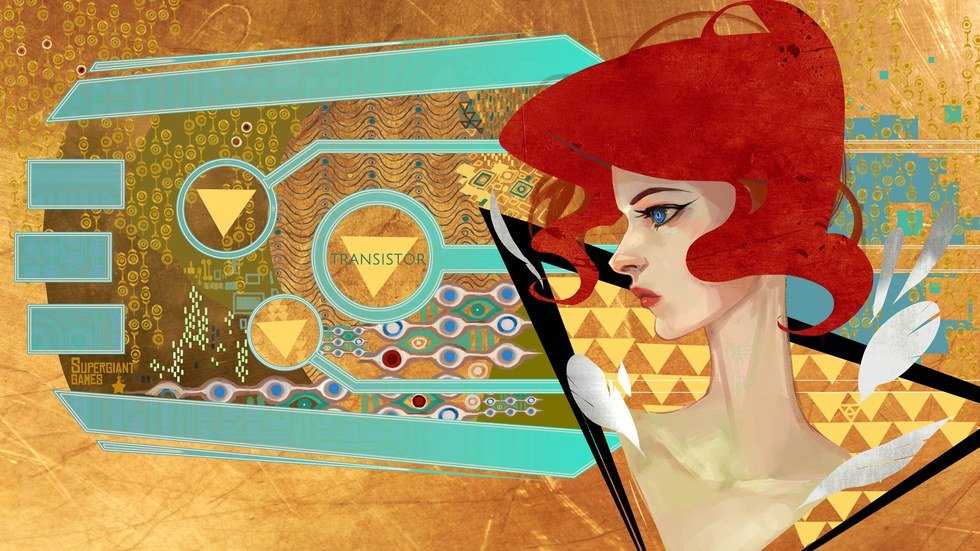
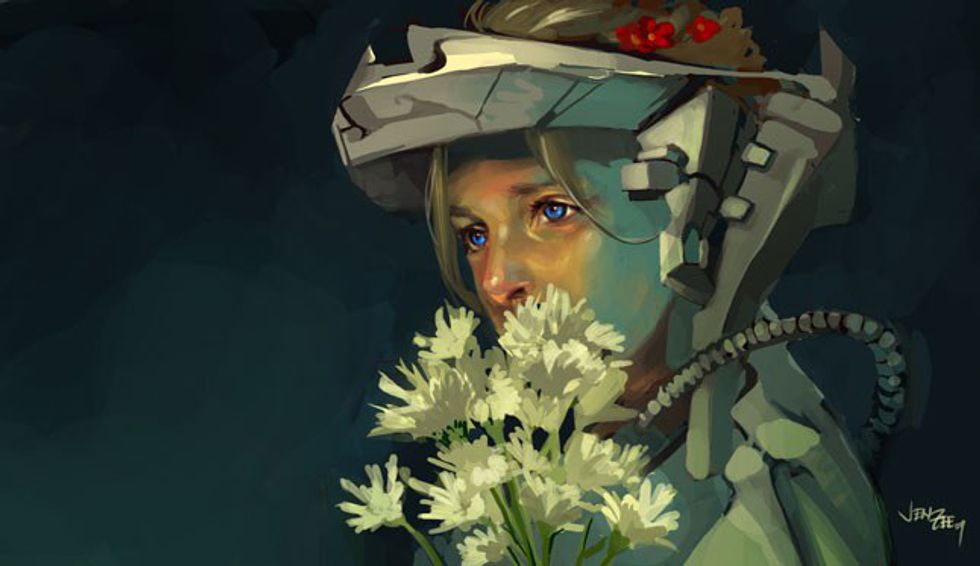
Jen Zee, the artist behind Bastion and Transistor, creates strong female characters
Gaming, like literature, like movies, like many things, is about escapism. I am 5'6" and can't lift most small dogs. The odds that I could heft a heavy sword and go out to do some demon-slaying- even in Portland- are pretty low. Playing a well-designed video game, for me, isn't just about the gameplay or the graphics, fascinating as those things are: it's about the story. When I invest myself in a 40 or 50 hour fantasy trek, or even a 5 hour one, I want to feel like I'm experiencing something, like I'm learning as I go, even if I'm just learning about the history of the floating islands of Zeal or the interpersonal politics of Halamshiral. Because story is what makes any world, in any medium, feel alive. Writing women out of the script for the sake of convenience or tradition is just lazy writing.