

It wasn’t until last semester that I realized how many factors are involved in making a class enjoyable. You see, last semester, my classes, for the first time, weren’t enjoyable. I was coming off a high from freshman year in which I loved every class and enjoyed every professor, and thus I was hoping this trend would continue. The trend did not continue, and much of my motivation went missing. So what is it that makes a class great? I’m glad you asked—there are many factors!
For starters, you must be interested in the class itself, e.g. the material. Many students (OK, mostly freshman) have the freedom to choose their courses. This is especially true of Rochester and why I love this university so much—the open curriculum means that people who aren’t so fond of math (that’s me) can avoid the subject. Instead, students can take classes they’re curious about. However, once you get on track for a major, your class choices become limited, and you begin taking only required classes. Similar to reading a required book for an English class, required courses can be boring just based on the fact that you didn’t get to choose the course. After all, what's more American than freedom to choose your courses?
So the next important factor in deciding how good a class is: who’s in it! If you walk into a class and don't know anyone, it can be a great opportunity to meet new people, but let’s be real—there’s a great comfort in at least having one friend in all of your classes. This may help you get out of bed in the morning for your friend (not so much the class), or for the attractive person who’s sitting in the very front (what a shame). Whatever it is, a friendship or crush can make a boring/annoying/difficult class a bit more bearable. Just don’t let that friend—or someone—become a distraction.

Perhaps the greatest factor in determining the quality of a class is by the quality of the professor. The professor plays the largest role in determining how you perceive a class. If a class has really interesting material that isn’t taught well, it can defeat the subject. On the other hand, a great professor can make even the most mundane of topics somewhat interesting. This is all obvious, but I was spoiled freshman year and only just learned the importance of a great professor: someone you can understand (and I mean this literally), and a person who you view as more of an intellectual spreading wisdom rather than a professor doing her or his job. Professors who can go outside of the class itself and become a sort of life coach or give you some life lessons are the best kind of professors.
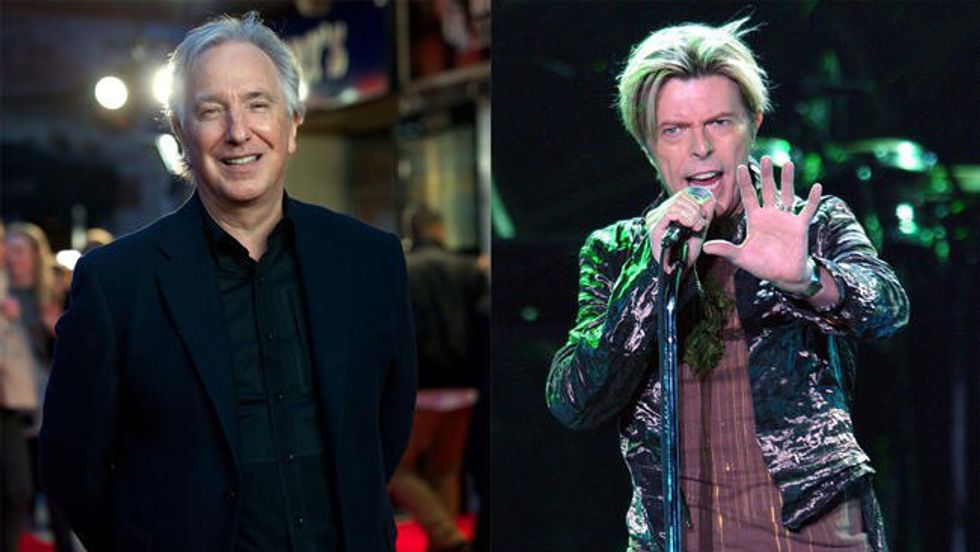
As per example, Severus Snape, though a controversial character in "Harry Potter," was not only a professor but also worked to protect the students of Hogwarts. Alan Rickman, who played Severus Snape, went beyond his role as an actor and became a mentor for Daniel Radcliffe and to anyone else he worked with. Not all teachers have to be professors, either. David Bowie was most known for his singing, but he was also an actor and artist who inspired others to challenge societal and gender norms. Both men were otherworldly characters, and thus it seems rather appropriate to think of their passing as more of a transfer to a different world than as a complete end to each life. To take it back to a smaller scale and the topic at hand, classes are not the be-all, end-all of your learning, but can expand your horizons beyond the inside boundaries. As we here at Rochester like to say, "Meliora" or "Ever better." That is what we are striving toward.
"If only life could be a little more tender and art a little more robust." - Alan Rickman
"The truth is of course that there is no journey. We are arriving and departing all at the same time." - David Bowie