


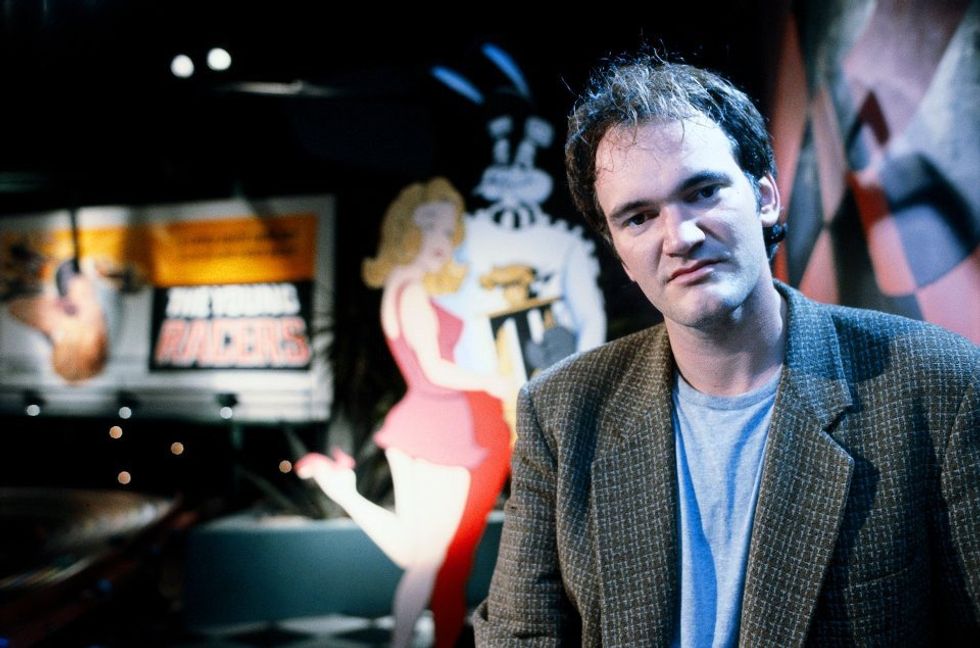
Quentin Tarantino is a household name when it comes to movie makers. For the few people who don’t quite recognize the name, they surely recognize his works. Tarantino’s films are known for being graphic in nearly every conventional way, and are filled with blood, language, sex, and Samuel L. Jackson.
Below is a list of his filmography, ranked in order of worst (or rather, least impressive) to best.
8. "Death Proof"

One of Tarantino’s collaborative efforts, “Death Proof” was part of a double feature of sorts, designed to be shown alongside Robert Rodriguez’s “Planet Terror.” Kurt Russell plays Mike, a man with a Hollywood stunt car, which he uses to murder women. Equipped with a roll cage, Mike prides his car on being “death proof” (albeit only for the driver), until he encounters stuntwoman Zoë, whose training spares her from Mike’s attempt on her life. Zoë goes after Mike, succeeding in enacting revenge. The film wasn’t considered anything beyond action by most critics, however, it received moderate praise, with many calling the film “wild fun.”
7. "Kill Bill" (Volumes 1&2)
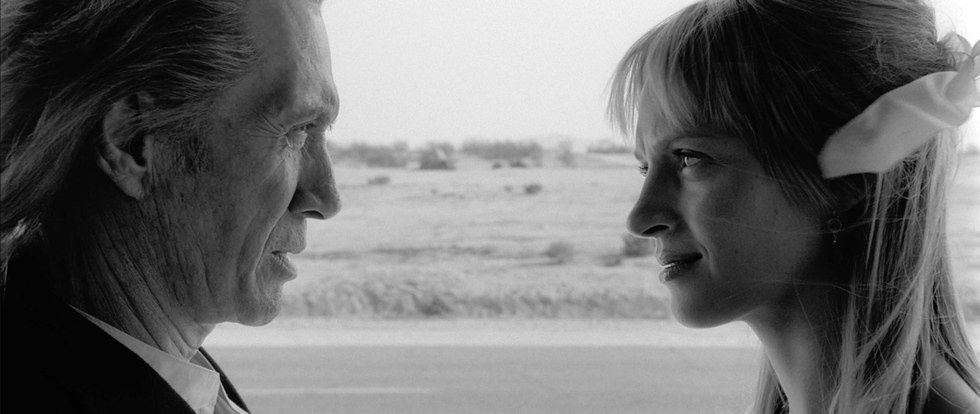
Tarantino’s homage to 70s kung fu flicks came alive with his most hyper-stylized brainchild, “Kill Bill.” Released in two parts, the story follows the Bride, an assassin whose betrayal at the hands of her boss, Bill, sends her on a path for revenge. Utilizing elements from classic kung fu, samurai, spaghetti western, and blaxploitation films, “Kill Bill” became Tarantino’s highest-grossing film at the time of its release.
6. "Jackie Brown"

Considered by many film theorists to be his best movie, it is perhaps Tarantino's least stylized and his most linear and orthodox work. The movie follows a flight attendant whose legal involvement with the police and a life-or-deal involvement with a drug lord lead her to double-cross both. The movie has garnered praise from critics since its release, though maybe due to its lack of the noticeable Tarantino-stamp, it has become overshadowed by his more recognizable works.
5. "The Hateful Eight"
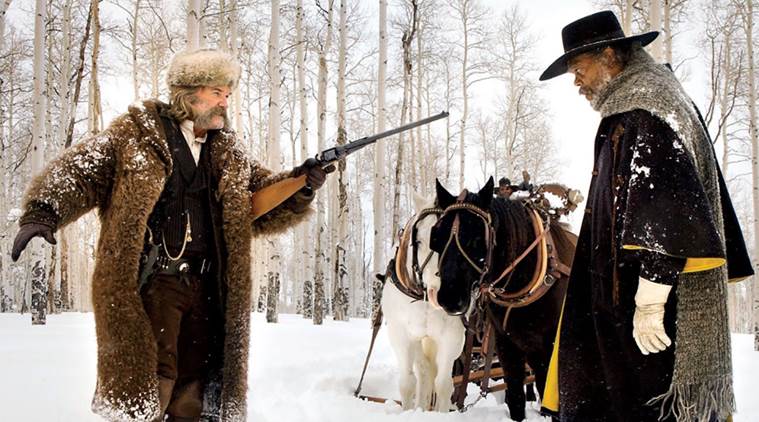
The most recent addition to the list of works by Quentin Tarantino, “The Hateful Eight” was the director’s second run at the western genre, pulling together nearly all of his frequent cast members (including Samuel L. Jackson, Kurt Russell, Tim Roth, and more) to create his most tense film ever. Set almost entirely in a cabin in the middle of the Wyoming wilderness, the film spins exactly what happens when eight Tarantino characters are trapped in a room for 187 minutes. The movie drew a line down the middle with critics, those against it calling it “overlong” and “boring,” while those for it claiming it one of Tarantino’s most ambitious projects ever.
4. "Django Unchained"
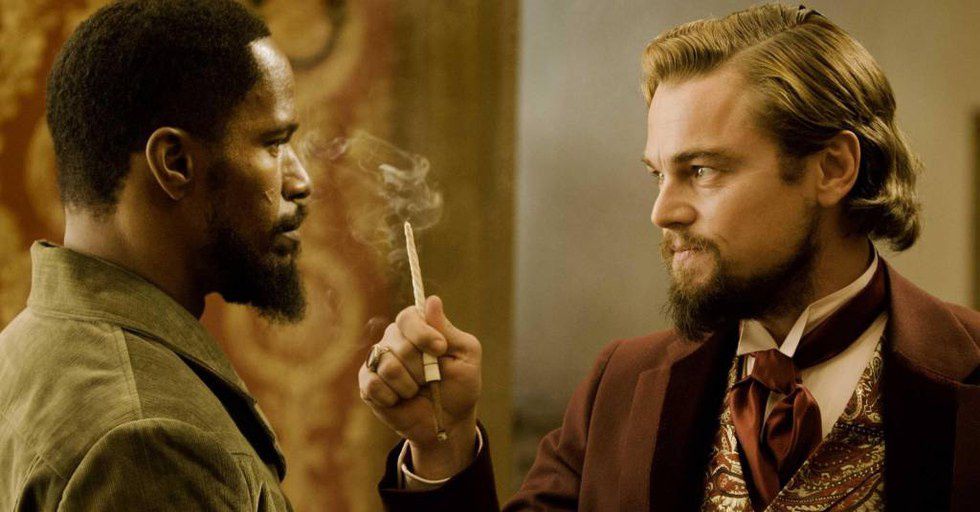
Tarantino’s most financially successful piece was his first shot at a western, with “Django Unchained.” Following the endeavors of a freed slave named Django as he attempts to rescue his wife, the film is carried by amazing performances by Jamie Foxx and Christoph Waltz, who won the Academy Award for Best Supporting Actor for his role as Dr. King Schultz. The film’s original screenplay also earned Tarantino the Oscar, Golden Globe, and BAFTA Award. Perhaps the most widely favorited Tarantino film, “Django Unchained” has been cited as one of the filmmaker’s best ever.
3. "Inglourious Basterds"

Probably the closest Tarantino will get to a war movie, “Inglourious Basterds” is perhaps the filmmaker’s attempt to show that during the second World War, nobody was the good guy. Following Aldo Raine and his band of Jewish-American soldiers, the “bastards” (as the Germans call them) travel throughout Nazi territory, executing SS soldiers one-by-one. Meanwhile, attempts on the lives of both Hitler and Colonel Hans Landa are made by a French cinema owner. “Inglourious Basterds” is one of Tarantino’s best received movies by both audiences and critics alike, garnering Waltz his first Oscar in a Tarantino film.
2. "Reservoir Dogs"

Tarantino’s 1992 directorial debut featured what would become an all-star cast, each playing a small-time thief pulling off a big-time diamond heist. But when one of them seemingly tipped off the police, each of the men runs through the story to narrow down the rat. This nonlinear masterpiece put Tarantino and his cast on the map for the rest of their careers, in a movie that went on to define Tarantino as a filmmaker.
1. "Pulp Fiction"
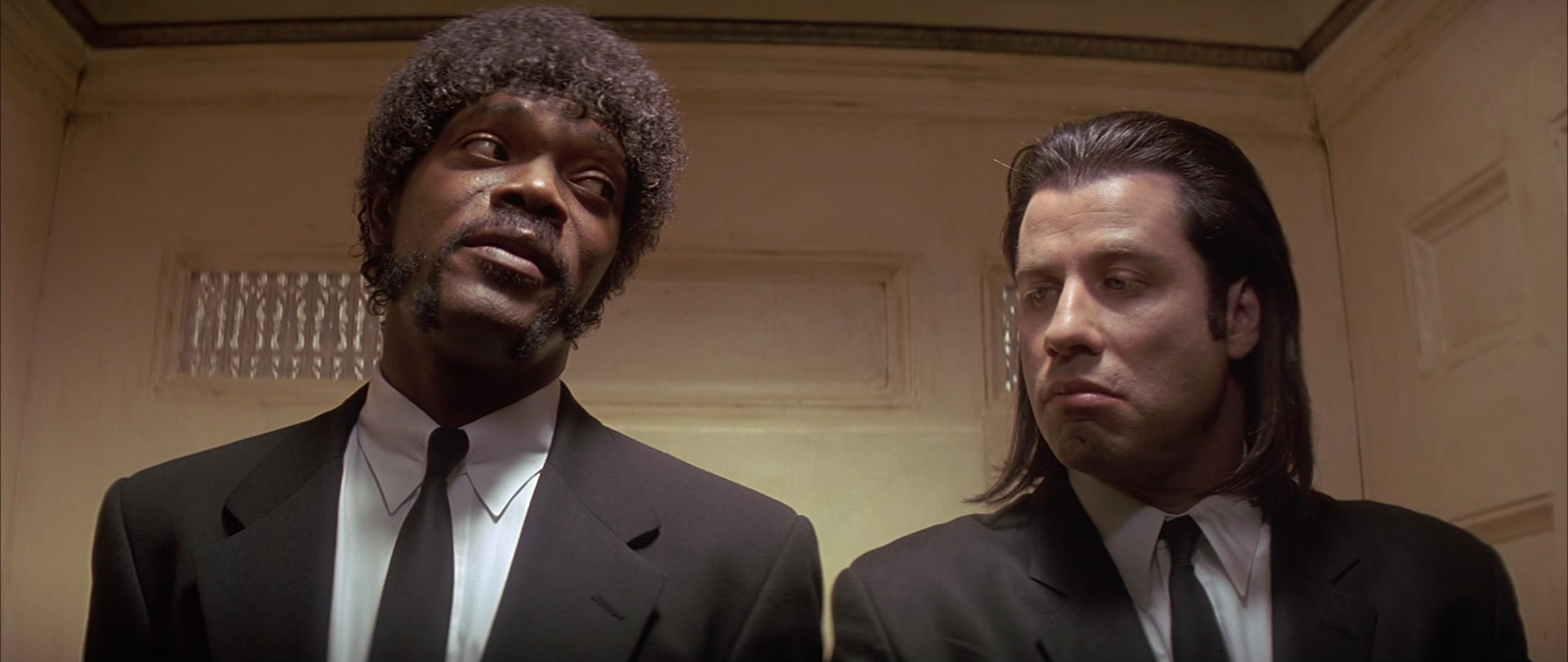
This should come as no surprise. While “Reservoir Dogs” put Tarantino on the map, “Pulp Fiction” was the 90s masterpiece that wound up changing cinema. Ask anybody what it’s about, you’ll get a different answer almost every time— perhaps the only consensus as to the movie’s plot being: “I don’t really know.” It is, after all, essentially a movie about nothing; Tarantino’s metaphor for how pointless movies are, but regardless, just how much we love them. Nearly universally adored by critics and audiences alike, “Pulp Fiction” is considered by many to be one of the greatest movies in the history of film.
















