
"Racists never want to believe that they are racist. They are constantly redefining what racism means so that they can escape meeting the definition while simultaneously engaging in the behavior." -Son of Baldwin
Racism, cultural insensitivity and de facto segregation are not unique to certain college campuses and small towns, but permeate American culture and our society. As microcosms of our society, college campuses especially emphasize these intense issues of racial tension as young, energetic and mostly naive students of various backgrounds and socioeconomic statuses are thrown into the new and stressful environment that is the collegiate campus.
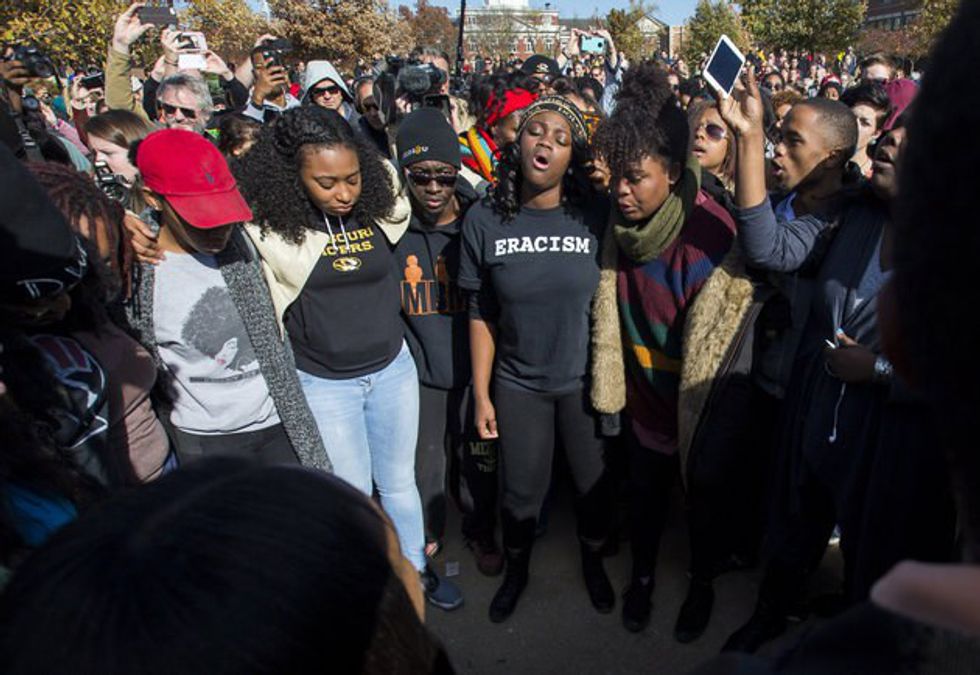
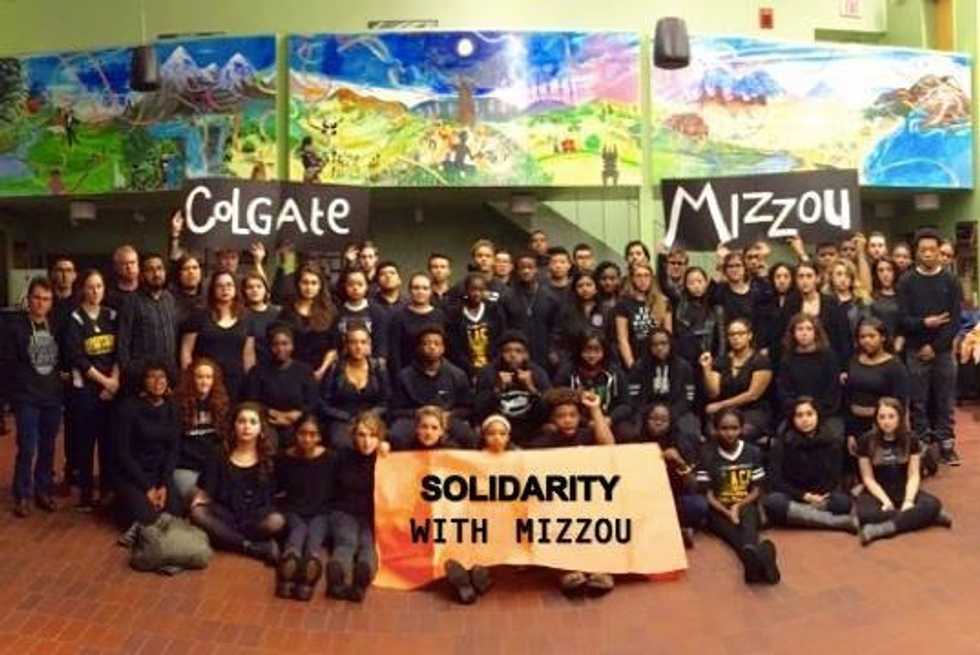
We have seen this unfold most recently with the protest at the University of Missouri, where students, black, Latino/a and white alike have come together to challenge the racial tensions and divisions that have run rampant on campus due to alleged neglectful action on the administration's part.
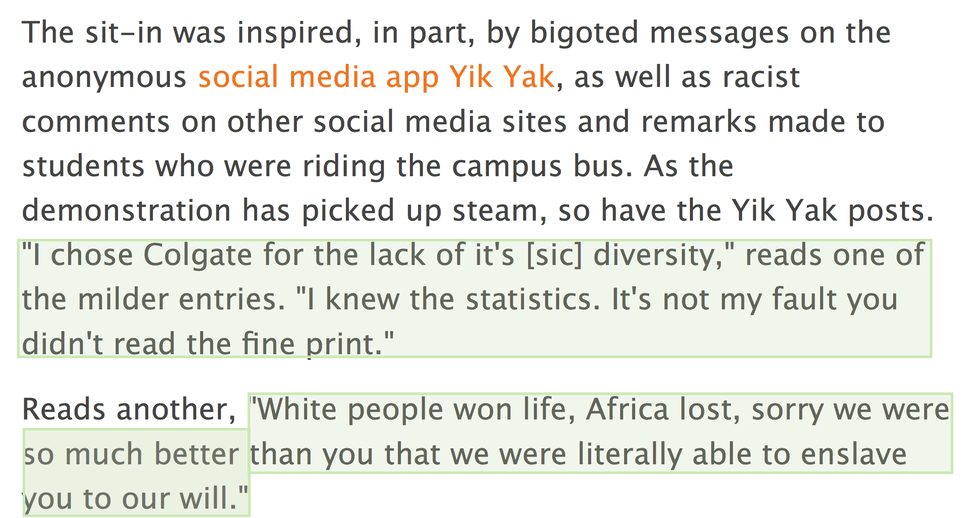
Grossly bigoted commentary, though not altogether absent before the demonstrations, has heated up on social media outlets such as Yik Yak, which has only further divided the campus and ignited a national debate. After ignoring the demonstrators' qualms and suggestions to quell racial tensions, Mizzou's administration only responded to their sets of demands after the football team refused to participate in practice or games until the school system's unresponsive president, Tim Wolfe, stepped down.
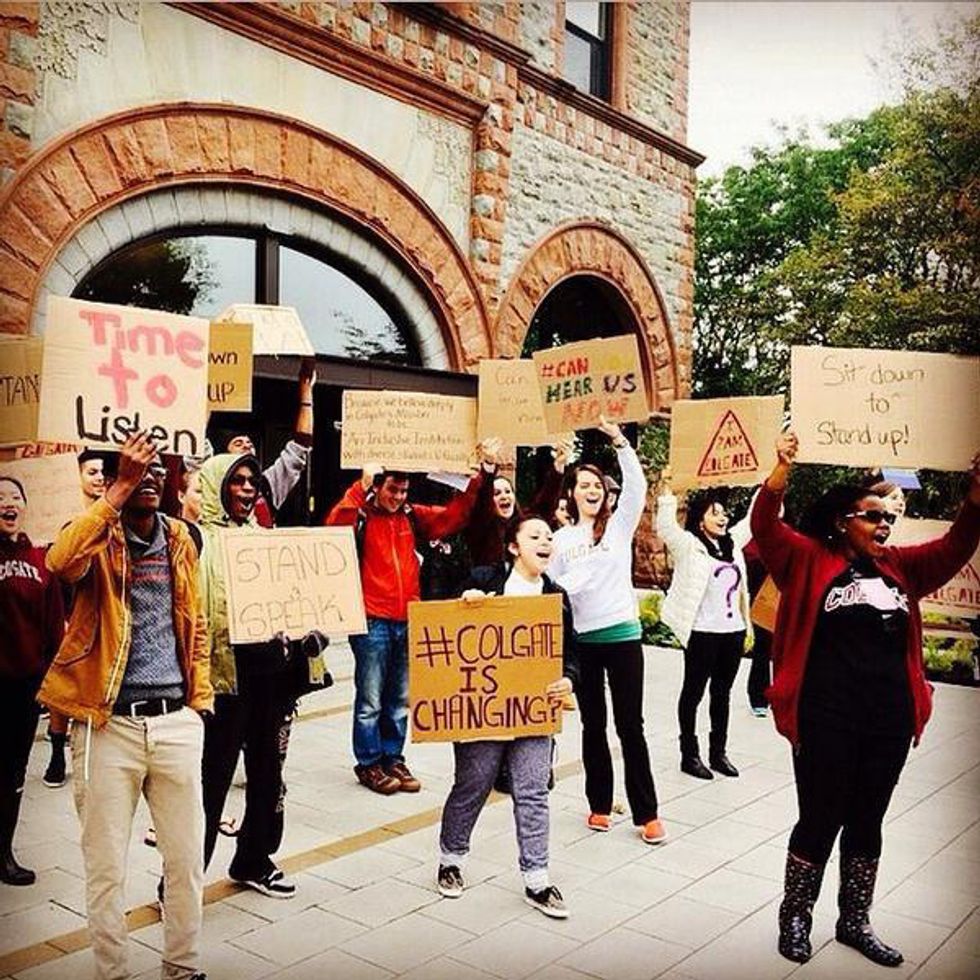
Sound familiar? Just last fall, Colgate University's administration came under fire when students staged a 100-hour sit-in at the admissions building on campus to protest the gross injustices and "institutionalized racism" minority students faced on a predominantly white campus. Prejudiced messages on social media sites, especially Yik Yak, and racist incidents on the campus bus prompted these protesters to construct a list of demands that would introduce a more diverse campus and institute diversity training for current and future faculty and staff. Though the university's president since 2010, Jeffrey Herbst, released a 21-step plan to address racial issues, he announced his resignation, “so that new leadership can be in place as the university prepares for the next fund-raising campaign and the 2019 bicentennial celebration.”
As different as these two campuses and their respective demonstrations are, their message remains the same; more must be done on the community's part as well as the administration to combat the institutionalized racism and prejudice present in American society. Though Colgate never experienced KKK members walking the campus streets or swastikas adorning the academic halls, our black students still feel unsafe. No student should ever feel unsafe on their own campus, fearing for their own life if they were to step outside their dorm room. As a white American, I am granted the privilege to continue to feel the freedom to speak out against these injustices without fear of retribution, a freedom not shared with my respective black and other minority students.
On both Colgate's and Missouri's campuses, more than 70 percent of the student population and full-time faculty are white non-Hispanic, which only emphasizes the underrepresentation of minority students and lack of faculty role models. The influence of white privilege on both campuses is further strengthened by this imbalance. Michael S. Kimmel explains in his book "Privilege: A Reader" that, “To be white, or straight, or male, or middle class is to be simultaneously ubiquitous and invisible. You’re everywhere you look; you’re the standard against which everyone else is measured...Any college course that doesn’t have the word ‘woman’ or ‘gay’ or ‘minority’ in its title is a course about men, heterosexuals, and white people. But we call those courses ‘literature’, ‘history’ or ‘political science.’ This invisibility is political.” It’s our duty as human beings to listen to the stories of minorities before we begin to jump to conclusions about things we wouldn’t understand.
For many students hurt by the racial injustices and discrimination, a presidential resignation or administration overhaul may offer a small victory. However, as demonstrations continue and debates rage across the country, we as a society must all be aware of the deep roots of racism that are instilled in our American culture, not simply limit the conversation to racial inequality on college and university campuses. We must be prepared to address the social, economic, and political inequalities minorities face in American society today that are simply reflected in academic institutions like Colgate or Missouri.