In the United States today, it is a fairly well-known fact that many police-involved deaths have been occurring across the nation. Just this month, two police officers were caught, on camera, shooting (and killing) two unarmed men on the street. Some applaud and support these law enforcement officers, commending them on a job well-done. But what if this terrible trend was based in the roots of racial bigotry and discrimination? Turning a blind eye on this sort of horrendously damaging behavior can lead to anarchy, much like that which occurred in Ferguson after the grand jury failed to indict officer Darren Wilson on the shooting death of unarmed black teen Michael Brown.
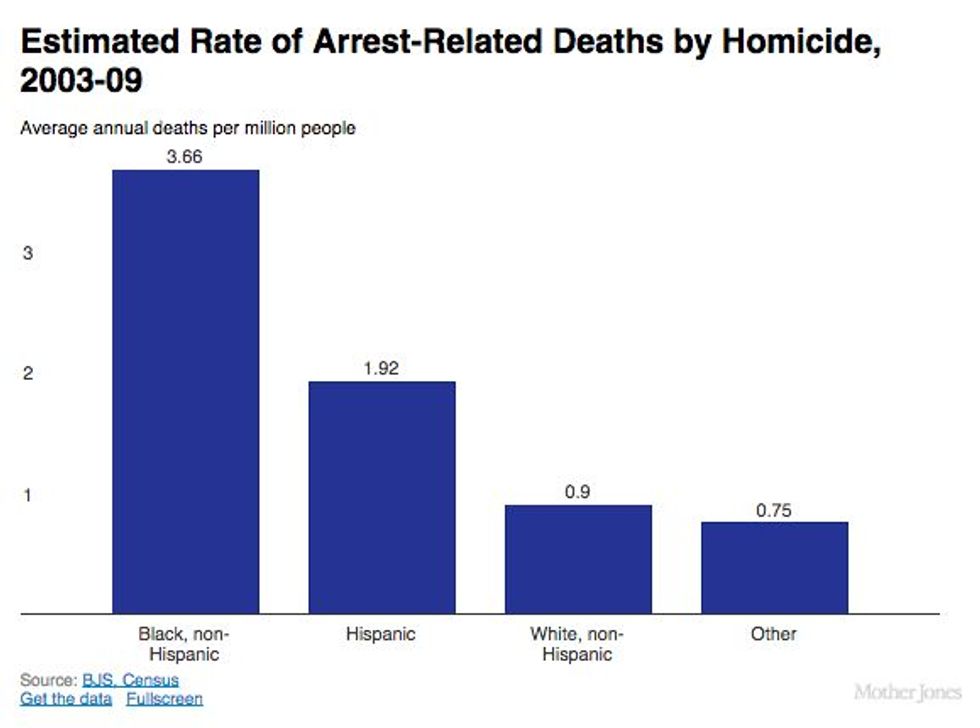
So in the midst of all this racially-charged debate and race-related deaths, when does someone say “ENOUGH!”? When does the government of this once-proud nation say “All lives matter!”? At what point does society stop and ask itself one critical question: How do we as a society go about preventing unnecessary deaths while reducing disparity and discrimination, yet still maintain a level of efficient law and order?
As a second-year undergraduate criminal justice major at Appalachian State University, I find the disparity between members of the white community and members of the minority communities, especially the African American population, quite intriguing. This racial gap has existed since the first ancestors of today's African American population first set foot in this land, as slaves. I theorize that this disparity is due to a lack of adequate education among minorities, as well as insufficient equal representation within our government system, which is perpetuated by a number of factors. It is my belief that with better educational opportunities, as well as equal representation of the minorities, the disparity between the races will shrink. I have formulated a means by which this process could possibly be implemented, which I will describe later in this essay.
I will begin by providing a brief timeline of legislative events during the Civil Rights movement, the era that supposedly eradicated racial discrimination from the United States. Prior to 1964, racial segregation and, by association, discrimination and bigotry, were a part of everyday American life. In 1954, the United States Supreme Court overturned its previous landmark ruling of “separate but equal” educational systems. Otherwise known as racial segregation, this decision was reached in 1896’s Supreme Court case Plessy v. Ferguson. 1954’s Brown v. Board of Education’s ruling stated that “separate educational facilities were inherently unequal.” This sparked the conversation about other forms of racial discrimination, and in 1964, Congress passed the Civil Rights Act, along with the Voting Rights Act of 1965, and the Fair Housing Act of 1968, all guaranteeing protections to black Americans from the open display of racially-based discrimination in the United States.
When the United States elected its first-ever African American president, Barack Obama into office, many saw it as a catalyst for major change within the racial spectrum of our nation. Rep. Terri Sewell, a House Democrat from Alabama, insisted that "...his very presence...changes the psyche, and the willingness of other generations to see beyond race." What this means is that, by visibly having a black man in the highest position in America, it opens up the realization to younger generations that race shouldn't matter in this society, even if this notion is great in theory if not by practice. According to a poll done by the Pew Research Center, "...forty-five percent of Americans... think the United States has made a lot of progress toward... racial equality, [while] thirty-six percent... said only 'some' progress has been made."
Today, most open forms of racial bias have been quashed, but there still remain many views on the subject of the existence of racial discrimination in the United States. These differing stances will be shared, starting with the Conservative view. Published in the scholarly Foreign Affairs magazine, Harris and Liebermann’s essay Racial Inequality After Racism: How Institutions Hold Back African Americans describes the members on the right side of the political spectrum as believing in a colorblind society. These individuals believe that “racial disparities reflect deficiencies of merit on the part of less successful individuals and groups rather than flawed institutions that perpetuate unequal outcomes.” Simply put, those who agree with this notion believe that, as a whole, the African American population suffers in poverty, not due to subtly-biased entities and organizations, but by a lack of self-motivation and determination. Those on the left, however, believe that, although open expression of prejudice are tantamount to scandalous, there still exist many negative stereotypes about minorities that are powerful enough to frame social and political constructs. Whereas the conservatives tend to analyze the individual black person’s character and merit, liberals tend to scrutinize white people’s possible ulterior motives and underlying biases. These views, however, still have yet to bring about any necessary, lasting change within and for these minority populations.
African Americans face insurmountable discrimination, disparity, and stacked chances in life in general. Compared to non-Hispanic whites, blacks are three times as likely to be poor, six times as likely to be imprisoned, and only about half as likely to graduate from a college or university (Harris, Liebermann). The average white American household makes a whopping thirteen times more than that of the average African American household. Geographically, African Americans tend to find themselves surrounded by a community mainly composed of members of their own race, oftentimes in what is known as "Section 8 housing," or the projects. This trend is reinforced by the notion that oftentimes, blacks cannot afford to live in nicer parts of town, and therefore are unintentionally self-segregated. The communities in which this trend occurs are often poor and run-down, and the local neighborhood schools, although operated as best as possibly can, are overcrowded with minorities and underfunded by the government.
Within these minority communities thrive criminal subcultures: drugs, gangs, general violence, etc., etc. According to Poverties.org, a website on the research for social and economic development, "Poverty and crime combined together leave people with two choices: either take part in criminal activities or try to find legal but quite limited sources of income- when there are any available at all." This simply means that destitute individuals must choose between legitimate and illegitimate means for making money, even if that means choosing the illegal side due to higher payouts.
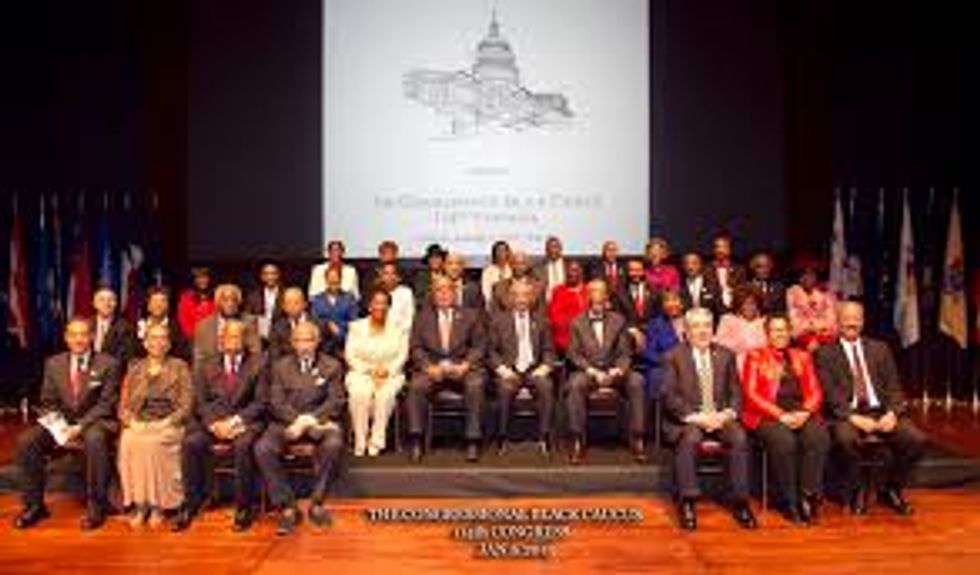
According to Reid Wilson, a writer for the Washington Post, “whites make up… 69.7% of high-wage [government] jobs. By contrast, blacks… account for 20.69% of low-earning jobs.” Many hold fast that government positions are difficult to obtain for the African American community, because these jobs require financial stability, good benefits, and inside connections, all of which the majority of blacks disproportionately do not possess. Equal representation of all races should be a must in the government system. "African American legislators average about 8.1 percent overall..." This means that out of five hundred thirty-five voting members of our United States Congress, only forty-four of them are black.
With such an obviously existent problem in our midst, how does the United States go about correcting it? The answer is more funding towards public, inner-city schools that educate higher percentages of minority students, along with government-funded and involved internships. As mentioned before, African Americans are statistically less likely to graduate from a high school, college or university. For this solution to work, the U.S. government will need to better fund these schools, which are oftentimes outdated and lack adequate supplies and equipment for all the students. Once improved, these schools can set more minority students onto a four-year university track.
After completing their undergraduate degrees, the selected candidates, whom exemplified leadership and integrity over the course of their undergraduate studies, would be given the opportunity to embark on an internship by their respective home state government. Two candidates from each state, a male and female, should be nominated by the faculty members at their respective schools, and decided upon by a special committee dedicated to working with these individuals. This method may allow the minorities the chance to finally be better involved within our governmental system, thus giving younger generations the opportunity to see, hear, and experience change within their communities. This critical step in improving the racial divide could potentially lessen, or even eliminate, these disparities, and revolutionize the country today that seems to see so much racial bias and discriminatory behaviors.
Although this solution has only just been proposed, I believe that it will be a great first
initiative to reducing, or ending, racial discrimination and all of its ill effects, such as unwarranted use of deadly force which results in the death of unarmed minority members. Though the solution needs some fine-tuning, I believe that, with the assistance and guidance of a professional, the system I have described above will have an overall positive affect on this long-debated and rather heated issue of racial inequality in America.