As I was scrolling through my Tumblr the other day I came across this gif set of Riley, a girl no more than five, ranting to her dad about the oddity of princesses being marketed exclusively to girls and superheroes only to boys. This wasn’t a foreign concept to me. Almost every adult woman has heard of the infamous “pink tax” that applies to all female products. If you haven’t, I’m not joking. The New York City Department of Consumer Affairs found that of the nearly 800 goods surveyed “women’s products cost 7 percent more” even though the ingredients in the men’s products were almost identical. This extends to children’s toys and clothing, where female clothing costs 4 percent more than males and 7 percent more for female toys and accessories. The facts of inequality really speak for themselves in this matter: Women are forced to pay more for almost any good or service.
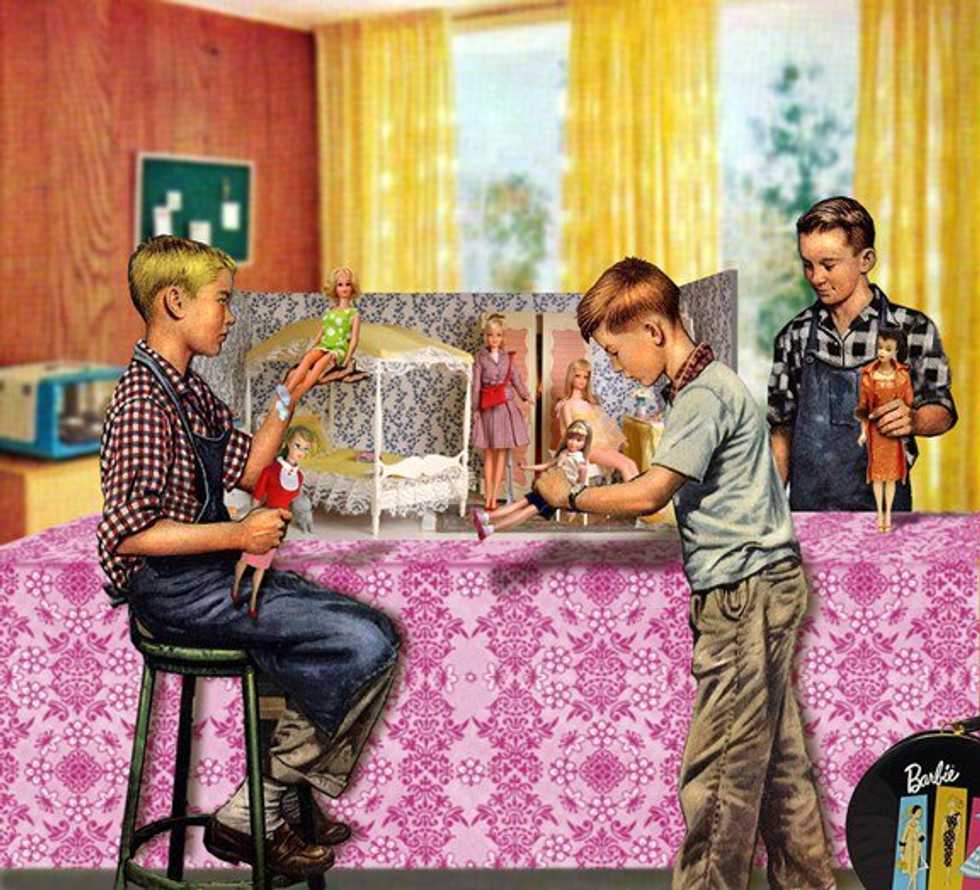
Back to Riley who her vents her frustration about girls being pushed to like pink and boys being discouraged from playing with princesses. This kid has some great points about the toy industry, which continues to perpetuate old-fashioned gender roles for children from a very early age. However, the fault does not only lie with the toy industry, which is really like any business, here to meet the demands of its clientele.
Our culture has become a sort of dichotomous place for females. With the third feminist uprising, women have been encouraged to become more ambitious in the work place and take charge of their lives by becoming independent. Yet it is extremely difficult for a woman to get her tubes tied or seek long-term birth control. Peers and relatives encourage us to be independent, but they also pester us with questions about having kids and getting married, as if those things are essential to the fabric of every woman’s life. But if you look down the aisles of numerous baby dolls, makeup kits, and clothes in the kids section it's almost eerie how little wiggle room our society gives girls, and boys for that matter, in exploring their identities.
The trend of gender products as exclusively for males or for females is dictated by the cultural standards surrounding what it means to be a man or to be a woman. In most Western societies, the ideals of a man are centered around power, ambition and acts of aggression. To meet these standards, the men's section of stores often showcases dark or bold colors that have strong natural names such as Dial’s Blue Grit soap, or sleek, modern names like Nivea Platinum Protect shampoo. Meanwhile women’s shelves are filled with brightly labeled, often flowery (or fruity) scents like Suave’s Everlasting Sunshine or Secret’s Paris Romantic Rose deodorant. Don’t get me wrong, I personally love Suave’s Tropical Paradise and really nothing is physically stopping me from deciding to buy Old Spice’s Fiji (which is pretty much the same thing) except for some wayward comments I might get from people.
These comments act as a form of in-group policing, which both men and women often do to keep each other within these boundaries of what is acceptable to purchase due to their gender. Psychologically, in-group policing can really damage the way someone wishes to express themselves.
That society tries to push on all of us the idea that products such as toothpaste, deodorant, even soap have somehow gained a gender label is ridiculous. Men shouldn’t have to feel emasculated if they want to use Dove’s soap because it's pink or smells “girly.” It feels cliche to say this, but c’mon y’all, it's 2016, we need to stop the subversive gendering of hygiene products and imaginary rules of what toys kids can play with.