
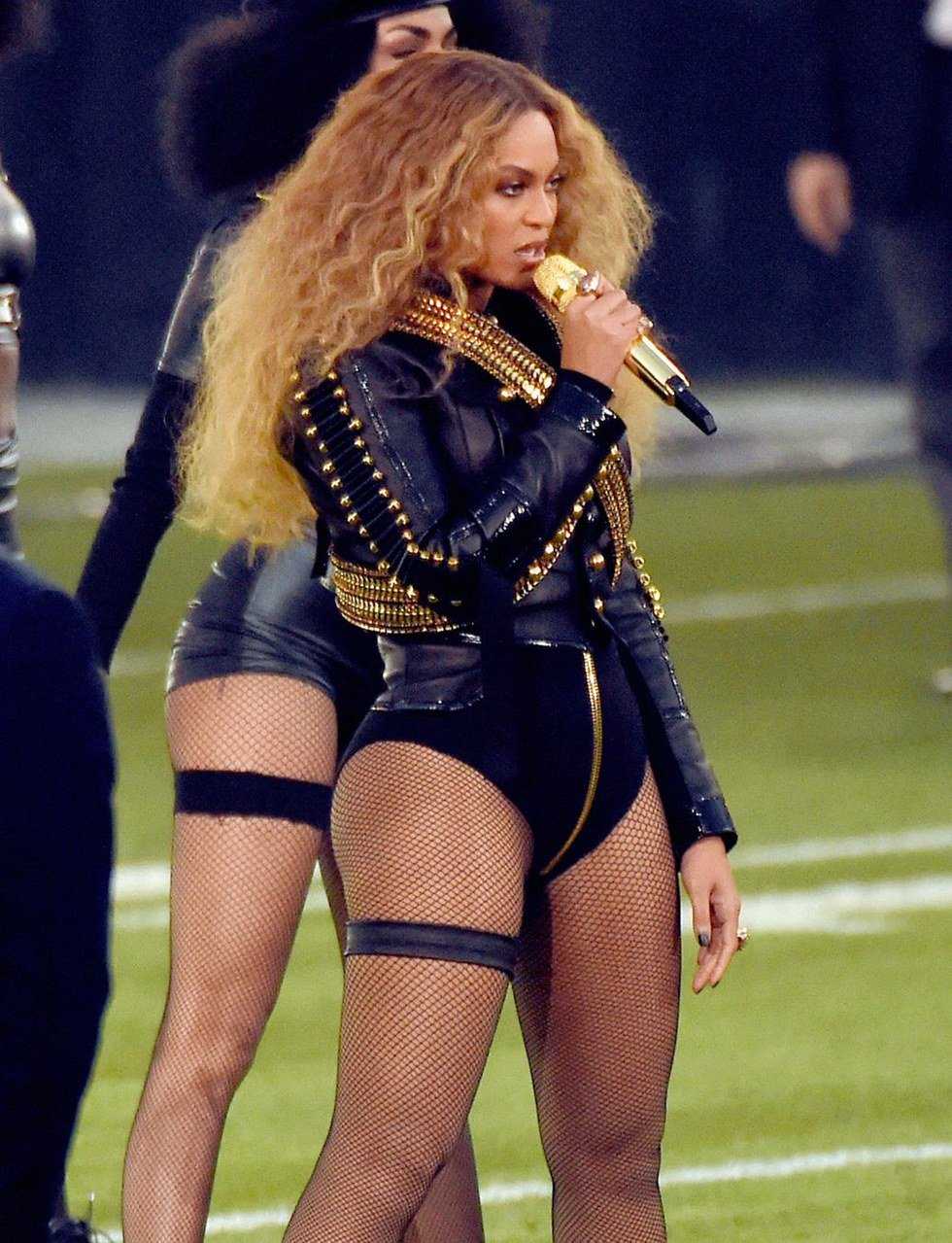
Beyoncé released her music video for her new song "Formation" on Feb. 6, just before her appearance in the Superbowl Halftime show the following Sunday. Her video featured clips of the Hurricane Katrina flood, a child dancing in front of police officers where "Stop Killing Us" is written on a garage door, and New Orleans culture. At her halftime performance, she and her dancers all wore Black Panther Party-inspired costumes and the dancers wore signature black berets. In both her music video and her performance at the Superbowl, Beyoncé celebrated being black and, like she does in many of her songs, encouraged black women to love themselves for who they are. She made a statement to support Black Lives Matter (she has also donated funds to programs related to this cause in the past) and acknowledged the importance of the movement.
After her video and halftime performance went viral, Beyoncé started to receive backlash for being "too political," "anti-police," and was even accused of not being inclusive of all women. Her lyrics, however, have been political in the past, and commenting on the unjust actions of a few police officers does not make her anti-police. Alicia Garza put it well in Rolling Stone article when she wrote, "The lyrics of the song are complicated — and so is the movement itself. The images in the video conjuring the man-made tragedy of Hurricane Katrina, police violence, resistance and black life in the South showed that the Queen is multifaceted, complex, full of contradictions and black as hell. In it, she invokes Southern heritage, traditions and tragedy. She uses magic to remind us that we have the power to change the dynamics between police and the communities they're supposed to protect and serve." When it comes down to it, Beyoncé is exercising her right as an artist by using these images to express what she sees to be a problem, but a problem that we can all change.
Singers, songwriters, painters, musicians, and any other kinds of artists go through the same process that Beyoncé and her producers did when considering her performances. They often sing about, paint about, and write about things that are important to them. They have freedom of expression and controversial subjects have been expressed in art forms before. So why is everyone making a big deal of Beyoncé's art?
It seems like people in the media felt threatened by her political statement. They slander the Black Panther Party without doing research first. (The BPP was actually created as a self-defense group, and their core mission was to get land, bread, housing, education, clothing, justice, and peace to underprivileged, black urban communities.) They call her art "shameful" and insist that the anti-police rhetoric is disrespectful. They do not realize that Beyoncé's message, "Black is Beautiful," is one that she has had in dozens of her songs. "I wanted people to feel proud…and have love for themselves," she said in a People magazine article. Her inclusion of police in her video was to comment on the unjust system that has resulted in so many unwarranted deaths. She wanted to encourage people to do something about it, peacefully. There were no visuals in her video that exhibited police brutality or encouraged violence against the police.
This is what I have seen in the media and in her video. Because I am white, I cannot directly relate to her lyrics, nor understand exactly how Beyoncé feels about Black Lives Matter. I can, however, look at the facts and the rhetoric and see that outrage over Beyoncé's video and halftime performance is ridiculous. I have loved Beyoncé since "Irreplaceable" came out and I bought that CD. She's a fantastic singer and philanthropist, having donated both time and money to countless organizations. She's been active in donating to civil rights and social justice organizations, including Black Lives Matter. So why are people so surprised by her new video? I think she has captured exactly what she wants to capture: that black communities are often treated unfairly.
I am disgusted by how some of the media is portraying Beyoncé's performance. It is not shameful, disgusting, or disrespectful. We live in the United States, after all, and have the right to express ourselves in manners such as this. Beyoncé was speaking up for what she believed was important. Like she said, she wanted people to be proud of who they are. I cheer you on, Beyoncé, because your performance was both entertaining and powerful. Her celebration of being black may not apply to me, but, nonetheless, I see it as beautiful and empowering — not to be slandered and shamed.